Keir Starmer Under Fire in Political Cartoon Over Mandelson Scandal
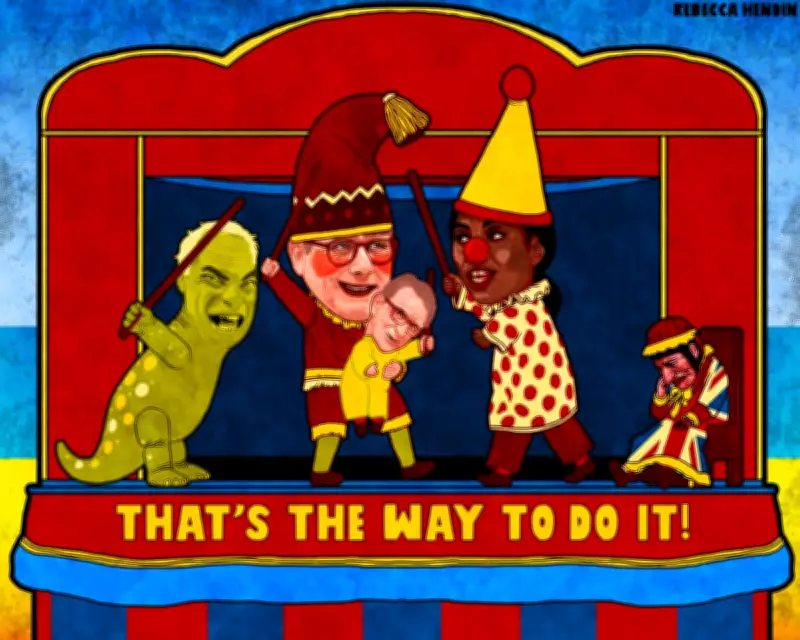
A new political cartoon by artist Rebecca Hendin has sparked significant attention, portraying Labour leader Keir Starmer as being under intense pressure and criticism amid the ongoing Mandelson scandal. The artwork, published recently, captures the growing internal and external scrutiny facing Starmer, with vivid imagery that underscores the political turmoil within the Labour Party.
Details of the Cartoon and Its Impact
The cartoon depicts Keir Starmer in a defensive posture, surrounded by symbolic elements that represent the allegations and controversies linked to the Mandelson scandal. Rebecca Hendin, known for her sharp and insightful political illustrations, uses this piece to highlight the challenges Starmer faces in maintaining party unity and public trust. The visual narrative emphasizes the weight of the scandal on his leadership, with subtle cues pointing to broader issues of transparency and accountability in politics.
Observers note that the cartoon has resonated widely, reflecting public and media perceptions of the Labour Party's current struggles. It serves as a commentary on how political figures are often held to account through art, with Hendin's work adding a layer of cultural critique to the ongoing discourse.

Background on the Mandelson Scandal
The Mandelson scandal involves allegations and investigations that have cast a shadow over key figures within the Labour Party, including indirect implications for Keir Starmer's leadership. While specific details of the scandal are complex, it centers on issues of influence, ethics, and potential misconduct, drawing parallels to past political controversies in the UK. The cartoon taps into this context, using Starmer as a focal point to explore the broader ramifications for the party's image and future electoral prospects.
Political analysts suggest that such scandals can erode voter confidence and fuel internal divisions, making Hendin's depiction particularly timely. The artwork not only critiques Starmer's handling of the situation but also invites viewers to consider the wider implications for democratic integrity and party governance.
Reactions and Broader Implications
Reactions to the cartoon have been mixed, with some praising Hendin for capturing the essence of the political moment, while others argue it oversimplifies a nuanced situation. Supporters of Keir Starmer have defended his leadership, pointing to his efforts to address party reforms and policy challenges. However, critics see the cartoon as a valid reflection of the pressures he faces, especially in light of the Mandelson scandal's persistent media coverage.
This incident highlights the role of political cartoons in shaping public opinion and holding leaders accountable. In an era of rapid news cycles, such visual commentaries can amplify key issues, making them accessible to a broader audience. For the Labour Party, the cartoon underscores the need for clear communication and decisive action to navigate ongoing controversies and rebuild trust.
As the Mandelson scandal continues to unfold, Keir Starmer's response will be closely watched, with artworks like Hendin's serving as a barometer of public sentiment. The cartoon not only critiques current events but also contributes to a larger conversation about leadership, ethics, and the intersection of politics and culture in modern Britain.