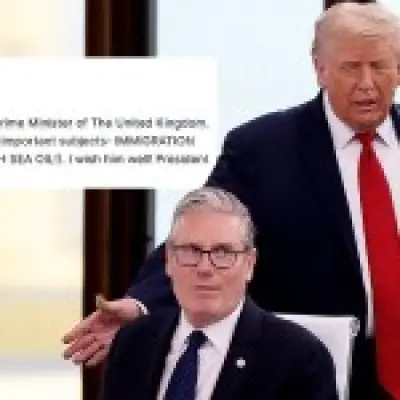
Starmer's Diplomatic Shift Challenges Trump's Pressure Tactics
After years of international leaders employing appeasement strategies towards Donald Trump, Britain's Prime Minister Keir Starmer appears to have adopted a fundamentally different approach. The emerging pattern suggests that coordinated resistance, rather than placation, might be the only language the former American president truly understands.
The Failure of Appeasement Strategies
For nearly a decade, global leaders have attempted to manage Trump through flattery, deflection, and avoidance of confrontation. This approach treated presidential outbursts as temporary tantrums to be weathered rather than substantive policy positions requiring challenge. The consistent result has been reinforcement of Trump's belief that international partners will rearrange themselves around his demands when faced with sufficient pressure.
The recent Davos World Economic Forum summit provided compelling evidence that this dynamic might be changing. Canadian Prime Minister Mark Carney's viral speech declaring "We are in the midst of a rupture, not a transition" and dismissing "nostalgia as a strategy" drew characteristically blustery responses from Trump. Yet the international reaction proved notably different from previous encounters.

Coordinated European Resistance Emerges
European leaders have demonstrated particular clarity in their response to Trump's pressure tactics. Brussels has openly discussed retaliatory measures and economic sanctions, explicitly warning against attempts at economic coercion. This firm stance represents a marked departure from the cautious approach that has characterised much of Britain's recent diplomacy.
At a private Davos dinner, Trump's Commerce Secretary Howard Lutnick faced booing and walkouts after criticising European positions. While Lutnick attempted to maintain composure, the incident visibly dented both his authority and the perception of American invulnerability to coordinated pushback.
Starmer's Evolving Diplomatic Posture
Prime Minister Starmer's approach has undergone noticeable evolution in recent days. Initial criticism of Trump's tariff threats against allies as "completely wrong" represented some of the strongest language yet directed toward the former president by a British leader. This was followed by Downing Street statements emphasising "pragmatic, sensible and sustained" solutions over "gesture politics."
The most significant development came during Prime Minister's Questions, where Starmer declared "Britain will not yield" on principles and values. He specifically referenced Trump's attempt to use the Chagos Islands as leverage in discussions about Greenland, firmly stating "He wants me to yield... I'm not going to." This represents a substantial departure from the reactive diplomacy that has characterised much of Labour's tenure.
The Practical Consequences of Firmness
Almost immediately following this coordinated resistance, Trump began backing away from tariff threats related to Greenland, instead discussing "framework" agreements. While the former president will undoubtedly frame this as strategic progress, the reality appears closer to capitulation in the face of determined opposition.
Foreign Secretary Yvette Cooper reinforced this approach by declining Trump's Board of Peace invitation, further demonstrating Britain's willingness to resist pressure through coordinated action rather than individual negotiation.
Sustained Resistance as Strategic Imperative
The emerging strategy recognises that Trump's approach relies on isolating individual nations and negotiating with each separately. The antidote requires consistent, coordinated pushback that makes pressure tactics increasingly ineffective. Britain must translate "will not yield" rhetoric into practical solidarity with Denmark and Greenland's self-determination, enhanced economic planning with European partners, and unified messaging that prevents division.
This approach carries inherent risks. Historical patterns suggest that challenging Trump's ego typically prompts retaliation rather than reflection. If denied progress on Greenland, he will likely seek alternative targets for pressure. Therefore, resistance must become a sustained process rather than occasional performance.

Rebuilding British Diplomatic Credibility
For months, Starmer's premiership has faced criticism for reactive governance and diminishing authority despite commanding parliamentary majorities. This week's developments offer a different vision of British leadership: clear, principled, and willing to maintain positions even under significant pressure.
The coordinated resistance emerging between Britain and European partners represents the most promising avenue yet for rebuilding diplomatic credibility after years of perceived drift. Success will depend on maintaining this firm stance through inevitable challenges and retaliatory measures, demonstrating that Britain's historical reputation for determination remains intact.
What remains uncertain is whether Starmer possesses the political will to sustain this approach through the coming weeks and months, transforming momentary firmness into consistent diplomatic strategy. The coming period will test whether Westminster can maintain this principled stance without reverting to deference in international relations.