Starmer's Strategic Shift in Tone Towards Trump at Prime Minister's Questions
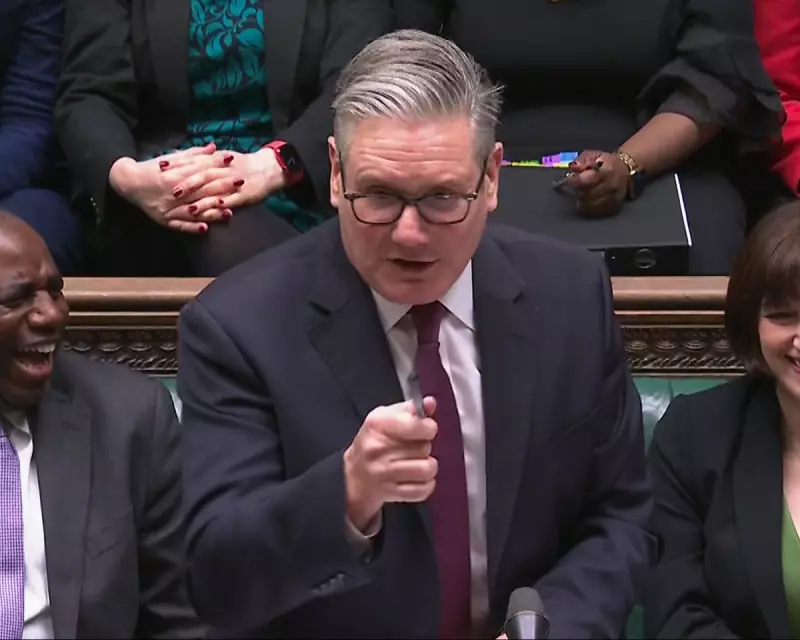
In a notable departure from his typically measured approach, Prime Minister Keir Starmer adopted a surprisingly forceful stance during Wednesday's Prime Minister's Questions session. The Labour leader made it unequivocally clear that he would not yield on his position regarding Greenland, directly challenging US President Donald Trump's recent threats to impose tariffs on European allies.
The Breaking Point in UK-US Relations
Starmer's diplomatic strategy of maintaining private dialogue and cultivating a close relationship with the unpredictable White House occupant has faced increasing strain since the beginning of the year. The prime minister's carefully calibrated approach spectacularly unraveled on Saturday when President Trump threatened to impose 25% tariffs on European nations opposing the United States' proposed takeover of Greenland.
Within hours of this development, Starmer delivered a pointed response, stating unequivocally that "applying tariffs on allies for pursuing the collective security of NATO allies is completely wrong." This marked the first instance where the prime minister has publicly challenged Trump with such directness, aside from previous disagreements over the US president's claims about London's supposed desire for sharia law.

A Subtle But Significant Hardening of Position
During a hastily arranged press conference at Downing Street on Monday, Starmer maintained that he still sought a "pragmatic, sensible and sustained" resolution to the escalating crisis. He emphasized his preference for "calm discussion" over what he characterized as potentially damaging "gesture politics."
Nevertheless, observers noted a subtle but significant toughening in the prime minister's messaging. Starmer explicitly warned that US tariffs would harm the British economy and served "in no one's interests," while keeping the possibility of retaliatory measures cautiously on the table. This represented a clear departure from the quiet appeasement approach that his most vocal critics have consistently attributed to him.
The Chagos Reversal and Political Opportunism
Starmer's resolve appears to have been strengthened by what he perceives as President Trump's sudden volte-face regarding the Chagos Islands agreement. During Wednesday's parliamentary session, in response to questioning from Conservative Party leader Kemi Badenoch about Trump's changed position on Chagos, the prime minister delivered his most definitive statement yet.
"President Trump deployed words on Chagos yesterday that were different to his previous words of welcome and support," Starmer declared. "He deployed those words for the express purpose of putting pressure on me and Britain. He wants me to yield on my position, and I'm not going to do so... I will not yield. Britain will not yield on our principles and values about the future of Greenland and the threats of tariffs."
Insiders suggest that Starmer views Trump's threats against the United Kingdom as particularly unacceptable given the close collaboration between the two nations, including recent joint operations such as the seizure of a Russian-flagged oil tanker earlier this month. The prime minister is also understood to be frustrated by what he regards as political opportunism from Badenoch and the Conservative Party regarding the Chagos issue.
Domestic Reactions and Future Implications
The shift in Starmer's typically diplomatic tone surprised some Labour backbenchers, yet there are voices within domestic politics urging even stronger measures. Liberal Democrat leader Ed Davey published commentary arguing that "Starmer now faces a choice: to continue with his failed strategy of fawning over Trump, or stand up to him, like we would with any other bully."
One cabinet minister observed that "Keir is usually very English about it all: polite, civil, plain-speaking, not prone to drama. In the context of all that, he was actually very robust and that will have been noted in Washington." The same minister added that "there may well come a point where Keir has to make a judgment call that we need a more obvious shift in both rhetoric and substance."

For the present moment, Starmer's criticism of the US president remains specific and carefully limited in scope. However, political analysts suggest that should President Trump's approach become increasingly threatening or bullying in nature, the prime minister's response—while still characteristically considered—is likely to become correspondingly more forceful and matched to the challenge at hand.