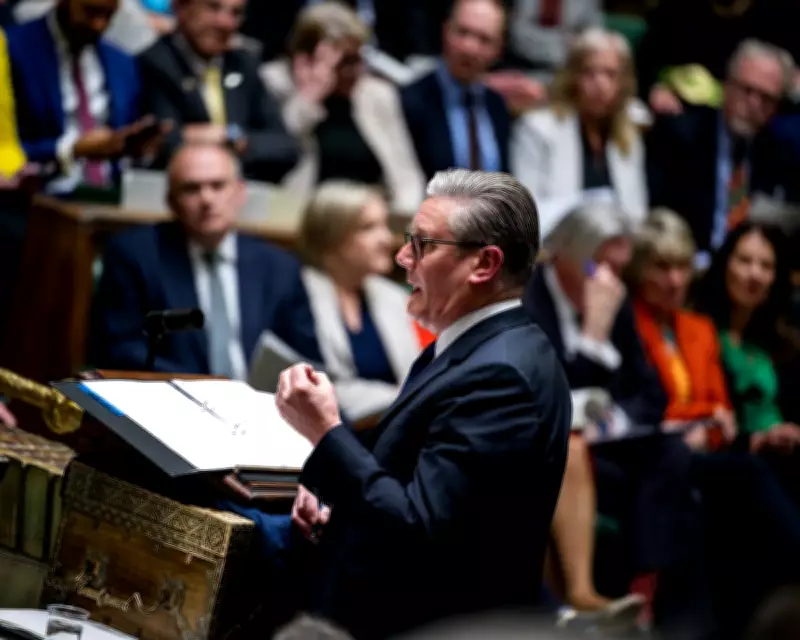
Starmer's Commons Statement: A Legalistic Timeline on Mandelson Vetting Failure
In a statement delivered to the House of Commons, Prime Minister Keir Starmer meticulously outlined the events leading to Peter Mandelson being refused security vetting for an ambassadorial role, framing his account almost as a prosecution opening case against the Foreign Office. The Prime Minister insisted he had not misled MPs, while revealing key details about the timeline and decisions made by officials.
Full Chronology of Events from December 2024 to Present
Starmer, leveraging his background as a lawyer, set out a comprehensive timeline starting from 18 December 2024, when the decision to appoint Mandelson was confirmed, through to last Tuesday, when he learned of the initial vetting refusal. He highlighted critical moments when information should have been shared, including the initial refusal by UK Security Vetting (UKSV), assurances given to the foreign affairs select committee, and the launch of a wider vetting review this year. The statement heavily implicated the Foreign Office and its former head civil servant, Olly Robbins, who was ousted last Thursday.
Rapid Overruling of Vetting Concerns
On 28 January 2025, UKSV recommended denying developed vetting clearance to Mandelson, but by the following day, Foreign Office officials had overruled this decision. This swift action, taking a maximum of one day, has been interpreted by some as officials attempting to smooth over obstacles for a Downing Street-announced appointment, while others see it as an example of the Foreign Office's assertive judgment.

Policy Changes and Inquiry Announced
Starmer announced significant procedural changes: the Foreign Office's ability to overrule vetting decisions has been removed, and from now on, vetting must be completed before any appointment is announced. Additionally, an inquiry has been initiated to investigate potential security breaches during Mandelson's tenure, given the vetting issues.
Clarity on Decision-Makers and Accountability
While Starmer initially blamed the Foreign Office as an entity, he later made it explicit that Olly Robbins was responsible for withholding information. Robbins claimed he could not provide details to the Prime Minister due to restrictions, a point Starmer emphasized while noting Robbins's upcoming Commons committee testimony.
Denial of Misleading Parliament
Responding to accusations from Tory leader Kemi Badenoch and others, Starmer firmly denied misleading the Commons, stating, "No I did not mislead the House of Commons." He argued that any incorrect information was not his fault, though he acknowledged that MPs lacked full details, a serious matter given that deliberate misleading can be grounds for resignation.
Lack of Specifics on Vetting Refusal
Starmer admitted he does not know why vetting was refused, citing rules that restrict access to detailed, personal information from intense vetting processes. This aligns with protocols that limit knowledge to those with a need-to-know, even for a Prime Minister.
Assurances on No 10 Staff Knowledge
In an exchange with Conservative MP Louie French, Starmer definitively denied that any of his advisers, past or present, including Morgan McSweeney, were aware of the vetting issue before last Thursday. This exclusion applies to civil servants like Cat Little and Antonia Romeo, who learned in March, placing Starmer at risk if contradictory evidence emerges.