The United States Senate found itself in a frantic race against time on Friday, as lawmakers scrambled to broker a last-minute funding agreement to avert a partial government shutdown set to begin at midnight. The high-stakes negotiations were dramatically upended by the recent killings of two American citizens by federal immigration agents in Minneapolis, granting Senate Democrats unexpected leverage over former President Donald Trump's aggressive mass deportation agenda.
Deaths Prompt Democratic Stand Against DHS Funding
The fatal shootings of Alex Pretti and Renee Good, both US citizens caught in a surge of Immigration and Customs Enforcement (ICE) activity in Minneapolis, triggered an immediate and forceful response from Senate Democrats. They moved to block the passage of a crucial funding measure for the Department of Homeland Security (DHS), the parent agency of ICE. This action jeopardised a broader legislative package designed to fund numerous government departments through to September.
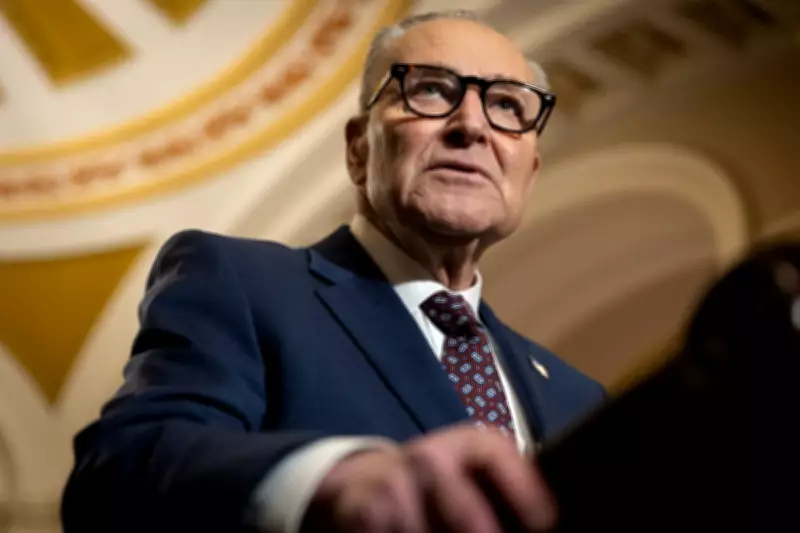
Senate Majority Leader Chuck Schumer seized the moment to outline a series of non-negotiable reforms he insisted must be codified into the DHS funding bill. His demands included mandating that federal immigration officers wear body cameras, adhere to a strict code of conduct, and cease wearing masks and conducting so-called "roving patrols" targeting individuals suspected of being in the country illegally.

"Basic Standards" for Law Enforcement
"These are not radical demands, they're basic standards the American people already expect from law enforcement," Schumer declared from the Senate floor on Friday morning. He expressed hope for swift Senate action to advance the critical work of imposing new constraints on ICE operations.
Behind the scenes, Schumer's office had announced a tentative deal with Republicans late on Thursday. The agreement proposed quickly passing five bipartisan spending bills to fund departments like Defense, Labor, and Health and Human Services. Funding for the contentious DHS would be addressed with a temporary two-week stopgap measure, creating a window for intense negotiations over the Democrats' demanded immigration enforcement reforms.
Weekend Shutdown Appears Inevitable
Despite this fragile Senate agreement, a partial government shutdown over the weekend now seems unavoidable. The package requires approval from the House of Representatives, which is currently out of session and not scheduled to reconvene until Monday. This procedural delay guarantees that several federal departments will begin closing their doors or curtailing services from midnight Friday.
Republican House Speaker Mike Johnson acknowledged the impending disruption, telling USA Today that the earliest possible floor action would be Monday, inevitably leading to a short-term shutdown situation. He affirmed the House's commitment to funding the government, aligning with the president's stated goal.
Republican Hurdles and Internal Divisions
The path to a Senate vote on Thursday evening was obstructed by Republican Senator Lindsey Graham, who reportedly held up the unanimous consent process. Graham demanded the removal of a provision that would revoke lawmakers' ability to sue the government if their phone records were obtained by the FBI during its investigation into Trump's 2020 election interference.
Should the Senate agreement ultimately hold, it presents a rare opportunity for Democrats to establish significant guardrails around Trump's deportation campaign. This initiative, launched immediately after his return to office a year ago, has deployed masked federal agents to major cities nationwide, resulting in hundreds of thousands of arrests and deportations. The campaign has also been marred by killings, detentions of US citizens, and widespread complaints from local leaders and advocacy groups regarding brutal tactics and rights violations.
Uncertain Fate in the Republican-Controlled House
Even if the spending deal clears the Senate, its reception in the Republican-controlled House remains highly uncertain. The chamber had previously passed both the DHS bill and the five other spending bills last week, with seven Democrats breaking ranks to help advance the latter despite calls to halt proceedings following Renee Good's killing.

Complicating matters further, several right-wing lawmakers are now demanding that any measures returning to the House be coupled with conservative priority legislation, such as the Save Act. This controversial bill would impose new voter identification requirements that critics argue would disenfranchise large segments of the American electorate.
Florida Congresswoman Anna Paulina Luna underscored this hardline position on Friday, declaring, "EVERY SINGLE APPROPRIATIONS BILL THAT IS VOTED OUT OF THE HOUSE MUST HAVE THE SAVE ACT ATTACHED."
Blame Game and Operational Realities
With Republicans holding a razor-thin one-seat majority in the House (218 to 213), internal GOP opposition could easily derail the spending measures. Democratic House Minority Leader Hakeem Jeffries issued a stark warning, stating that Republicans would bear full responsibility for any government shutdown caused by their internal factional fighting.
"The demands being made by far-right extremists in the House Republican conference are going nowhere, and if, for whatever reason, Speaker Johnson bends the knee to the far right, then Republicans are going to shut the government down," Jeffries asserted.
Critically, even a government shutdown is unlikely to halt ICE's deportation operations. The agency retains access to a $75 billion allocation from last year's One Big Beautiful Bill Act, and the Trump administration retains the authority to mandate that its employees continue working during a funding lapse. The standoff in Washington, therefore, centres not just on funding, but on the fundamental rules governing a deeply controversial federal enforcement campaign.