Laura Fernández Secures Costa Rican Presidency in Decisive Election Victory
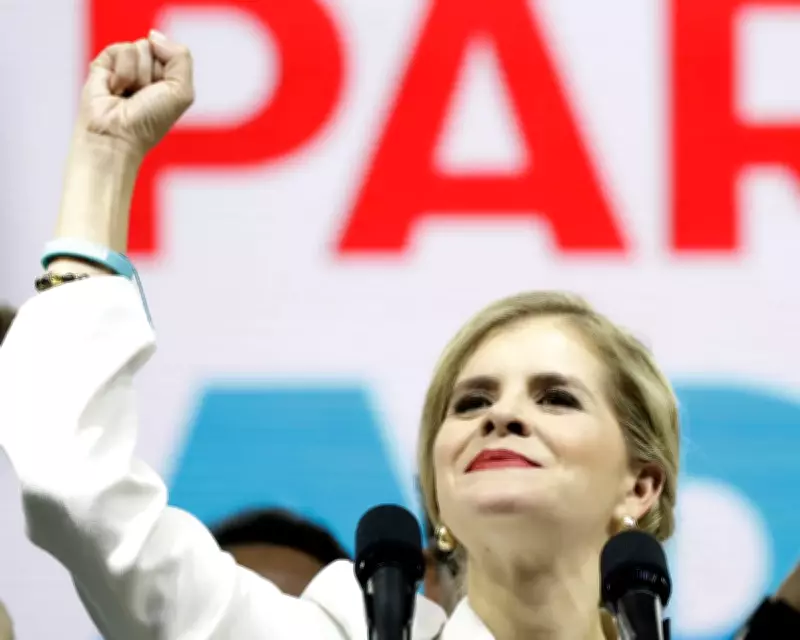
Laura Fernández, representing the Sovereign People (Pueblo Soberano) party, has triumphed in Costa Rica's presidential elections, securing a decisive victory that steers the nation further to the right. The rightwing populist candidate celebrated her win in San Jose on Sunday, after promising a robust crackdown on escalating violence linked to the cocaine trade.
Landslide Win Avoids Runoff
Fernández's nearest competitor, centre-right economist Álvaro Ramos, conceded defeat as official results demonstrated a clear mandate for the ruling party. With an impressive 94% of polling stations reporting, the Supreme Electoral Tribunal (TSE) confirmed that Fernández captured 48.3% of the vote, significantly surpassing the 40% threshold required to avoid a runoff. Ramos trailed with 33.4%, highlighting the substantial margin of victory.
Supporters of the Sovereign People's party erupted in jubilant celebrations across the country, waving Costa Rican flags adorned with blue, red, and white stripes. Chants of "Viva Rodrigo Chaves" echoed through the crowds, paying tribute to Fernández's mentor and the outgoing president.

Fernández Vows to Continue Chaves' Legacy
Appearing via video link at her party's election night gathering in San Jose, the 39-year-old president-elect expressed gratitude to Rodrigo Chaves for instilling confidence in her leadership. Fernández pledged to "fight tirelessly" to ensure Costa Rica maintains its trajectory of economic growth, freedom, and societal progress. She emphasised that Chaves' legacy would be preserved and enhanced under her administration.
Chaves, who plucked Fernández from relative obscurity to serve as planning minister and chief of staff, expressed confidence in her leadership during a conversation on Sunday night. He asserted that under Fernández's guidance, Costa Rica would avoid dictatorship and communism, reinforcing the government's commitment to democratic principles.
Tackling Rising Violence and Drug Trade
Costa Rica, renowned for its pristine white-sand beaches and longstanding reputation as a bastion of stability in Central America, has faced mounting challenges in recent years. The nation has evolved from a transit point to a logistics hub in the global drug trade, with Mexican and Colombian cartels infiltrating local communities. This infiltration has fuelled violent turf wars, causing the murder rate to surge by 50% over the past six years, reaching 17 per 100,000 inhabitants.
Fernández has cited Nayib Bukele, the iron-fisted president of El Salvador, as a key inspiration for her crime-fighting strategies. Bukele, who has detained thousands of suspected gang members without formal charges, was among the first foreign leaders to congratulate Fernández on her victory. Her proposed measures include completing a maximum-security prison modelled on Bukele's Terrorism Confinement Center (CECOT), stiffening prison sentences, and implementing state-of-emergency protocols in crime-ridden areas.
Regional Rightward Shift and Domestic Concerns
Fernández's election underscores a broader rightward trend in Latin America, where conservative leaders have capitalised on public frustration with corruption and crime to secure power in countries like Chile, Bolivia, Argentina, and Honduras. In Costa Rica, voters also elected members of the 57-seat Legislative Assembly on Sunday, shaping the political landscape for Fernández's tenure.
However, some detractors express apprehension that Fernández may attempt constitutional reforms to enable Chaves' return to the presidency after her four-year term concludes. The current constitution prohibits immediate re-election, requiring an eight-year hiatus. Former president Óscar Arias, a Nobel Peace Prize laureate, cautioned that the "survival of democracy" is at stake, warning against constitutional changes that could perpetuate power.
Fernández has consistently affirmed her dedication to upholding Costa Rica's democratic traditions, aiming to balance security measures with institutional integrity. As drug-related violence permeates informal settlements in cities like San Jose, her administration faces the dual challenge of restoring safety while preserving the nation's democratic foundations.