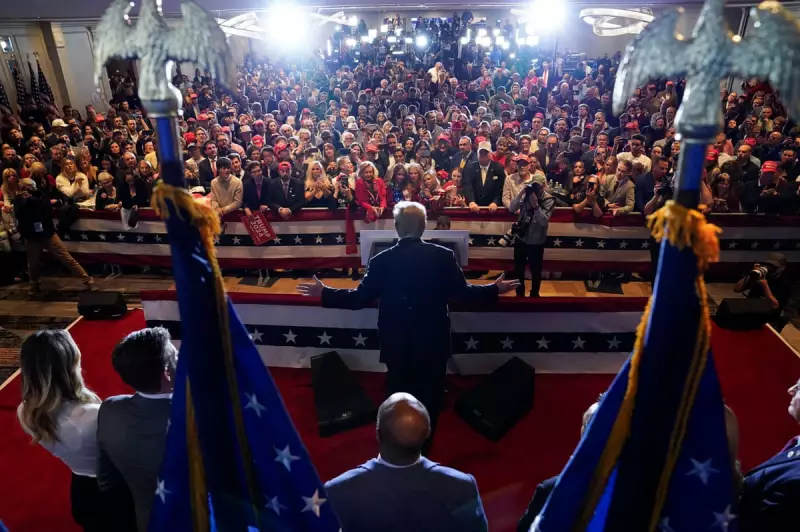
The political landscape facing Republicans has transformed dramatically following the 4 November elections, with party members now confronting an electoral reckoning for their unwavering loyalty to Donald Trump. As the president's popularity plummets, congressional Republicans find themselves positioned as the inevitable fall guys for policies they enabled but may ultimately destroy their political careers.
The Pyramid of Dread Collapses
Trump's image of political invincibility, built upon what analyst Sidney Blumenthal describes as a pyramid of dread, has crumbled within just ten months of his 2024 victory. The president who claimed an unprecedented mandate now faces repudiation from voters across multiple demographic groups, with Republicans bearing the consequences.
The mechanism maintaining Republican obedience—fear of primary challenges from Trump-backed opponents—has created a devastating political trap. While members maintained lockstep loyalty to avoid presidential wrath, they've simultaneously severed their connection with constituents increasingly furious about Trump's policies and behaviour.
Electoral Evidence Points to Disaster
The 4 November elections provided stark evidence of Republican vulnerability. Key indicators suggest catastrophic losses in the upcoming 2026 midterms:
Republican turnout cratered while Democratic enthusiasm surged. In the New Jersey gubernatorial contest, Republican vote counts declined 42% compared to Trump's 2024 totals. Virginia saw even more dramatic drops, with Republican votes falling by nearly 45% while Democratic votes decreased by only 22%.
Polling significantly underestimated Democratic margins. Virginia's Abigail Spanberger won by 15 points despite polls suggesting a narrow 2.5-point lead or dead heat. New Jersey's Mikie Sherrill achieved a 13-point victory where polls indicated a much closer race.
Democratic performance exceeded 2024 results across diverse regions. Sherrill won all 21 New Jersey counties, including overwhelming victories in Hispanic-majority cities like Union City and Perth Amboy. Spanberger outperformed Kamala Harris in more than 95% of Virginia's counties and independent cities.
The Fall Guy Pattern Established
Trump's history of manoeuvring subordinates into taking responsibility for his actions provides ominous precedent for Republican politicians. Michael Cohen's testimony about hush money payments to Stormy Daniels illustrates the pattern: I should take responsibility for his dirty deeds, Cohen lamented after serving prison time for crimes committed at Trump's direction.
Cohen's warning that the more people that follow Mr. Trump as I did blindly are going to suffer the same consequences now applies collectively to Republican lawmakers. Their abject obedience has made them Trump's sycophants rather than public servants, leaving them exposed to voter wrath while the president remains insulated.
Recent polling underscores the danger. The Marist-NPR poll showed Democrats with a 14-point advantage, while Marquette University polling indicated an 11-point lead among likely voters. Historical patterns suggest such margins could translate to approximately 60 House seats and likely Senate control for Democrats.
Structural Disadvantages Compound Problems
Several factors ensure Republican difficulties will persist through the 2026 midterms:
Trump's economic policies, particularly draconian tariffs contributing to inflation and unemployment, create conditions unlikely to improve significantly before election day. The poisonous combination of stagflation persists despite court challenges to Trump's emergency authority claims.
The president's absence from the ballot eliminates his attraction to low-propensity voters who previously backed him. These voters have mostly evaporated, as 2025 election results demonstrated.
Trump's deepening unpopularity—worse than any recent president except George W. Bush during the financial collapse—creates powerful turnout motivation among opponents. Current polling shows 81% of Democrats and 60% of independents strongly disapprove of Trump, while only 68% of Republicans strongly approve.
Trump's immutable personality ensures continued problems. His refusal to acknowledge the 4 November repudiation, explosive rage toward critics, and demands for absolute fealty guarantee ongoing alienation of moderate voters.
The Republican predicament appears inescapable. Having allowed Trump to avoid accountability, they now face merciless voter judgment in his stead. As Blumenthal observes, Trump is the cause for which they will suffer the effect. The butcher's bill comes due in 2026, and congressional Republicans alone will pay it.