
Reform UK's Political Surge in Scotland Challenges Progressive Narrative
On a Monday evening in Aberdeen, George Preston stands out in his union flag suit, leafleting for Reform UK at a rally that symbolizes the party's growing influence in Scotland. Having joined the party in 2024 as it gained its first councillor defections from the Scottish Conservatives in the north-east, Preston now represents a movement that polls suggest is competing with Scottish Labour to become the official opposition to the Scottish National Party in the upcoming Holyrood elections on 7 May.
"Very, very few have said: 'Have this back,'" Preston remarks about his leafleting efforts. "Far more are supportive. I think Reform have found a following that was already here." This observation captures both local political dynamics and the broader national mood shift in Scotland.
Traditional Tory Strongholds and Beyond
The north-east of Scotland, historically a battleground between the Tories and SNP with higher-than-average Brexit support, has seen a collapse in Scottish Conservative support, creating a vacuum that Reform UK has rapidly filled. However, the party's appeal extends beyond these traditional Tory areas. Reform is expected to make significant gains in the post-industrial villages and towns of the central belt and in pockets around Glasgow, challenging Scotland's reputation as a progressive outlier.
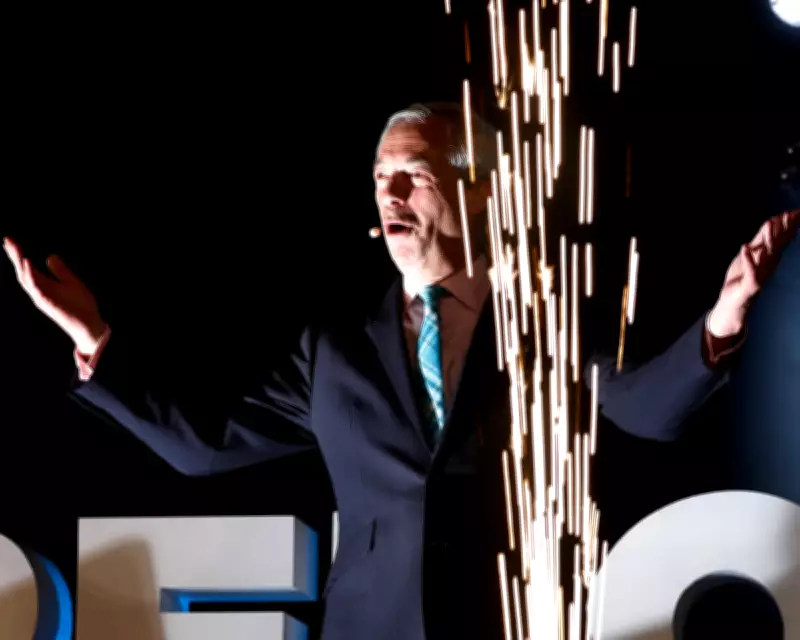
At the Aberdeen rally, Reform's Scottish leader, millionaire financier Malcolm Offord, addressed the audience with claims about asylum seekers pushing local families to the back of housing queues and cited a central belt GP's report of HIV-positive migrants receiving treatments costing £11,000 annually. "It's not racism to say that is not fair," Offord asserted, framing immigration concerns in economic terms.
Allegations of Racism and Community Response
Despite such rhetoric, several Reform candidates have faced allegations of blatant racism. One candidate withdrew after social media posts surfaced describing former First Minister Humza Yousaf as an "Islamist moron," while another remains standing in Dumfries despite expressing support for Tommy Robinson and the deportation of Muslims.
Earlier on the day of the rally, anti-racism activists across Aberdeenshire shared details of antisemitic and racist literature discovered in a city centre park. This incident is not isolated, as the area has seen repeated anti-immigration demonstrations outside asylum hotels and previous distribution of material using racial slurs or promoting neo-Nazi ideology.
Omowunmi Ola-Edagbami, a Nigerian woman who moved to Aberdeen as a student in 2022, first encountered racist material at a bus stop two years ago and removed it immediately. Seeing recent material shared on social media, she expressed horror: "I have two children and I imagined how they would feel seeing them and if they'd feel safe walking around the city."
Unity Marches and Shifting Perceptions
In response, hundreds attended a unity march through Aberdeen to advocate for "a different kind of city: one that welcomes refugees and rejects hate." This event is part of a series organized by Scotland's active anti-racism movement ahead of the elections.
Ola-Edagbami, who founded Black Scottish Stories to share experiences of black people in Scotland, notes that while she has found Scotland welcoming, "Welcoming is not the same as fully understanding or including, and that's the gap where many immigrant stories live." She observes a shift in recent years: "In both my personal experience and the stories I've documented there is a sense that racism is more visible. But it's not as simple as whether Scotland is welcoming or not, or if racism is worse or not; the difference is in its visibility and that some people feel more confident in saying these things out loud."
Polling and Political Capitalization
This change in public sentiment is reflected in polling, which shows Scottish voters becoming increasingly concerned about immigration. Reform has capitalized on tensions around asylum housing, particularly in Glasgow. Last December, Nigel Farage drew condemnation from other Scottish political leaders for using a contested statistic that one in three Glasgow schoolchildren do not speak English as a first language, which he claimed amounted to the "cultural smashing" of the city.
Glasgow City Council clarified that 27.8% of pupils are bilingual learners with an English Language Level score, with the vast majority demonstrating good conversational fluency to advanced English proficiency.
Far-Right Appropriation and National Symbols
Far-right organizers have been identified at protests outside asylum hotels, met with vociferous counter-demonstrations. In a parallel to England's Operation Raise the Colours movement, last summer saw the Scottish saltire appropriated for anti-immigration activism, shocking politicians—particularly Scottish nationalists who associate the flag with pro-independence marches.
When Scotland avoided the wave of anti-immigration rioting following the Southport killings in 2024, Scottish people of color warned against complacency. Equalities campaigner Talat Yaqoob recalls: "The troubling thing about that was aggressive rallies outside asylum hotels had already happened in Scotland before that incident in Southport. There was some shock among political parties and civic society at the growth of Reform, but grassroots activists, like in Women Against the Far Right Scotland, would have been able to tell you there is an increasing level of division and bigotry being spread within our communities."
Superficial Narratives and Honest Conversations
Yaqoob identifies a "long-term narrative-building about the country welcoming refugees and diversity being our strength," tracing it back to the constitutional debate where independence was pitched as Scotland being better than the rest of the UK on equality issues. "But what has been clear for a number of years is that, really, that narrative is superficial," she says. "Scotland is not immune from the systemic and historic realities that play out across the UK and the world."
This hinders honest conversations about prejudice: "There is the illusion that Scotland is a much more progressive nation than we are in reality and that has consequences. Communities need to talk in realistic terms about their experiences without feeling like they are doing the nation wrong by simply being honest about what needs to change."
Academic Perspective on Scottish Values
Ailsa Henderson, a professor of political science at the University of Edinburgh and principal investigator for the Scottish Election Study, notes that Scots' attitudes aren't markedly different from those elsewhere in the UK: "If we map baseline attitudes to a range of core issues, like the EU or left-right attitudes, this reveals very little difference between Scotland, England and Wales."
However, she adds that perception matters: "Although we don't have consistent evidence that our values are different, my word, do we believe that our values are different. We also believe that they are to the left of the rest of the UK, even though they are not." This perception influences how voters view political positions, with right-aligned politics often portrayed as anti-Scottish.
This creates scope for Reform UK to capture right-of-centre votes in Scotland. Henderson explains: "There is a sizeable portion of the Scottish electorate that is on the right and the centre-right, who have different attitudes to immigration, tax, Brexit. There was always scope for that to be captured by a party that was not tarnished, with the image of Thatcher in particular, and that had not campaigned against independence in 2014."




