Reeves Defends Labour's Economic Agenda Amid Downgraded Growth Forecasts
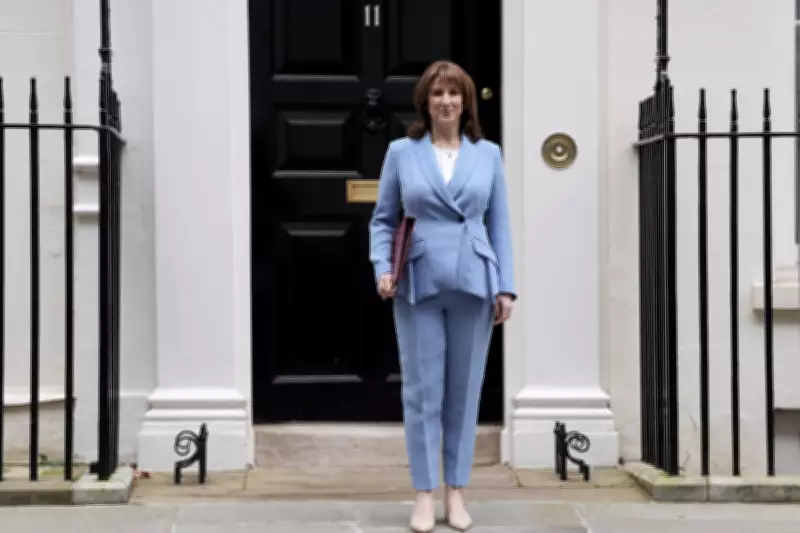
Chancellor Rachel Reeves has staunchly defended Labour's high tax and expenditure policies during the Spring Statement, even as new economic forecasts paint a bleaker picture for growth and unemployment throughout the current year. Addressing the House of Commons, Reeves asserted that updated projections from the Office for Budget Responsibility indicate her fiscal decisions are "starting to pay off."
Economic Forecasts Show Slower Growth and Rising Unemployment
Despite the Chancellor's confident tone, the UK economy is now projected to expand at a more sluggish pace than previously anticipated. The OBR has revised its growth forecast downward to 1.1 percent for this year, a significant reduction from the earlier prediction of 1.4 percent. Concurrently, unemployment is expected to peak later in the year, with the current rate holding at 5.2 percent before gradually declining to 4.1 percent by the conclusion of the parliamentary term.
In a more optimistic development, the OBR has slightly upgraded its growth forecasts for 2027 and 2028. Additionally, inflation is projected to decrease at a faster rate this year than initially outlined in the November Budget. Reeves also disclosed that adjustments in government borrowing calculations have increased the available fiscal headroom from £21.7 billion to £23.6 billion.

Political Criticism and Economic Challenges
Shadow Chancellor Mel Stride launched a sharp critique, accusing Reeves of being "in denial" about the economic realities. The Labour Party faces mounting pressure to recalibrate its economic strategy amid growing voter dissatisfaction with governmental actions. Reeves remains central to the government's aspirations for an economic turnaround, with recent polling indicating a modest improvement in her approval ratings during February.
However, the only political figure scoring lower than Reeves' approval rating of -38 is Prime Minister Keir Starmer at -42. Officials are particularly concerned about widespread pessimism among voters regarding the UK's economic prospects. Polling data reveals that half of respondents anticipate a worsening economic outlook over the next twelve months, while 39 percent expect their household finances to deteriorate further.
Geopolitical Tensions and Energy Price Concerns
Reeves delivered her stability-focused message against the volatile backdrop of escalating conflicts in Iran and the Middle East. The Chancellor announced plans to meet with energy executives in the North Sea on Wednesday to address these pressing issues. Former Chancellor Jeremy Hunt issued a stern warning to the government regarding its stance on Middle Eastern conflicts, particularly the refusal to permit US utilization of UK military bases for operations against Iran.
Hunt cautioned that the UK economy would likely suffer more severe consequences from Middle Eastern turmoil than the US economy, primarily due to dependencies on vulnerable supply chains, especially in the energy sector. He projected that a 20 percent surge in oil and gas prices could potentially add one percentage point to inflation and reduce growth by 0.5 percentage points.
"For the UK, I think we've really got the worst of all worlds," Hunt stated emphatically. "On one hand, America questions our loyalty, which significantly impacts their support in critical areas like Ukraine where we desperately need them. Simultaneously, we will endure far greater economic damage from rising oil and gas prices than the American economy."
Market Reactions and Energy Price Volatility
The Brent Crude Oil price has already surged by over five percent to $81 per barrel, while natural gas prices have skyrocketed by more than 90 percent. This dramatic increase follows QatarEnergy's decision to halt liquefied natural gas production due to regional conflicts, further exacerbating energy market instability.
Strategic Omissions and Future Implications
Reeves deliberately crafted the Spring Statement as an uneventful presentation, avoiding new policy announcements to bolster business confidence and alleviate governmental tensions. Notably absent were detailed discussions on defense spending increases, the economic impact of higher minimum wages, and student loan repayment challenges.

Some financial analysts suggest that critical issues including public sector debt approaching 100 percent of GDP, rising youth unemployment, and military modernization commitments have been strategically deferred. This postponement could elevate the stakes for the upcoming Budget, particularly as stronger economic headwinds threaten to derail government plans.
Economists from Montfort and Mizuho have raised concerns that certain OBR forecasts risk becoming "obsolete" and "irrelevant" given the severe disruptions to Middle Eastern trading routes. The economic landscape may deteriorate further as the effects of elevated energy prices permeate the UK economy in coming months.
Reeves concluded her address with a firm declaration of her economic philosophy: "I know that an economy cannot be working if it is delivering only for a few people, in a few places. I believe that the working people who keep our country moving deserve a fair day's pay for an honest day's work. Borrowing is down, living standards are up, and the economy is growing."
Methodological note: Freshwater Strategy conducted online interviews with 1,221 eligible UK voters aged 18 and above between February 27 and March 1, 2026. The margin of error is +/- 2.8 percent. Data has been weighted to accurately represent the UK voting population. Freshwater Strategy maintains membership in the British Polling Council and strictly adheres to its regulations.