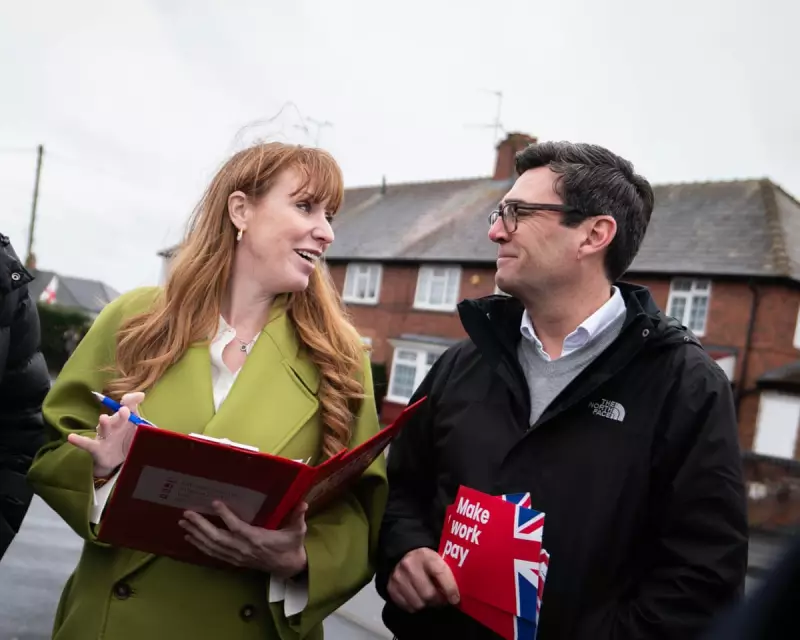
Labour's Leadership Vacuum Sparks Renewed Rayner Speculation
The abrupt termination of Andy Burnham's anticipated return to Westminster has created a political vacuum within the Labour Party, inevitably redirecting attention toward other potential successors to Keir Starmer. This development has particularly intensified scrutiny of Angela Rayner, the former deputy leader and housing secretary who has maintained a quiet but persistent presence since her ministerial resignation nearly five months ago.
The Rayner Resurgence: Policy Influence and Political Positioning
Despite stepping back from frontline government duties, Rayner has strategically resurfaced on key policy matters she considers part of her political legacy. She has been actively holding ministers accountable on workers' rights legislation and played a significant role in lobbying for the recently announced leasehold system reforms. This calculated engagement demonstrates her continued influence within Labour's policy framework while maintaining distance from the cabinet table.
Senior Downing Street sources confirm that Rayner and Starmer remain in regular contact and maintain cordial relations, with both recognising their effectiveness as a political partnership. However, some residual mistrust persists on Rayner's side regarding certain individuals within the Prime Minister's inner circle, creating subtle tensions beneath the surface of their working relationship.

Obstacles to Immediate Return: Vacancies and Investigations
Rayner's path back to cabinet faces two significant hurdles. The most immediate barrier is the absence of suitable ministerial vacancies following Starmer's comprehensive reshuffle after her departure. The earliest potential opportunity for her return appears to be after May's Scottish, Welsh, and local English elections, creating an extended waiting period.
More critically, an ongoing HMRC investigation into Rayner's tax underpayment concerning a flat in Hove continues to cast uncertainty over her political future. While none of the potential outcomes – whether a fine, reprimand, or no action – are expected to permanently block her return, the unresolved investigation creates frustration within her team and delays any definitive career moves.
Leadership Ambitions: Beyond the Deputy Role
Allies close to Rayner reveal that while she has no current plans to openly challenge Starmer's leadership, she would definitely compete for the top position if circumstances changed. There is particular frustration within her circle about repeated media narratives casting her as the deputy or left-leaning ideological counterweight in potential leadership bids by male colleagues.
"Angela says she took the scars for Jeremy Corbyn, she took the scars for Keir Starmer, and so the next time she takes the scars it will be for herself," one senior Labour figure commented, highlighting Rayner's determination to pursue leadership on her own terms rather than supporting another candidate's campaign.
Strategic Considerations and Potential Challenges
Rayner recognises her potentially divisive nature among some voter demographics and understands that any leadership bid would require careful team-building. Her vision includes appointing a steady, understated chancellor – potentially someone like John Healey or Pat McFadden – to balance her more outspoken political style.
With her primary legislative priorities progressing through parliament, Rayner is reportedly contemplating broader policy directions for Labour, acknowledging that meaningful change would require both new leadership and substantive policy shifts rather than merely personnel changes at the top.
Personal Factors and Internal Party Dynamics
An unexpected complication in Rayner's potential leadership candidacy involves her partner, Sam Tarry, a former Labour MP who was deselected before the last election in circumstances he considers deeply unfair. Some political observers worry that Rayner might face association with these bitter internal party divisions, though her team emphasises her right to privacy regarding both her relationship and family life.

In terms of potential support within the party, Rayner would likely seek backing from the recently revitalised soft-left Tribune caucus, particularly among female MPs. However, the true extent of her support base remains uncertain, and any path to leadership appears complex and unpredictable.
What seems increasingly clear is that if any Labour figure – such as Wes Streeting – hoped to engineer a smooth leadership transition, they would instead face significant opposition and a potentially contentious contest, with Rayner positioned as a formidable contender in any future leadership battle.