
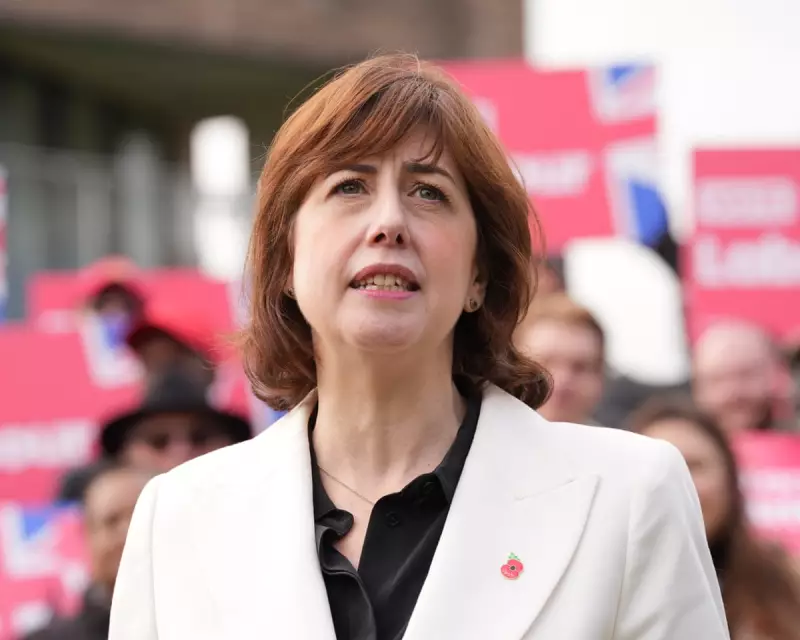
Lucy Powell, the newly elected deputy leader of the Labour Party, has issued a firm call for her own government to stand by its core manifesto commitment and resist raising key taxes, while simultaneously demanding the urgent removal of the controversial two-child benefit cap.
Standing by Manifesto Promises
In a significant intervention, Powell emphasised the critical importance of the government adhering to the promises upon which it was elected. She explicitly referenced the manifesto commitment not to increase income tax, national insurance, or VAT, a pledge that senior figures like Chancellor Rachel Reeves and Prime Minister Keir Starmer have recently been hesitant to reaffirm.
Speaking to BBC Radio 5 Live, Powell stated, "It's really important we stand by the promises we were elected on and do what we said we would do." She left no room for ambiguity, adding, "We should be following through on our manifesto, of course. There's no question about that."
Urgent Call to Lift Two-Child Cap
Beyond the tax debate, Powell turned her attention to social policy, making a passionate case for the immediate abolition of the two-child limit on benefits. She framed this not just as a policy adjustment, but as a moral imperative to combat child poverty.
Powell revealed that every year the policy remains in place, a minimum of 40,000 additional children are pushed into deep poverty. This stark statistic underpinned her demand for swift and complete action. "That's why it is urgent that we do lift it and we lift it in full," she asserted, signalling that a partial solution would be insufficient.
Political Pressure and Financial Realities
Powell's comments are poised to create considerable discomfort within the highest levels of the Labour government. Her unequivocal stance on the tax pledge comes as the Treasury, led by Rachel Reeves, is actively examining options to fill a £30 billion hole in the public finances.
One option under consideration is a potential rise in income tax, a move that would directly contradict the manifesto Powell is urging her colleagues to uphold. Her position reinforces the internal tension between fiscal responsibility and electoral promises, all while the government seeks to build a financial buffer against potential future economic shocks.
Elected as deputy leader just last month, following her departure from Keir Starmer's cabinet in a reshuffle, Powell's voice carries significant weight. Her public statements highlight the ongoing debates shaping Labour's economic policy and social justice agenda in the early days of its administration.




