
Disturbing new evidence has emerged revealing significant police failures in the lead-up to the horrific murders of Hannah Clarke and her three children, casting serious doubt on official findings that nothing more could have been done to prevent their deaths.
Critical Mistakes in Final Weeks
A two-year Guardian investigation has uncovered police lapses during the critical final weeks of Clarke's life as she sought to escape her abusive estranged husband, Rowan Baxter. The new evidence shows failures to properly investigate or document Clarke's allegations of non-lethal strangulation, stalking, phone hacking, rape and suspected child abuse.
On Boxing Day 2019, witnesses saw Baxter bundle his daughter Laianah into a car, her head banging against the door as he drove off while shouting at Clarke: "You have caused all of this, it's your fault." Just eight weeks later, Baxter filled a jerry can with petrol, poured it into the family car and set it alight, killing their three children - Aaliyah, six, Laianah, four, and Trey, three - instantly. Clarke died in hospital from her injuries, while Baxter took his own life soon afterwards.
Police Coaching of Perpetrator
Recently released body-worn camera footage from 29 December 2019 shows police officers arriving at Baxter's property to serve him with a protection notice requiring him to return four-year-old Laianah to her mother. The footage reveals officers instructing Baxter on how he might challenge the police protection order in court.
One officer advised him: "Talk to your friends about, you know, someone who might be willing to provide a reference about you or something like that." Another interjected: "To say you are a good dad and don't need any conditions." The body-worn camera was then switched off - in an apparent breach of protocol - as police continued speaking to him.
Former police sergeant Kate Pausina, who reviewed the footage, expressed shock at the officers' behaviour: "In all my years policing I've never seen officers coach an offender who was accused of stealing. Why would you do it in the case of domestic violence?"
Unrecorded Allegations and Missed Opportunities
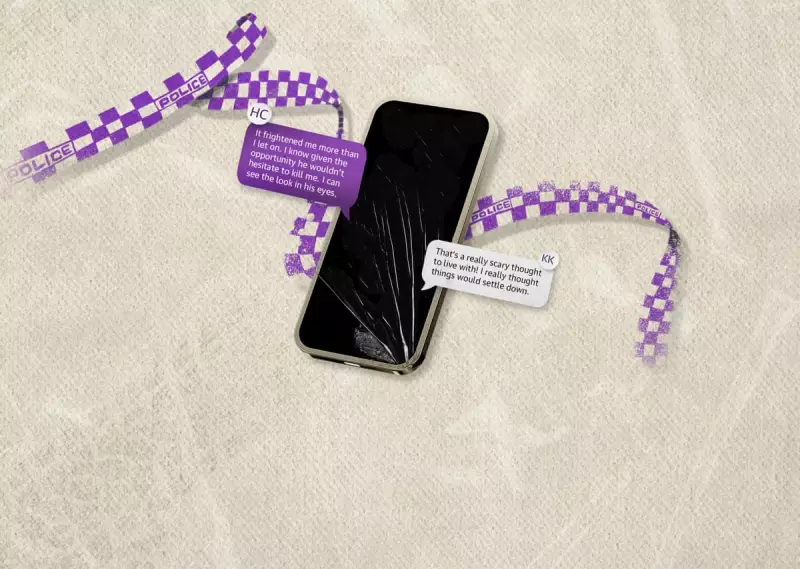
The coroner also released more than 200 pages of text messages between Clarke and specialist domestic violence police officer Kirsten Kent, who developed a friendship with Clarke. While the coroner praised Kent in her 2022 findings, the text conversations reveal Clarke disclosed serious concerns that weren't properly recorded or investigated.
Clarke reported believing Baxter was stalking her and questioned how he knew about her movements and private conversations. She shared concerns about Baxter repeatedly appearing at her regular coffee shop and "lingering" nearby. These disclosures weren't recorded in the police QPrime data system, meaning other officers wouldn't have been aware of the escalating risk.
On 30 January 2020, Baxter assaulted Clarke in the driveway of her parents' home when she tried to retrieve intimate photographs he had printed out "for court." Police initially charged him with assault occasioning bodily harm but later downgraded the charge to common assault - a decision the coroner described as a "missed opportunity" that meant Baxter received a notice to appear in court rather than being taken into custody.
In the assault's aftermath, Clarke disclosed that Baxter had previously placed her in a jujitsu hold - an allegation of non-lethal strangulation, which is a criminal offence in Queensland. Research shows the risk of intimate-partner homicide is seven times greater in cases where non-lethal strangulation has occurred.
Systemic Failures and Unanswered Questions
A whistleblower from within the coronial system raised concerns with Queensland's Crime and Corruption Commission about police failures and potential conflicts of interest in the homicide investigation. The complaint alleges that critical evidence of "wrongdoing, errors, incompetence and embarrassing failures" was overlooked.
The Queensland police service has never conducted an internal investigation or review into its handling of the case. Instead, after Clarke and her children were murdered, detectives questioned whether she had fabricated her claims of domestic violence against the man who killed her.
Deputy commissioner Cameron Harsley told Guardian Australia that police "always believe the victim" and were "trying to do the best they could" in Clarke's case. However, he acknowledged that "even if you have a perfect police response, we're not going to stop homicide, domestic homicide."
Former sergeant Pausina offered a different perspective: "I believe as police officers we should view every domestic and family violence homicide as preventable." She added that in Clarke's case, "absolutely" more could have been done to protect her and her children.
The night before she was murdered, Clarke sent a final text to officer Kent, expressing concerns about Baxter's demeanour. By the time Kent saw the message the next morning, the three children were dead and Hannah was dying from her injuries.




