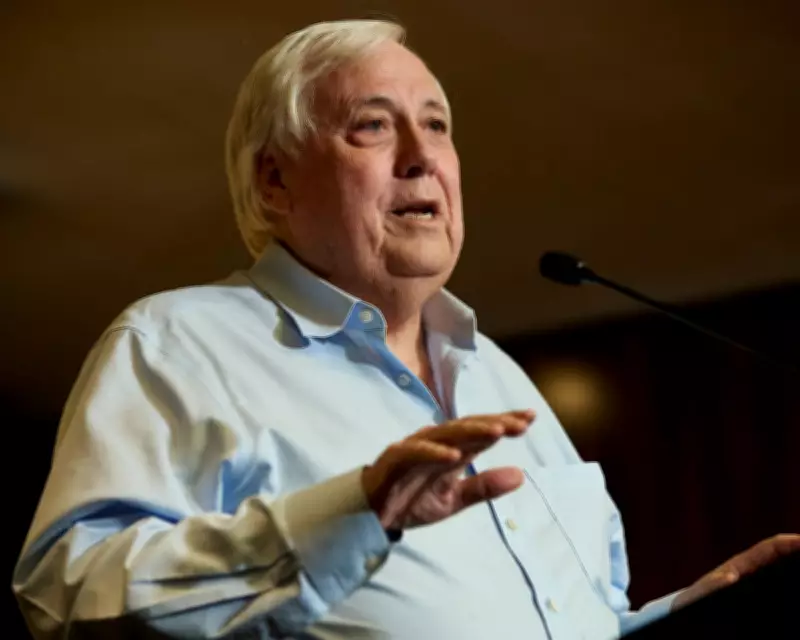
A spokesperson for Australian mining magnate Clive Palmer has vehemently denied claims made by far-right political strategist Steve Bannon regarding Palmer's involvement in the 2019 federal election advertising campaign. The allegations surfaced in recently released documents connected to the Jeffrey Epstein case, sparking controversy and immediate rebuttal from Palmer's camp.
Bannon's Controversial Text Message Claims
The disputed claims originate from text messages among a tranche of documents released by the US Department of Justice in connection with convicted sex offender Jeffrey Epstein. In these messages, which purport to be between Bannon and an unidentified individual believed to be Epstein, Bannon states: "I had Clive Palmer do the $60 million anti china and climate change ads." This message was sent just two days after the 2019 Australian federal election concluded.
Bannon, a prominent Donald Trump loyalist who managed Trump's 2016 presidential campaign and has been associated with spreading misinformation, made this assertion in the context of discussing the unexpected election outcome. The conversation touches on the failure of published polls to predict the result, with the account linked to Epstein comparing the Australian election to "your last go round."

Palmer's Camp Issues Forceful Denial
Andrew Crook, Palmer's media spokesperson, responded to these allegations with strong language, dismissing them as "bullshit" and stating unequivocally: "This is made up." The denial came via text message on Sunday, highlighting the immediate and categorical rejection of Bannon's claims by Palmer's representatives.
Palmer's United Australia party executed an unprecedented advertising blitz during the 2019 election, spending approximately $60 million on campaigns that focused heavily on anti-China rhetoric and climate change skepticism. The strategy marked a significant shift in Australian political advertising, contributing to what many analysts described as a rise in online misinformation during that election cycle.
Context of the 2019 Election Campaign
The 2019 federal election was notable for several reasons, including Palmer's substantial advertising expenditure and the unexpected victory of Scott Morrison's Coalition government despite consistent polling indicating a Labor win. On election night, Palmer himself acknowledged that he had pivoted his strategy in the final weeks of the campaign "to polarise the electorate" and undermine Labor's chances of success.
During the campaign, Palmer ran a particularly controversial two-minute advertisement that accused "communist China" of attempting "a clandestine takeover of our country." This advertisement, along with others targeting then-Labor leader Bill Shorten as "Shifty Shorten," formed part of what Labor's subsequent election review described as having "a significant negative effect on Bill Shorten's popularity and on Labor's primary vote."
Bannon's Previous Comments on Australian Politics
Interestingly, Bannon had previously commented on the Australian election campaign in an interview with the Sydney Morning Herald approximately one week before Palmer shifted his advertising focus. In that interview, Bannon described the campaign as "dull" and expressed surprise at the lack of discussion about China, stating: "There should be a really intense debate about this. They are trying to hold the election on national security, and it should be tied to China."
Bannon further criticised what he called "insurgent parties" for not generating sufficient intensity in the debate, comments that now take on additional significance in light of his text message claims about directing Palmer's advertising strategy.
Documentation and Verification Challenges
The text messages revealing Bannon's claims exist in two versions within the released documents. One version shows Bannon conversing with a person whose identity has been redacted, while a separate file containing the same conversation appears to show the other participant as an email account linked to Jeffrey Epstein. This documentation raises questions about verification and context, particularly given Epstein's criminal background and the complex nature of the released materials.

It's important to note that Bannon's claims remain untested and unverified, existing solely within these text message exchanges. No independent evidence has emerged to substantiate his assertion of directing Palmer's advertising strategy, and Palmer's representatives have categorically denied any such involvement.
Impact and Legacy of the 2019 Advertising Blitz
Labor's official election review provided detailed analysis of Palmer's advertising impact, noting that following a preference deal with the Coalition, Palmer "dovetailed his $70 million advertising spend with the Liberal Party's in the final two weeks of the campaign." The review highlighted how Palmer's advertising "strongly amplified the Coalition's anti-Labor message to economically insecure, low-income voters" and described focus group participants using "the most derogatory terms" about Palmer, though his attacks nevertheless damaged Shorten's leadership standing.
The controversy surrounding Bannon's claims adds another layer to the ongoing analysis of the 2019 election, particularly regarding the role of substantial private funding in political campaigns and the influence of international political operatives on domestic elections. As of now, Bannon has not provided additional comment or clarification regarding his text message claims, leaving the allegations firmly in the realm of unverified assertions met with firm denial.