
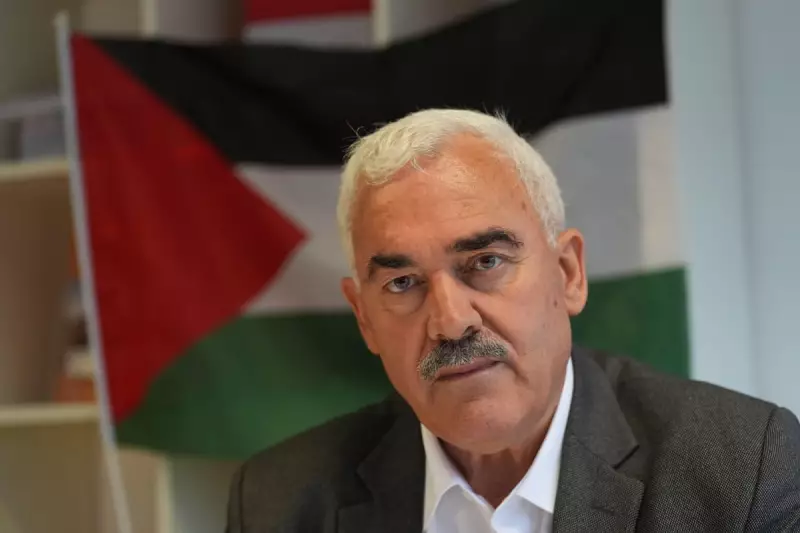
The Trump administration's sanctions against Palestinian human rights organisation Al-Haq have created a devastating impact on its operations, with staff working without pay and international partners distancing themselves from the West Bank-based group.
Financial Strangulation and Isolation
Since the sanctions were imposed in September, Al-Haq's world has dramatically shrunk. The organisation has lost access to its bank accounts after three financial institutions closed them in October, leaving approximately 45 staff members working without salaries.
Shawan Jabarin, Al-Haq's general director, expressed profound disappointment at the silence from US-based human rights and social justice organisations that previously collaborated with them. "I feel a deep, deep pain in my heart," Jabarin told the Guardian. "Most of them – if not all – they stopped working with us or engaging with us formally and openly."
The sanctions have triggered a domino effect across the organisation's operations. American funders have withdrawn financial support, US staff were forced to resign, and major tech platforms including YouTube have removed hundreds of the group's videos documenting human rights abuses by Israeli forces.
Political Context and Wider Campaign
The Trump administration justified the sanctions by citing Al-Haq's support for the International Criminal Court's investigation into Israeli crimes in Palestine. US Secretary of State Marco Rubio stated that the United States would "continue to respond with significant and tangible consequences to protect our troops, our sovereignty, and our allies from the ICC's disregard for sovereignty."
This move forms part of a broader campaign against civil society groups, with particular focus on organisations advocating for Palestinian rights. The administration has also targeted the Open Society Foundations founded by George Soros and detained foreign nationals for pro-Palestinian speech.
Jabarin dismissed the sanctions as a "political attack" designed to silence voices calling for accountability. "They want to silence any voice calling for accountability, calling for ending the culture of impunity, anyone speaking about the rights of Palestinians and justice for Palestine," he stated.
Consequences for Global Civil Society
The chilling effect extends far beyond Al-Haq's immediate operations. US-based non-profits that previously collaborated with the Palestinian organisation now fear engaging with them could expose them to significant legal risks, including potential criminal enforcement and loss of tax-exempt status.
Leena Barakat, co-founder of the Block and Build Funder Coalition, described the position of US-based groups supporting sanctioned Palestinian organisations as "devastating." While there's strong desire to fight back, organisations are carefully considering "what is the best and the most strategic fight."
Al-Haq has documented human rights abuses in Palestine for half a century and played a crucial role in supporting the ICC's investigation. In 2021, Israel designated Al-Haq and five other Palestinian rights groups as "terrorist organisations," though subsequent reporting revealed Israel lacked concrete evidence to support these designations.
Despite the immense pressure, Jabarin remains defiant. "We will continue doing our work, we will continue fighting for justice and for human rights and we will continue going after the criminals and holding the criminals accountable." He emphasised that Palestine represents a critical test for global conscience in the struggle between "the rule of the jungle and the rule of law."




