
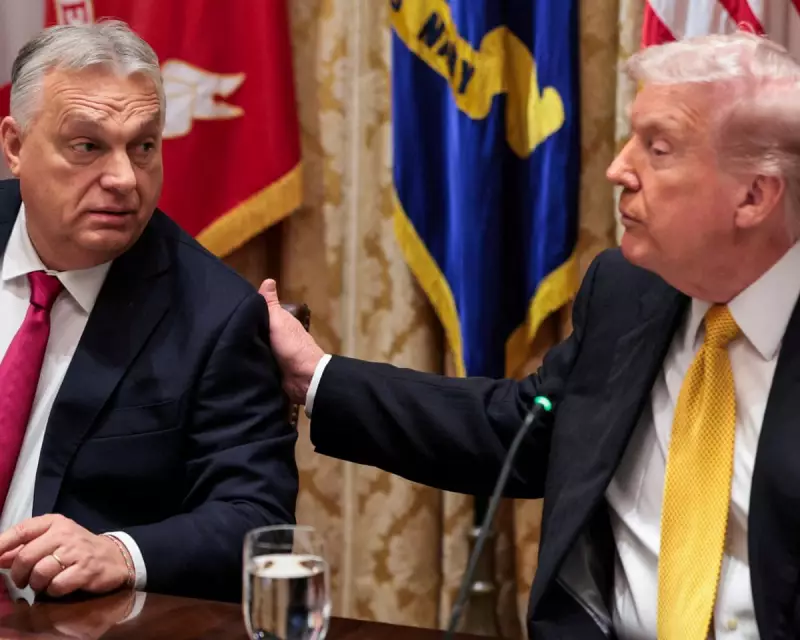
Hungarian Prime Minister Viktor Orbán has declared his recent meeting with Donald Trump at the White House a resounding success, but growing evidence suggests his claims of victory may be masking deeper concerns about his political future.
The Contested Agreement
Following their high-profile meeting last week, Orbán quickly announced that he had secured an indefinite exemption from US sanctions on Russian oil and gas imports. This would have represented a significant political win for the embattled leader, potentially shielding Hungarian citizens from rising energy costs ahead of crucial parliamentary elections next year.
However, the Trump administration has since disputed Orbán's characterisation of their agreement. While the Hungarian government maintains they received an unlimited waiver from sanctions, US officials have clarified that the exemption lasts for only one year.
Hungarian Foreign Minister Péter Szijjártó vehemently defended their version of events, stating during a press briefing: "We have received a waiver for an unlimited period from the sanctions. Anyone who states differently wasn't present during the meeting." He went so far as to label conflicting media reports as "fake news".
Political Stakes and Economic Deals
The energy sanctions exemption wasn't the only matter discussed during the Orbán-Trump meeting. The Hungarian leader revealed several significant economic agreements, including:
- A commitment to purchase US liquefied natural gas valued at $600 million
- A pledge to spend $700 million on American military supplies
- Discussion of a potential financial safety net worth up to $20 billion if EU funding were cut
Orbán emphasised the personal nature of the agreement in a rare television interview, stating that Trump told him the exemption would remain valid "as long as he is president there and I'm the prime minister here" - effectively tying the deal's longevity to both leaders' political survival.
Growing Skepticism and Political Realities
Behind the public declarations of friendship and cooperation, sources in Washington reveal growing skepticism about Orbán's political prospects. A diplomatic source noted that Trump and Republican allies have become increasingly doubtful about the Hungarian leader's chances in next April's elections.
The ambiguity surrounding the White House agreement reflects a pattern in the Trump administration's foreign dealings. A congressional aide suggested the results could be largely "performative", with pro-Orbán circles likely to exaggerate the importance of preliminary statements.
Congressional Republicans have expressed particular concern about Orbán's close relationship with Vladimir Putin and his positions on national security issues, including the war in Ukraine. "Orbán is still maintaining his close relations with Putin, and he is not being helpful to Zelenskyy," the aide revealed.
Despite the uncertainties, Orbán's Fidesz party has portrayed the White House visit as a major triumph. Hungarian geopolitical analyst Botond Feledy explained: "For the Fidesz camp, this is a victory. This is how they explain why they can keep utility prices low. Because of the election campaign, this is a strong message."
Meanwhile, Hungary's opposition has questioned whether the $700 million arms deal represents good value for the country and criticised the government's failure to prepare for reducing dependence on Russian energy since 2022.
As the political battle intensifies in Hungary, the White House meeting appears to have provided Orbán with valuable campaign material, even as the actual substance of the agreements remains contested and his grip on power faces its most serious challenge in years.




