Congresswoman's Guest Detained During Presidential Address
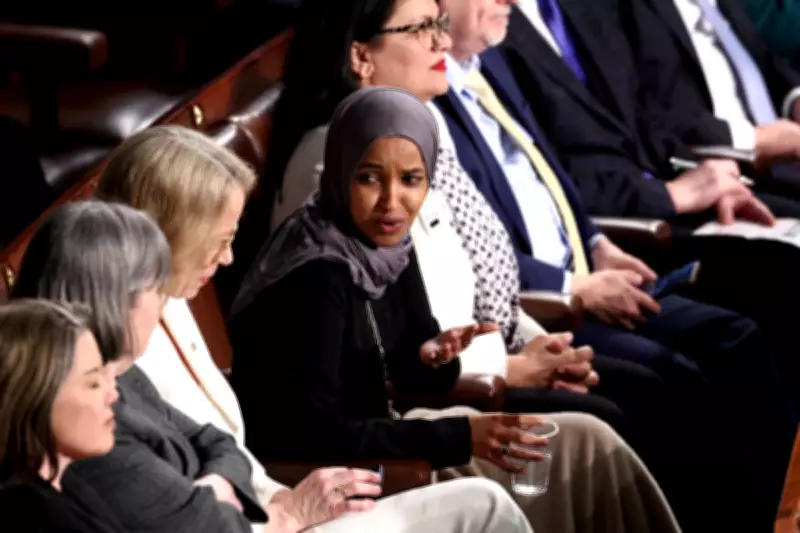
A guest of Democratic Representative Ilhan Omar was arrested by Capitol police during President Donald Trump's State of the Union address on Tuesday night, creating a dramatic scene in the House chamber. Aliya Rahman, a Minneapolis resident and U.S. citizen who had been invited by Omar, was taken into custody for allegedly disrupting the proceedings by refusing to obey orders to sit down during the presidential speech.
Controversial Arrest During Presidential Speech
Capitol police stated that Rahman was arrested for unlawful conduct and disruption of Congress after she "started demonstrating" during Trump's address. According to official statements, the guest was told to sit down but refused to comply with lawful orders. "It is illegal to disrupt the Congress and demonstrate in the Congressional Buildings," police emphasized in their formal statement about the incident.
However, Rahman presented a different account during an interview with Democracy Now on Wednesday. She claimed she had been standing silently without any buttons, facial expressions, gestures, signs, or sounds. "There are only two things you can do at the State of the Union, and they are, sit down and stand up," Rahman explained. "All kinds of people were standing up all night. Me too. I stood up at the moment that I heard this man say some of the most racist things I have heard come out of any leader's mouth about the people of my city."

Background of Immigration Enforcement Incident
The arrest carries additional significance given Rahman's personal history with immigration enforcement. In January, she was removed from her car and dragged by immigration agents in Minneapolis during what she described as an attempt to visit her doctor. "I'm disabled trying to go to the doctor up there, that's why I didn't move," Rahman told officers during that incident, which resulted in shoulder injuries according to her account.
Representative Omar had specifically invited Rahman to highlight what she called "the ICE occupation" and its impact on constituents. Before the address, Omar explained in an MS Now interview that she wanted to show "what the ICE occupation has meant for our constituents and the real harm that this administration has caused. Even though they promised to create safety in our communities, they have created chaos, violence and terror."
Political Context and Constitutional Protections
The arrest occurred during a particularly contentious moment in Trump's speech when he attacked public officials in sanctuary cities for blocking the "removal of criminal aliens." Omar herself shouted at the president during this portion, declaring "You have killed Americans" in reference to two U.S. citizens, Alex Pretti and Renee Good, who were shot and killed by federal law enforcement officers in Minneapolis in January.
Capitol police clarified that while Rahman was arrested, Omar and other lawmakers who protested during the speech were protected by the speech or debate clause of the Constitution. "All State of the Union tickets clearly explain that demonstrating is prohibited," police noted, emphasizing that rules apply differently to guests than to elected representatives.
Aftermath and Political Reactions
Following the arrest and a subsequent hospital visit, Omar confirmed on CNN that Rahman was "back and safe." The congresswoman's press office did not immediately respond to additional requests for comment about the incident.
During his speech, Trump had chastised lawmakers who did not stand to show support for his immigration enforcement efforts, telling them "You should be ashamed of yourselves" as Republicans loudly cheered. Rahman, a software engineer, had previously expressed her views about Trump's policies, stating that elected officials "were not elected to point at folks they would like to construct as enemies so they don't have to do their jobs."
The incident highlights ongoing tensions between protest rights and congressional decorum, particularly during high-profile political events where symbolic gestures carry significant weight in the current polarized political climate.