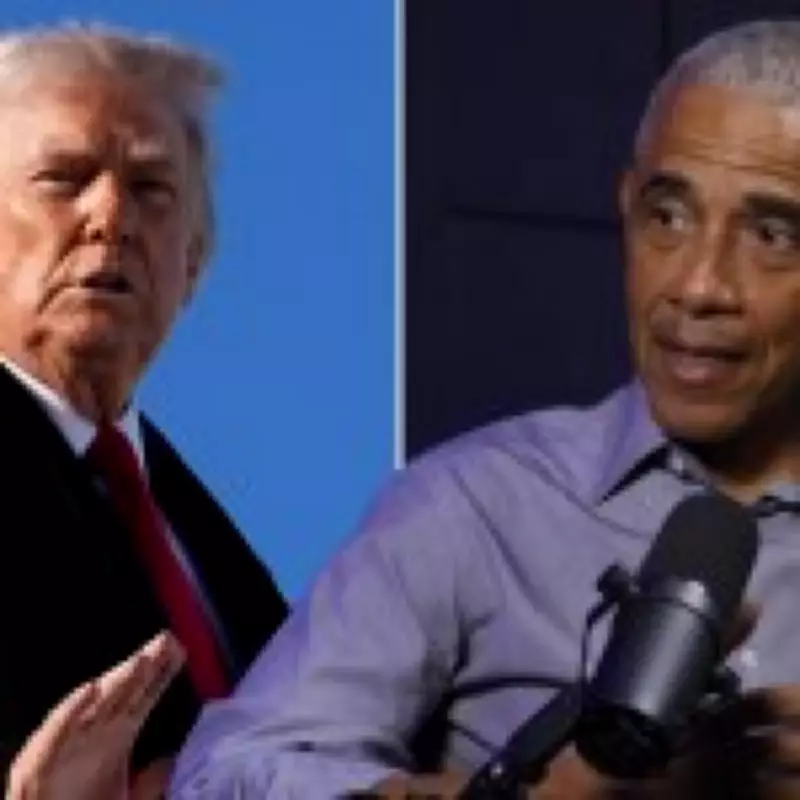
Former United States President Barack Obama has publicly addressed the deeply offensive artificial intelligence-generated video that former President Donald Trump posted on his Truth Social platform earlier this month. The controversial video, which has since been deleted, sparked widespread outrage across the political spectrum for its racist depiction of Barack and Michelle Obama.
Outrage Over Disturbing AI Content
The minute-long video, which focused on claims about rigged voting machines, included a two-second clip showing the faces of the former President and First Lady superimposed onto ape bodies. The disturbing imagery featured the Obamas dancing in a jungle setting with the song "The Lion Sleeps Tonight" playing in the background, creating what many have called a blatantly racist portrayal.
Obama's Response to the Controversy
During an interview with Brian Tyler Cohen, Barack Obama offered his first public comments on the matter. "First of all, I think it's important to recognize that the majority of the American people find this behavior deeply troubling," Obama stated. "It is true that it gets attention. It's indeed a distraction... You meet people... they still believe in decency, courtesy, kindness, and there's this sort of clown show that's happening in social media and on television."

White House Response and Deflection
Despite bipartisan condemnation of the video, White House Press Secretary Karoline Leavitt attempted to downplay the controversy. "This is from an internet meme video depicting President Trump as the King of the Jungle and Democrats as characters from The Lion King," Leavitt claimed. "Please stop the fake outrage and report on something today that actually matters to the American public."
Later, a White House official offered a contradictory explanation, stating that a staff member had "erroneously made the post." However, Donald Trump himself has refused to apologize for the video's dissemination.
Trump's Defensive Posture
When questioned about his involvement, Trump attempted to distance himself from responsibility. "I looked at it. I didn't see the whole thing. I gave it to the people, and they posted it," Trump explained. "What I saw in the beginning was really strong. It was about fraudulent elections. Anytime I see that stuff and it's credible, you put it up. I didn't do it. This was done by someone else. It was a re-truth, but that was a very strong truth."
Political Reactions and Criticism
When journalists pressed Trump about whether he understood the implications of content posted under his name, he became defensive. "I know a hell of a lot better than you do. You don't know what's going on. I know what's going on," Trump lashed out.
The video drew particularly strong condemnation from Senator Tim Scott, the only Black Republican currently serving in the United States Senate. Scott described the content as "the most racist thing I've seen out of this White House," highlighting the severity of the imagery and its implications.
Broader Implications for Political Discourse
This incident represents a significant escalation in the use of artificial intelligence technology to create offensive political content. The Obama video controversy has reignited debates about:
- The ethical boundaries of AI-generated content in political campaigns
- The responsibility of political leaders for content shared under their names
- The normalization of racist imagery in political discourse
- The impact of social media platforms on democratic processes
The widespread condemnation from both Democratic and Republican figures suggests that this particular incident has crossed lines that many Americans consider fundamental to civil political discourse. As artificial intelligence technology becomes more sophisticated and accessible, concerns are growing about how such tools might be weaponized in future political campaigns and what safeguards might be necessary to prevent similar incidents.