
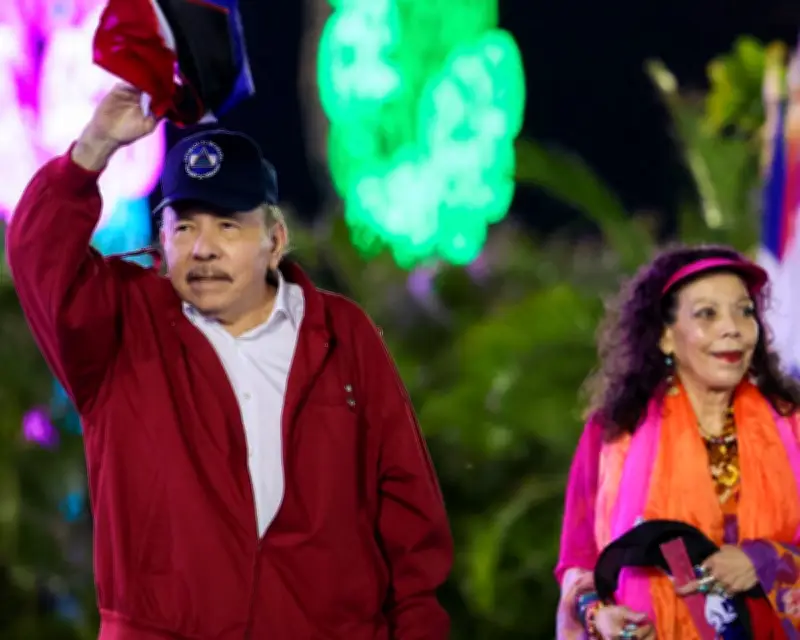
Nicaragua's Congress, dominated by allies of President Daniel Ortega, voted Wednesday to suspend elections indefinitely, a move that critics say cements Ortega's authoritarian grip on the country. The measure passed with 75 votes in favor and 23 against, effectively eliminating any constitutional mechanism for a change in leadership.
New Work Plan Eliminates Electoral Timeline
The legislation, titled the "National Work Plan for Peace and Development," replaces the electoral calendar with a series of government-led assemblies and consultations. According to the official congressional record, the plan suspends all political party activities and electoral processes until further notice. Ortega, who has been in power since 2007, now faces no scheduled elections.
"This is not a reform; it is a coup against the constitution," said opposition lawmaker Maria Elena Rivas in a statement. "They are dismantling the last vestiges of democracy." The United Nations High Commissioner for Human Rights expressed deep concern, calling the move a "serious setback for democratic governance."
International Condemnation and Economic Fallout
The United States, European Union, and several Latin American nations condemned the vote. U.S. State Department spokesperson Ned Price said the decision "exposes the regime's complete rejection of democratic norms." The Organization of American States (OAS) announced an emergency session to discuss possible sanctions.
Nicaragua's economy, already strained by international sanctions and a decline in foreign investment, faces further isolation. According to the Central Bank of Nicaragua, remittances from abroad—a key source of income—fell by 8% in the first half of 2026 compared to the previous year. The suspension of elections is expected to accelerate capital flight.
Oppression Intensifies Ahead of Vote
The vote came amid a broader crackdown on dissent. Since April, authorities have detained at least 200 opposition activists, journalists, and students, according to the Nicaraguan Association for Human Rights. The government has also revoked the legal status of more than 1,000 non-governmental organizations since 2018.
"The regime is using the pandemic and economic crisis as an excuse to eliminate any possibility of political alternation," said Tamara Dávila, a political analyst at the University of Central America. "This is the final step toward a one-party state."
Regional Reactions and Future Outlook
Neighboring Costa Rica recalled its ambassador for consultations, and Colombia called for an urgent meeting of the Lima Group. Meanwhile, Russia and China—both key allies of Ortega—voiced support for the Nicaraguan government's sovereign right to determine its political process.
With no elections on the horizon, Ortega's rule could extend well into the 2030s. The constitutional reform also grants the president control over the appointment of judges and electoral authorities, further consolidating power. As international pressure mounts, the likelihood of a peaceful democratic transition appears increasingly remote.




