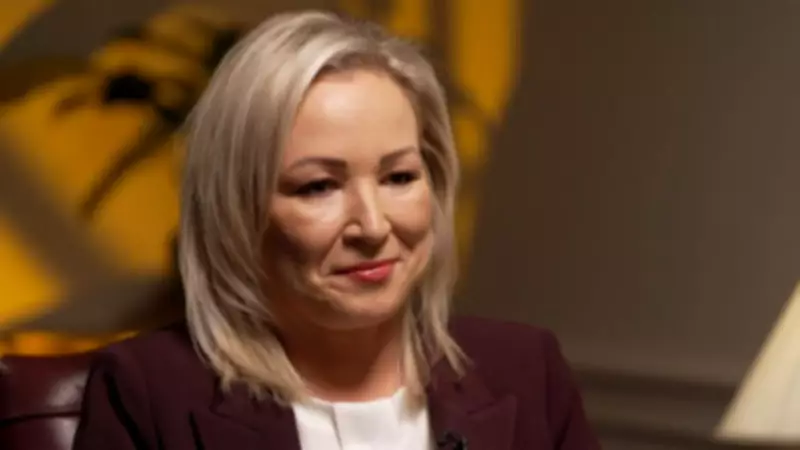
Northern Ireland's First Minister Michelle O'Neill has publicly advocated for a referendum on Irish unity to be held by the year 2030, emphasising the need for immediate planning and preparation. In a significant political statement, she argued that such a move would allow the people of Northern Ireland to shape their own future, contrasting it with the contentious Brexit process.
A Call for Democratic Control
Speaking in an interview scheduled for broadcast on the Sunday Morning With Trevor Phillips show, Ms O'Neill expressed her firm belief in the feasibility of a border poll during her tenure. "Yes, I absolutely can imagine it," she stated, when questioned about the possibility. She elaborated that her party's position supports holding the referendum within this decade, noting that "2030 is only a short way away." This timeline underscores a proactive approach to addressing the long-standing constitutional question.
Brexit as a Cautionary Tale
The First Minister drew direct parallels to the Brexit referendum, which she described as an act of "economic self-harm" conducted "against the wishes of the people." She stressed the importance of avoiding a similar scenario in Northern Ireland, urging that any future poll be handled with greater care and democratic integrity. "I don't want done to the people here what was done in relation to Brexit," she remarked, highlighting the need for a well-considered and inclusive process.
Political Divergence and Unionist Perspective
Ms O'Neill's comments appear to conflict with the stance of Ireland's Taoiseach, Micheál Martin, who previously indicated that a border poll before 2030 is unlikely. This divergence highlights the ongoing political tensions surrounding the issue. Meanwhile, Northern Ireland's Deputy First Minister, Emma Little Pengelly, offered a unionist counterpoint during the same programme.
Ms Little Pengelly, a unionist, pointed out that nationalist and republican movements have not significantly increased their electoral support since the devolution of power in 1998. "They're sitting on and around the same percentage that they had in 1998," she noted, suggesting that claims of momentum towards Irish unity may be overstated. She argued that such narratives are often promoted to serve political purposes, rather than reflecting ground reality.
Looking Ahead
The full interviews with both political leaders are set to air, providing further insight into this critical debate. As Northern Ireland navigates its post-Brexit landscape, the call for a unity referendum by 2030 adds a new layer of complexity to its political future, with leaders on all sides preparing for potential constitutional shifts.