
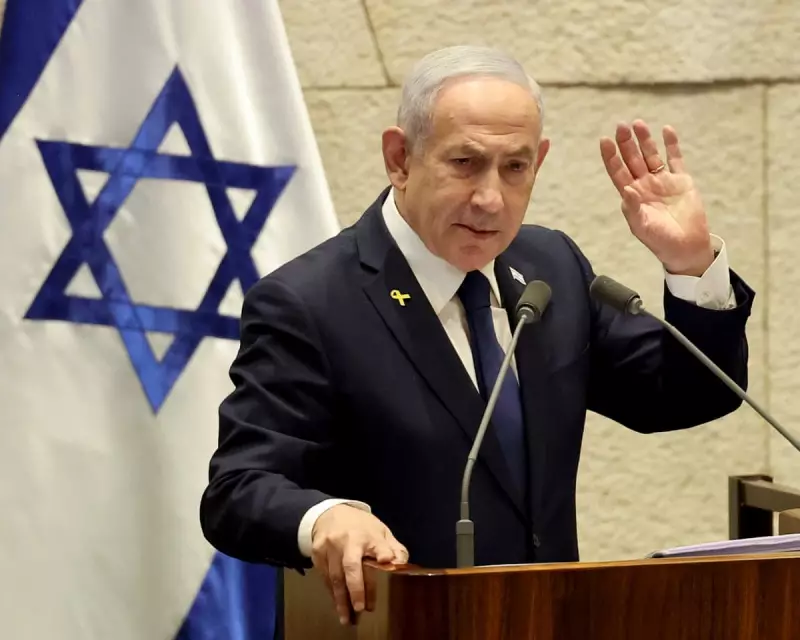
Israeli Prime Minister Benjamin Netanyahu is confronting significant internal government opposition amid accusations he has yielded to Donald Trump's pressure regarding the United States' proposed Gaza ceasefire plan.
UN Vote on International Stabilisation Force
The UN Security Council is scheduled to vote on Monday on a US-drafted resolution that would establish an international stabilisation force in Gaza. This controversial proposal originates from Trump's 20-point plan for the region, which additionally demands Hamas disarmament, Gaza's demilitarisation, and reconstruction under a technocratic Palestinian administration.
The proposed stabilisation force would operate under a two-year mandate, focusing on securing border areas, protecting civilians, ensuring humanitarian aid delivery, and working toward the permanent decommissioning of weapons from non-state armed groups.
Political Pressure and Compromises
The US text, supported in principle by Gulf states, France, and the UK, has undergone intense negotiations. A significant addition, inserted under Saudi Arabian pressure, includes reference to future Palestinian statehood. The draft states that once reforms are implemented and Gaza reconstruction progresses, conditions may finally be appropriate for a credible pathway to Palestinian self-determination and statehood.
Meanwhile, Russia and China have proposed a competing resolution, potentially creating a scenario where both motions face vetoes from permanent Security Council members.
Netanyahu addressed the controversy during his weekly cabinet meeting on Sunday, asserting his longstanding opposition to Palestinian statehood remains unchanged. He defended the inclusion of the statehood clause as necessary since no country has shown eagerness to participate in the proposed multinational force.
Coalition Crisis and International Reactions
The Israeli prime minister faces mounting pressure from far-right coalition partners. Ministers Itamar Ben-Gvir and Bezalel Smotrich have demanded Netanyahu reject the Palestinian state concept, with Ben-Gvir threatening to leave the government. Such a move could collapse Netanyahu's rightwing administration well before the October 2026 election deadline.
Defence Minister Israel Katz and Foreign Minister Gideon Saar have also publicly denounced Palestinian statehood without directly mentioning Netanyahu. Saar declared that Israel will not agree to the establishment of a Palestinian terror state in the heart of the Land of Israel.
International support for the stabilisation force has emerged from nine countries including Qatar, Egypt, Pakistan, Jordan, Turkey, Indonesia, and Saudi Arabia - nations expected to contribute troops. However, significant reservations persist among Muslim countries, with the UAE and Jordan refusing to supply forces, while Israel has vetoed Turkey's participation over alleged ideological alignment with Hamas.
The US military is reportedly planning for Gaza's division into a secured reconstruction zone under international and Israeli military control, alongside areas left in ruins. The complex arrangement between the international force and vetted Palestinian police regarding Hamas disarmament remains a critical unresolved issue that could determine Israeli withdrawal timing.




