Myanmar's Third Election Phase Concludes Amid Widespread Doubt and Fear
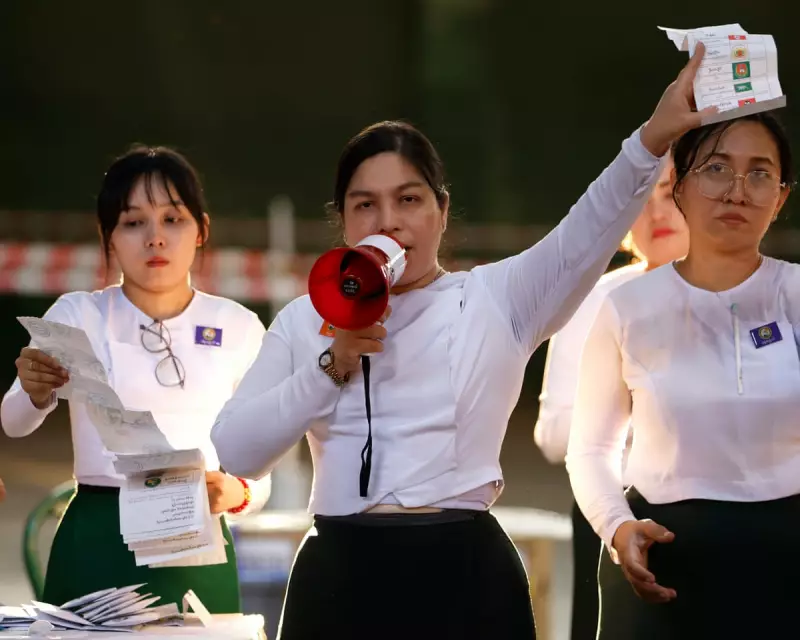
Electoral officials in Myanmar have completed ballot counting following the closure of the third phase of the general election, with polling stations in Yangon and other urban centers witnessing heavily monitored voting procedures. The military junta's proxy party appears destined for a comprehensive victory, despite widespread condemnation of the electoral process as fundamentally undemocratic.
'A Completely Fake Democratic Exercise'
Voters across Myanmar have expressed profound disillusionment with what many describe as a sham election designed to legitimise military rule. "This is entirely a fabricated electoral process," stated one Mandalay resident who participated under duress, his finger marked with the distinctive purple ink used to prevent multiple voting. Like numerous citizens, he reported voting primarily from fear of retaliation from junta officials monitoring participation rates.
"These authorities demonstrate complete disregard for human dignity. Currently, we possess no genuine prospects, enjoy no authentic liberties, and cannot express ourselves without severe consequences," the anonymous voter explained before hastily departing, concerned about surveillance from police and election monitors. He added bitterly, "They have murdered members of my own family."

Five Years of Military Rule and Escalating Conflict
Since overthrowing the democratically elected government half a decade ago, imprisoning former state counsellor Aung San Suu Kyi, and violently suppressing pro-democracy demonstrations, Myanmar's military has entrenched its control through systematic repression. Security forces have conducted door-to-door arrests of perceived opponents while engaging in brutal counterinsurgency operations against armed resistance groups.
According to United Nations investigators and human rights organisations, the junta has implemented a campaign of terror including village massacres, aerial bombardments of civilian infrastructure, and the deliberate destruction of residential properties. This has triggered a nationwide conflict that has drawn in longstanding ethnic armed organisations alongside newer resistance forces.
Urban Voting Under Armed Surveillance
In Mandalay, Myanmar's second-largest urban centre, voting proceeded under the watchful eyes of heavily armed police units. Families arrived at polling stations on motorcycles at dawn, filing beneath temporary blue shelters to cast their ballots. Meanwhile, in surrounding rural districts, electoral authorities cancelled voting entirely due to active combat operations.
Kyaw Kyaw, a Mandalay resident using a pseudonym for protection, remarked, "The military will attempt to project an illusion of democratic normalcy, but they cannot alter the fundamental reality." He anticipates no meaningful change regardless of electoral outcomes, predicting continued repression through existing legal frameworks and persistent armed conflict.
Economic Collapse and Humanitarian Crisis
The ongoing conflict has devastated Myanmar's economy, with Mandalay experiencing particularly severe consequences due to its proximity to active combat zones. Trade routes have been severely disrupted, leading to dramatic price increases for essential commodities. According to local estimates, costs for basic staples like rice and cooking oil have tripled since the military takeover.
Additionally, a massive influx of internally displaced persons fleeing violence in surrounding regions has overwhelmed urban housing markets, causing rental costs to skyrocket. Last year's destructive earthquake compounded these difficulties, leaving numerous residential structures unsafe for habitation while destroying major developments like the Sky Villa condominium complex.
Atmosphere of Pervasive Fear and Surveillance
Throughout Mandalay and other urban areas, residents avoid political discussions in public spaces, fearful of informants reporting to security forces. Thandar, another pseudonymous resident aged 35, explained, "They could be present anywhere—in tea shops, markets, or public transport." Citizens live in constant anxiety about random security checks where authorities examine mobile devices for banned virtual private networks or social media content sympathetic to opposition groups.

Despite systematic efforts to boost participation—including loudspeaker announcements and door-to-door canvassing by local officials—voter turnout in preliminary election rounds reached only 55%, significantly below the approximately 70% participation recorded in previous democratic elections. Many citizens, like Thandar, deliberately abstained despite explicit threats of repercussions. "The process lacks any fairness," she declared. "I refuse to be intimidated by their coercive tactics."
International Condemnation and Regional Division
The Union Solidarity and Development Party, the military's political proxy, has secured the majority of parliamentary seats in earlier voting rounds and fielded the most candidates nationwide. Junta leader Min Aung Hlaing, who is expected to assume the presidency despite questions about whether he will maintain dual military and political roles, has characterised the election as free and fair with substantial public support.
However, this assessment has been overwhelmingly rejected by the international community. The United Nations, Western governments including the United Kingdom and Australia, and the European Union's senior human rights official have all denounced the electoral process as fundamentally illegitimate. The Association of Southeast Asian Nations declined to send observers and will not recognise the results. China remains the notable exception, providing diplomatic support to its military ally and endorsing the controversial poll.