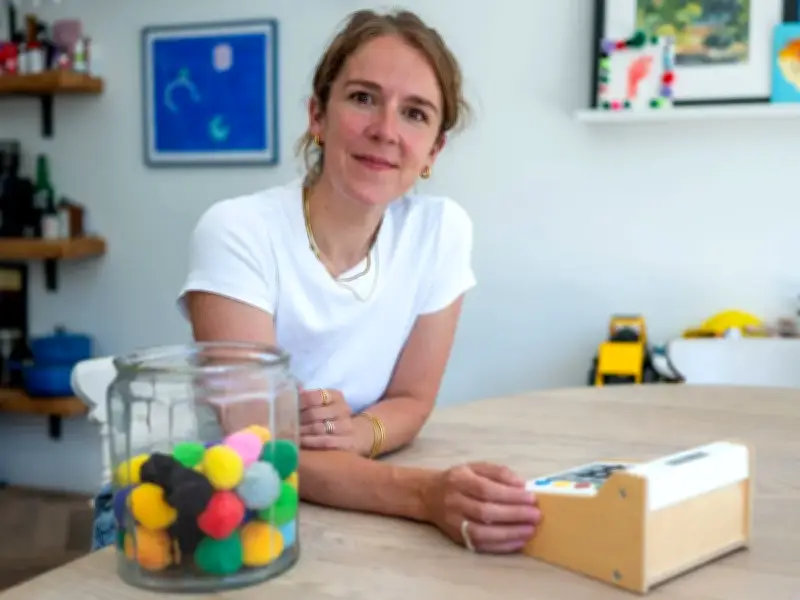
Phoebe Lee, 35, from Twickenham, West London, has introduced a 'mini democracy' in her home, where her children contribute small amounts from their pocket money into a shared family fund and vote on certain household decisions. The system, which includes a 'fun tax' on her seven-year-old daughter's pocket money, aims to teach the children about taxation, community contribution, and collective decision-making in an age-appropriate way.
How the 'fun tax' works
Phoebe, an AI architect and founder of Inherit Health, lives with her husband Alex, a public servant, and their three children aged seven, four, and two. While the couple pays all major household costs, the children are encouraged to contribute a small, symbolic amount each week. Her seven-year-old currently puts in around 20p from her £3 weekly pocket money, with £1 going into savings. The four- and two-year-olds will join once they have their own money.
Phoebe explained: "She gets £3 a week in pocket money and £1 goes into savings. Then she can make other money from chores, but we are very strict on what they are. We haven't got much in the pot yet, but we are hoping to increase our side and have around £300 by December." The 'fun tax' pot is spent on treats or bigger family purchases. Phoebe and Alex each contribute about £4 a week, with plans to increase their contributions as the scheme grows.

Teaching responsibility and public services
The idea began with simple voting at home, inspired by Phoebe's work in ethical technology and Alex's role as a public servant. She wanted to introduce concepts like contribution, community responsibility, and decision-making in a way that makes sense for her children's ages. "Being in ethical tech - I want them to learn a lesson. My husband is a public servant and we wanted them to feel that community contribution," she said. The family discusses where money goes, including donations and public services, and they donate time or second-hand items, with her daughter sometimes selling bracelets.
Phoebe said: "I am aware there are so many decisions that are made for our kids, and they have a lot of agencies in a lot of areas, and we try to give them control when we can." She added: "While Alex and I pay for everything, this is their house too - we want them to feel like they can make decisions in their home."
Voting on family decisions
The family holds votes on shared purchases or activities, and the children are encouraged to propose their own ideas. Phoebe says the 'fun tax' is symbolic, not financially significant, and is about teaching budgeting, the value of waiting, and how collective decision-making works in the real world. "The contribution is symbolic rather than financially significant - my husband and I are paying far larger amounts into the same system. It's supposed to be fun tax - we are not making them pay the Wi-Fi or the rent," she added.
Phoebe also uses age-appropriate examples like the NHS and state education to explain how taxes fund public services. "We are trying to keep her informed in an age-appropriate way. She benefits from things like the NHS and state school because we pay taxes for them - I want her to start to understand them," she said.
Future plans and goals
The family hopes the 'fun tax' pot will grow steadily, with Phoebe joking it could eventually fund a second-hand trampoline. "We anticipate to grow the funds... which could buy a great second-hand trampoline. It's not about control, it's about understanding how things work in a family, and eventually in the world," she said. The scheme is designed to give children a sense of inclusion in family life without feeling burdened, while preparing them for adult responsibilities.