
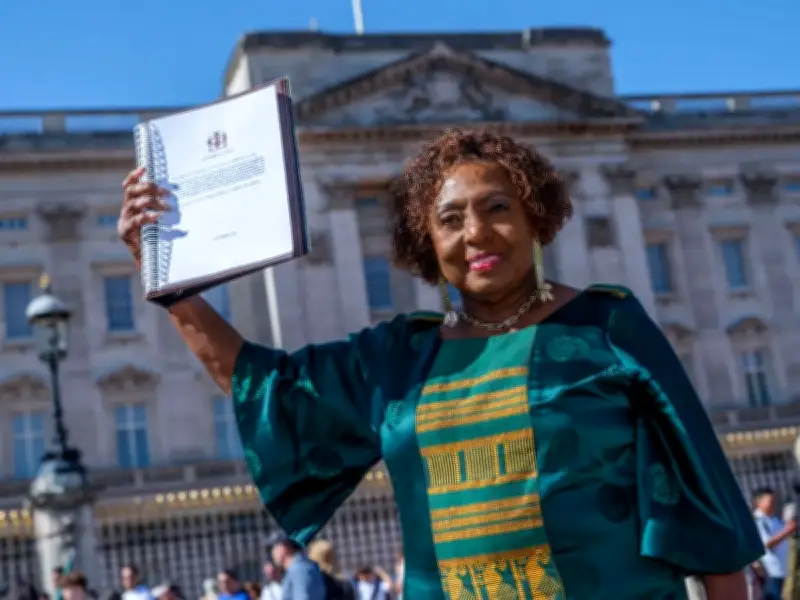
A Jamaican delegation has arrived in London to file a petition asking King Charles to refer three questions about transatlantic chattel slavery to the Judicial Committee of the Privy Council, the Caribbean island's highest court of appeal. The filing on Monday would mark the first time a Commonwealth state has used this legal route for the cause of reparatory justice, according to the delegation.
Olivia Grange, Jamaica's minister of culture, gender, entertainment and sport, told the Press Association that Britain's past payments raised the question of why Jamaica should not now seek a remedy. She noted that Britain was still paying off debt linked to slave-owner compensation as recently as 2015.
Britain's slave-owner compensation debt
The British government paid £20 million to slave owners in compensation when slavery was abolished across most of the empire in 1833, which at the time amounted to 40% of the Treasury's annual income. The government had to take out massive loans to raise the cash, with the debts finally being paid off in 2015.
Asked if British people today should inherit a financial obligation for what happened in the past, Ms Grange said: “Up to 2015, Britain was paying the slave masters, because we were being considered property. The question really should be: if in modern times we’re still paying back the slave masters for the property that was our people, our ancestors, for property that was because of the abolition of slavery, then why shouldn’t we be pursuing some remedy at this time?”
Ms Grange said there may be Britons who felt differently, but that the majority “may consider that answers are required”.
Petition to the Privy Council
The petition asks Charles, as Jamaica's head of state, to put to the Privy Council whether the enslavement of Africans in Jamaica was legal under English law, whether it broke international law, and whether Britain now has a legal duty to provide redress.
Ms Grange would not be drawn into whether Jamaica was asking Britain to pay reparations, saying it first wanted the legal questions answered. She said: “I’m not going to anticipate, pre-empt, or guess. We want the answers. Once we get the answers, or once we get a response to those questions, then the next steps will be determined.”
The British monarch has authority under the Judicial Committee Act of 1833 to refer legal matters to the London-based Judicial Committee of the Privy Council for an advisory opinion. The King has no personal say over whether the petition is referred to the Privy Council and would act entirely on the advice of the relevant authorities.
Palace response and British Museum talks
A palace spokesman said: “We understand the Jamaican government is seeking a petition to be heard before the Judicial Committee of the Privy Council. The process for seeking a petition is to lodge it with the Judicial Committee so that referral under section four of the 1833 Act can be considered. We also understand the Jamaican representatives will be received by the Foreign, Commonwealth and Development Office for bilateral discussions.”
The palace also said that Charles “has on many occasions expressed his personal and wholehearted commitment to promoting greater understanding around the issue of slavery and finding ways to address historic wrongs for the benefit of communities today”.
In recent years, the UK has said it will not pay to make amends for slavery, while Caribbean leaders have called for a formal apology and various measures including debt cancellations. An estimated 12.5 million Africans were forcibly taken by European nations from the 16th to the 19th century, and those who survived the trip across the Atlantic Ocean were enslaved on plantations in the Caribbean and elsewhere.
The Jamaican delegation will also hold talks with the British Museum over the return of artefacts from the island. Ms Grange said Jamaica was particularly seeking the return of three Taino objects linked to the island's indigenous people. She said Jamaica had previously tried to secure the pieces for an exhibition but was told they were unavailable and was sent replicas instead.
She added: “We would wish to have repatriation of those artefacts. For years, we have tried, I think we’re making some inroads now in terms of the dialogue, and we have been invited to send three curators for them to go through to see what artefacts are in the possession of the museum, and for us to engage in discussions.”




