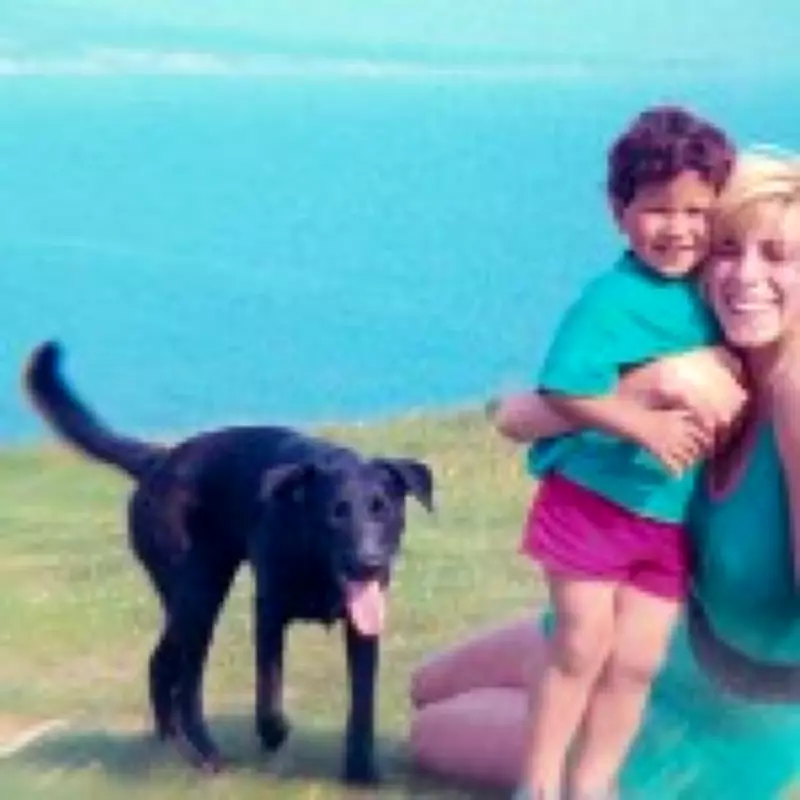
On July 15, 1992, Rachel Nickell was walking her dog Molly with her two-year-old son Alex on Wimbledon Common when she was brutally stabbed to death. An unknown man approached from behind, pushed Alex aside, stabbed Rachel 49 times, and sexually assaulted her. Her toddler was the only witness. The little boy watched the assailant wash his hands in a nearby stream before leaving, then clung to his mother's body until officers arrived and had to prise him away.
Forensic scientist Angela Gallop recalls, 'It was an incredibly high-profile case. A mother and her young child walking on Wimbledon Common in the middle of the day – you don't expect that sort of thing to happen.' Police sealed off the common and launched one of the largest murder investigations the Metropolitan Police had ever seen. Three incident rooms were set up, helicopters and mounted officers combed the area, and media appeals triggered a frenzy.
Detectives and psychologists worked with Alex for months to glean information, as his father André Hanscombe watched anxiously. André tried to keep life normal for his traumatized son. 'Literally hours after the event, I kept as close to the routine Rachel and Alex shared together as I could,' he says. Now 36, Alex adds, 'We couldn't return to our home, surrounded by reporters and with a killer on the loose. We moved to another country, ready to pack up at a moment's notice.'

With DNA testing fruitless at the time, police struggled for leads. In September 1992, Colin Stagg was arrested after Crimewatch viewers said he resembled a photofit. He spent over a year in custody, but the case collapsed in 1994. Meanwhile, more violence occurred. Between 1989 and 1993, a series of sexual attacks known as the Green Chain rapes took place across south-east London parks. Then, in November 1993, Samantha Bissett, 27, and her four-year-old daughter Jazmine were found murdered in their Plumstead home. Retired Detective Sergeant Roger Boydell-Smith recalls entering the flat: 'When we walked in, it became apparent that Samantha had been stabbed to death in the hallway, dragged to the living room, placed on a large cushion, and mutilated.' Jazmine was found suffocated and sexually assaulted in her bed.
Police took hundreds of fingerprints but found no matches. They drew potential links to Rachel's murder – young mothers, extreme violence, children present – but the Nickell investigation team rejected the idea. 'It's extremely rare that strangers attack members of the public. Children being present is even rarer,' says Roger. 'We couldn't fathom how two different people could carry out such ferocious crimes 16 months apart.'
Prior to the Bissett murders, an artist's impression of the Green Chain rapist was distributed. A member of the public reported Robert Napper, and police visited his Plumstead bedsit. He gave details but failed to attend a later appointment. Napper was ruled out partly because he was thought too tall. 'That was a catastrophic decision,' says Roger. 'He could have been caught quite easily.' When evidence from Samantha's flat was re-examined, a print inside matched Napper's. He was arrested, and inside his bedsit, detectives found a padlocked red toolbox containing knives, a book on strangulation, and a map of London with markings near where Rachel was killed. Napper was convicted of the Bissett murders on grounds of diminished responsibility and detained indefinitely at Broadmoor Hospital in 1995.
Tragically, Samantha's mother, Maggie Morrison, collapsed and died 48 hours before the conviction. 'Samantha was an only child, and her mother never recovered,' says Roger. 'So many lives were ruined.' The independent police watchdog found a 'catalogue of errors' in the investigations, concluding missed opportunities that allowed Napper to remain free.

Rachel's murder remained unsolved. Alex and André moved to France for safety. In 2002, forensic scientist Angela Gallop reviewed the evidence. 'We needed to make our technique more sensitive,' she says. It took two years, but they obtained a DNA profile that matched Robert Napper. They also noticed a cast of a footwear mark on the muddy ground. 'The cast mark was smaller than Napper's shoe,' recalls Angela. 'We discovered that when you press a foot into boggy ground and lift it, the mud closes around the shoe, so the cast is smaller.' They also found paint flakes in Alex's hair that matched paint from Napper's toolbox. In January 2016, Robert Napper pleaded guilty to manslaughter of Rachel Nickell. He remains at Broadmoor Hospital today.
34 years on, Netflix is releasing two titles based on the story: the drama series The Witness and the documentary The Murder of Rachel Nickell. Alex and André have been involved in both. Alex says, 'I have memories of both my parents together. My mother suffered to protect me in her last moments, and my father suffered to protect me from there.' André adds, 'People saw headlines about a tragedy, but Alex always had a huge appetite for life. I want people to know he's doing well.' However, Alex believes his mum never got justice. 'For 33 years, the police have washed their hands of their failure.'
A Met Police spokesperson said, 'We are deeply sorry for the failings. We accept we should have done more to identify Robert Napper, which could have prevented serious attacks. Since Rachel's murder, the Met has overhauled how it investigates homicides.'