Former Prime Minister's Jerusalem Speech Sparks Controversy
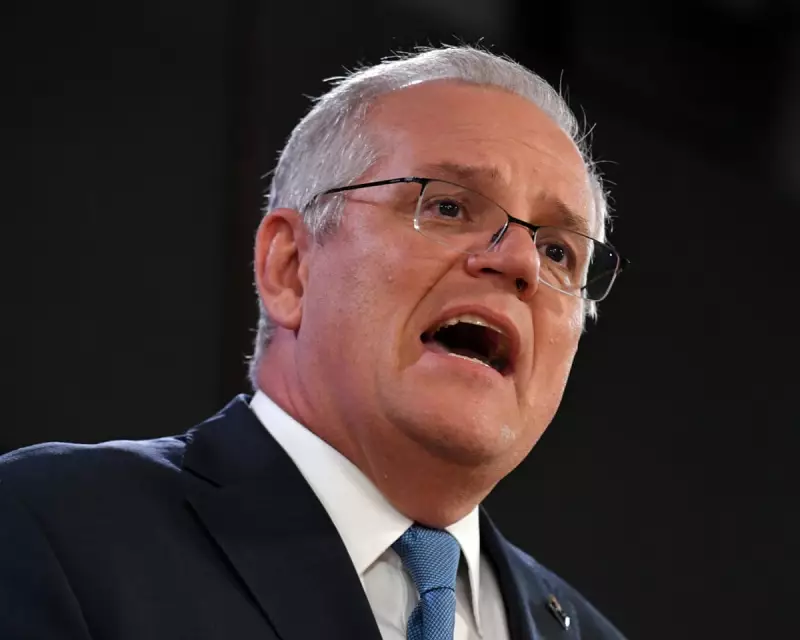
Former Australian prime minister Scott Morrison has ignited a fierce debate about religious freedom and community relations following controversial remarks made at an antisemitism conference in Jerusalem this week. The former Liberal leader used the platform to call for significant new regulatory measures targeting Islamic institutions in Australia, prompting immediate backlash from the nation's peak Muslim organisations.
Proposals for Regulation and Accreditation
Speaking at the international gathering on Tuesday, Morrison demanded what he described as "nationally consistent, self-regulated standards" for Islamic religious leaders in Australia. His specific proposals included recognised accreditation for imams, a national register for public-facing religious roles, clear training and conduct requirements, and enforceable disciplinary authority.
The former prime minister linked these measures to recent tragic events, specifically referencing the Isis-inspired Bondi terror shooting at a Hanukah event that claimed fifteen lives. Morrison emphasised that the two alleged Bondi shooters were "Australian-made" and argued that local Muslim bodies needed to do more to combat extremist ideologies within their communities.

"Safeguarding, financial accountability and scrutiny of overseas funding must also be strengthened," Morrison wrote in The Australian newspaper, expanding on his conference remarks. He drew comparisons with other religious institutions, noting that Anglican ministers require proper accreditation and training to ensure compliance with Australian laws.
Strong Condemnation from Muslim Leadership
The Australian Federation of Islamic Councils (AFIC), representing the nation's peak Muslim body, responded with forceful criticism, labelling Morrison's remarks as "reckless, deeply offensive and profoundly dangerous." The organisation characterised his proposals as a "fundamental attack on religious freedom and equality before the law."
AFIC president Dr Rateb Jneid expressed particular concern about the divisive nature of the rhetoric, warning that it "inevitably creates a divide between so‑called 'acceptable' and 'unacceptable' Muslims, with politicians positioning themselves as arbiters of our faith." The organisation firmly rejected the notion that Islam requires "special regulation, surveillance, or state‑imposed oversight" beyond what applies to other religious groups.
Political Reactions and Community Responses
Defence industry minister Pat Conroy described Morrison's ideas as "really problematic and troubling" during an ABC radio interview, while praising Australia's Muslim community as "incredibly valued Australians." He highlighted how Muslim leaders were among the earliest to condemn the Bondi attacks and emphasised the government's commitment to supporting their right to practise their faith in peace.
The Australian National Imams Council (ANIC), representing more than 300 Muslim leaders nationwide, issued a statement describing Morrison's claims as "deeply ill-informed." Special adviser Bilal Rauf pointed to existing English translations of Islamic teachings and noted that law enforcement authorities had been "unequivocal" that recent attacks were not directed or endorsed by any religious community.
ANIC drew a powerful comparison with the Christchurch mosque shootings in 2019, which occurred during Morrison's own premiership, noting that "no collective blame was placed on a race, religion, or community, nor should it have been. That same standard must apply consistently."
Broader Political Context and Historical Parallels
The controversy has extended beyond Morrison's original comments, with current Liberal senator and shadow minister Andrew Bragg endorsing the former prime minister's position and calling on Muslims to "take some responsibility" for acts of terrorism. ANIC condemned this rhetoric as reflecting "a failure of leadership at a time when calm and responsibility are required."

Gamel Kheir, secretary at the Lebanese Muslim Association, provided important context by noting that Islamic extremism needs examination alongside Australia's rising neo-Nazism problem. "To somehow say that the Muslim community is responsible for the ills of the world is living in a cocoon and putting your head in the sand," he remarked.
Morrison has defended his proposals by insisting he was not suggesting the government should "run religion" or police faith, but rather promote "responsibility and accountability." However, critics have noted the irony of these calls for accountability coming from a former prime minister who faced significant criticism over secret ministerial appointments during the Covid pandemic.
The former leader has cited examples from Arab countries like Saudi Arabia, Jordan and Bahrain, where governments exercise authority over religious teaching and imam licensing, suggesting such reforms could help Islamic communities "keep the wolves from their flock."