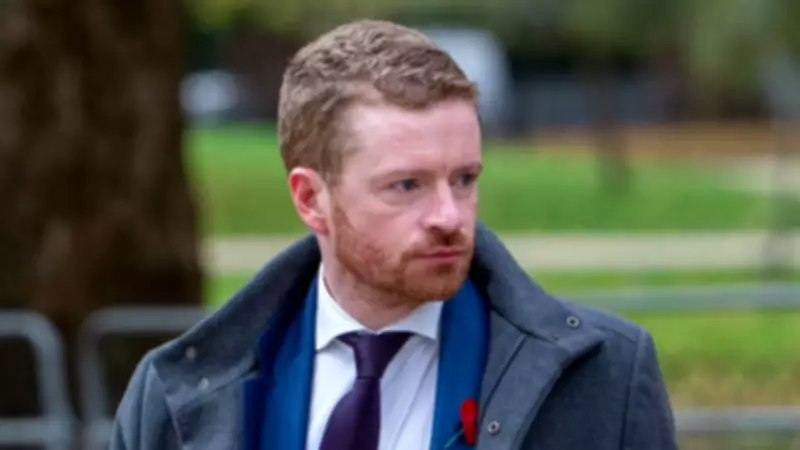
From Svengali to Sacked: Who is Morgan McSweeney, the Prime Minister's Departed Chief of Staff?
Morgan McSweeney, once hailed as the architect of Labour's landslide general election victory in 2025, has now joined the growing list of aides to depart Sir Keir Starmer's inner circle. His resignation, announced on Sunday 8 February 2026, marks a dramatic fall from grace for a figure previously seen as indispensable to the Starmer project.
The Rise from Lambeth to Labour's Top Ranks
Born in Macroom, County Cork, McSweeney's political career began in earnest at Lambeth Council, where he worked alongside Steve Reed, the current Housing Secretary. This early role provided him with a crucial apprenticeship in political combat, particularly in challenging the hard left factions that had dominated the local party for decades.
His campaign to purge Trotskyist influences in Lambeth during the mid-2000s became a blueprint for his later efforts within the national Labour Party. This experience shaped his ideological stance and honed the tactical skills that would later define his ascent.

Architect of the Corbyn Opposition and Starmer's Leadership
By 2017, with Jeremy Corbyn leading Labour, McSweeney found himself fundamentally opposed to the direction of the party. He became director of the Labour Together thinktank, an organisation dedicated to challenging Corbynite ideology and promoting a more centrist agenda.
This position proved pivotal, as he leveraged the network and resources of Labour Together to mastermind Sir Keir Starmer's successful leadership campaign in 2020. Following that victory, McSweeney was appointed as Starmer's chief of staff, a role in which he was accused of systematically marginalising left-wing elements within the party, including through controversial control of parliamentary candidate shortlists.
The Mandelson Scandal and Mounting Pressure
Concerns about McSweeney's influence over Sir Keir, who lacked a traditional Labour Party or trade union background, had been simmering for some time. These fears crystallised around the appointment of Peter Mandelson as US ambassador, a decision McSweeney reportedly championed despite the Prime Minister's reservations.
The subsequent scandal, involving revelations from the Epstein files that appeared to show Mandelson forwarding sensitive market information and receiving funds from the disgraced financier, proved catastrophic. McSweeney's resignation statement admitted the appointment was "wrong" and acknowledged the damage done to trust in politics.
A Bumpy Tenure and Internal Dissent
Even before the Mandelson affair, McSweeney's tenure was fraught with difficulties. He faced significant backlash from Labour MPs over the botched handling of welfare reforms, with accusations of disdain and a failure to comprehend backbench concerns. His management style was further criticised following anonymous briefings to journalists about a purported coup attempt by Health Secretary Wes Streeting, which plunged Number 10 into crisis.
His position had previously been weakened by the disastrous 2021 Hartlepool by-election loss, which led to a temporary demotion. Critics argued this episode exposed his limitations in the administrative and managerial demands of the chief of staff role, despite his recognised campaigning prowess.
The Sue Gray Episode and a Warning of Ruthlessness
McSweeney's return to the chief of staff role, replacing Sue Gray after a bitter internal power struggle, highlighted his enduring influence over Sir Keir. The brutal nature of Gray's departure, preceded by weeks of negative anonymous briefings, served as a stark warning to many about McSweeney's methods and the potential peril for allies who fell out of favour.
For Sir Keir Starmer, the danger now lies in having two powerful former allies—Mandelson and McSweeney—with significant grievances. The departure of his so-called 'right-hand man' over a scandal of his own making raises profound questions about the stability and direction of the Prime Minister's operation at a critical juncture.