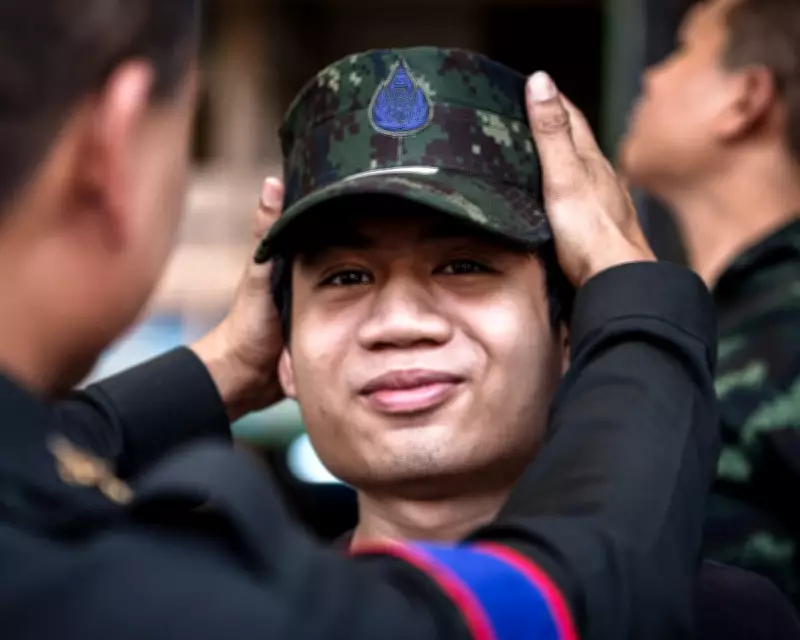
Thai Army Records Significant Increase in Volunteer Enlistments
The Royal Thai Army has reported a substantial rise in volunteer enlistments this year, with nearly 50,000 men stepping forward to join the military. This figure represents a 22% increase compared to 2025, continuing a five-year upward trend in Thailand. This surge stands in stark contrast to other nations, such as Japan, which are facing challenges in recruiting military personnel.
Factors Driving the Enlistment Boom
Analysts point to several potential reasons for this increase, though the exact motivations remain unclear. Rising nationalism, fueled by recent border conflicts with Cambodia, may be a contributing factor. Additionally, Thailand's struggling economy has left many young people with limited job opportunities, making military service a more attractive option.
The military itself attributes the growth to increasing public trust in the institution. In an effort to engage younger demographics, the army has adopted a more modern approach on social media ahead of the annual draft season. Moving away from traditional, formal communications, the military has utilized memes and relatable content to appeal to potential recruits.
One online post humorously suggested, "Bored of your wife? This April, come and enlist in the military." Another stated, "Dedication to training instills discipline; dedication to her brings only sisterly affection." These efforts aim to present the military as a supportive "family" and highlight the opportunity to protect Thailand's borders.
The Pragmatic Choice: Volunteering Versus Conscription
For many young Thai men, the decision to volunteer is a practical one. Those aged 18 to 29 who do not volunteer are entered into a conscription lottery at local centers. Drawing a black card grants exemption from service, while a red card means compulsory conscription for one to two years, depending on educational background.
Volunteers, however, serve shorter terms, with university-educated individuals committing to just six months. They also gain the advantage of selecting their preferred camp and timing, often choosing locations close to home. Krisana Phoolong, a 23-year-old recent graduate, explained his choice to volunteer: "As a volunteer I can pick the camp and the time, and check for the place closest to my home." He preferred the certainty of a six-month volunteer stint over the lottery's risk of longer service in a distant location.
Economic considerations also play a role. With many companies not actively hiring, the military offers a stable alternative. Conscripts receive a monthly salary of approximately 11,000 baht (US$340), along with food and accommodation.
Social Media and Public Perception
The annual conscription lottery often captures public attention, with video clips of reactions—particularly the relief of those drawing black cards—going viral on platforms like TikTok. One widely shared clip claimed a man was disqualified due to a high BMI of 35, allegedly from consuming two cups of bubble tea daily for three months.
Despite some opposition, such as the People's Party's campaign pledge to abolish compulsory conscription, significant reform appears unlikely in the near term. Pavin Chachavalpongpun, an associate professor at Kyoto University's Center for Southeast Asian Studies, noted, "With the current government in place, with the popularity of the military seeming to go up following the war with Cambodia, I think the issue of conscription might just be buried for the time being."
The border disputes with Cambodia in July and December of last year have reinforced the military's influence in politics and foreign policy. However, Pavin doubts that these conflicts have entirely shifted the perspectives of young people, who previously protested in 2020 demanding reduced military interference in politics.
Krisana, who begins training next month, advocates for a fully voluntary system with incentives like welfare benefits to encourage enlistment. He expressed empathy for those conscripted against their will, stating, "I understand that for some people who did the draft and got [a red card] but who have a family to take care of, or a job, it's very hard."
The combination of geopolitical tensions, economic pressures, and strategic outreach efforts has created a unique environment driving more Thai men toward military service, marking a significant shift in recruitment dynamics.