Australia's political landscape has been significantly shaped by substantial financial contributions from mining magnates and corporate entities during the 2024-25 financial year. New data released by the Australian Electoral Commission reveals a record-breaking period for political donations, with billionaire business figures playing a prominent role in funding various political campaigns and parties across the nation.
Mining Magnates Dominate Donation Landscape
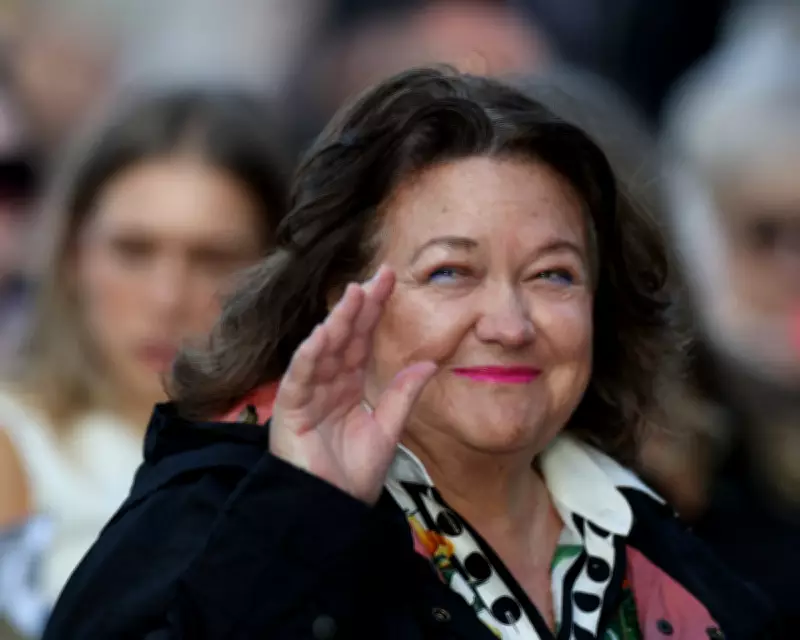
Gina Rinehart's Hancock Prospecting made two substantial political donations totalling $895,000 to Advance, a right-wing campaign organisation that has actively opposed net zero climate policies and current immigration approaches. The mining company's financial support extended beyond this single organisation, with an additional $105,000 directed to the Liberal party's Victorian division. Furthermore, S Kidman & Co, another company within Rinehart's business portfolio, contributed $99,000 to the Western Australian Liberal division.
Rinehart has demonstrated consistent political alignment through her financial backing, including support for former Nationals leader Barnaby Joyce following his defection to One Nation. Her political engagement has included practical support such as providing private aircraft for campaign activities, indicating a comprehensive approach to political influence beyond mere financial contributions.

Palmer's Massive Political Investment
Clive Palmer's Mineralogy emerged as the single largest political donor during the reporting period, directing an extraordinary $53.1 million to Trumpet of Patriots, a political party established by the mining magnate himself. Despite this massive financial injection, the investment yielded limited electoral success, with the party failing to secure any parliamentary seats. Palmer maintained his political funding strategy with an additional $302,901 directed to his United Australia Party, though this substantial expenditure similarly failed to translate into electoral victories.
Corporate Contributions Across the Political Spectrum
The Australian Electoral Commission data reveals a diverse range of corporate entities engaging in political funding across party lines. Labor received significant support including $500,000 from Fox Group, owned by transport magnate Lindsay Fox, who matched this contribution with an identical donation to the Liberal party. Pratt Holdings, the company of billionaire Anthony Pratt, demonstrated substantial bipartisan support with $2 million directed to Labor and $1 million to the Liberal party.
Billionaire Kerry Stokes' private company, Australian Capital Equity, contributed $300,000 to Labor while also donating $500,000 to the Liberal party, illustrating how some corporate entities spread their political investments across the major parties. The Liberal party's financial support extended to include $1.8 million from Oryxium, an investment company linked to businessman Frank Lowy, and $785,000 from food delivery platform DoorDash.
Third-Party Organisations and Special Interest Groups
Climate 200, the pro-climate action organisation supporting teal independent candidates, declared $9.45 million in donations during the period. Founded by businessman Simon Holmes a Court, the organisation distributed $10.85 million to candidates including sitting MPs and new contenders. Significant contributions came from Atlassian co-founders Scott Farquhar ($1.5 million) and Mike Cannon-Brookes ($1.3 million), highlighting how technology entrepreneurs are increasingly engaging in political funding.
Keldoulis Investments, owned by Climate 200 supporter Rob Keldoulis, donated more than $1.5 million to the organisation while also contributing over $400,000 to the Legalise Cannabis Party. Keldoulis maintained additional personal political contributions including $22,900 to Legalise Cannabis and $100,000 to the Australian Greens.

Regulatory Framework and Future Changes
Australia's political donation rules currently require disclosure of contributions above an annually indexed threshold, which stood at $16,900 for the 2024-25 financial year. However, significant changes are scheduled to take effect before the next federal election, due by 2028. The new regulations will reduce the disclosure threshold to $5,000 while implementing an annual donation cap of $50,000 per individual to political candidates.
These forthcoming changes will substantially alter the political funding landscape by limiting the ability of major donors to bankroll individual candidates. Third-party organisations will face restrictions of $50,000 annual donations to individual candidates, though they will retain the capacity to spend up to $11.2 million annually on promotional activities and campaign materials.
Industry-Specific Political Contributions
The data reveals distinct patterns of political engagement from specific industry sectors. Fossil fuel companies maintained strong donation programs with Woodside contributing $102,000 and Chevron donating $133,715 to major political parties. The gambling industry demonstrated balanced political engagement with Sportsbet donating $71,500 to both Labor and Liberal parties, while Tabcorp directed $60,500 to Labor and a combined $71,000 to Liberal and National parties.
Philanthropic contributions also featured prominently, with Adelaide-based philanthropist Pamela Wall donating $5.2 million to the Liberal party's South Australian division. Alongside her late husband Ian Wall, co-founder of electronics company Codan, she represents one of South Australia's most significant individual charitable and political donors.
The comprehensive data release confirms that the 2025 federal election represented a record high for political donations in Australia, even without accounting for inflationary adjustments. This substantial financial engagement from corporate entities, wealthy individuals, and industry groups underscores the significant role that private funding continues to play in shaping Australia's political landscape and policy directions.