
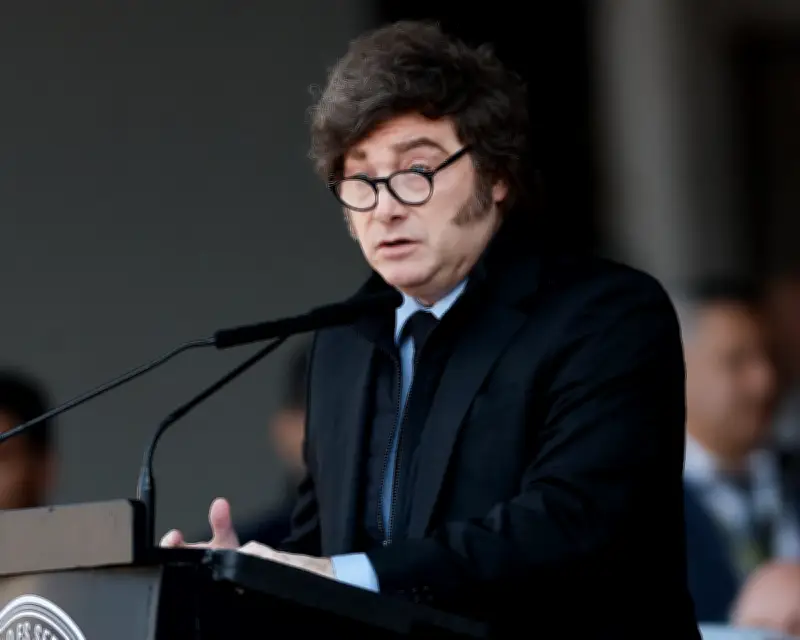
More than a week after Spain won the World Cup, Argentina's President Javier Milei claims a coordinated 'anti-Argentina campaign' was behind criticism of the national team, accusations of racism among fans, and conspiracy theories favoring Lionel Messi's side. In a radio interview, Milei alleged the campaign was financed by the US Democratic Party and the governments of Brazil and Mexico, calling it 'the work of progressive minds who do not want the ideas of freedom to succeed.'
Allegations and Reactions
Milei claimed Brazil's government, led by President Luiz Inácio Lula da Silva, provided the largest funding share. Analysts in Argentina suggest Milei uses this narrative to distract from his plummeting popularity, with some arguing the 'real anti-Argentina campaign' is his austerity plan. However, the narrative gains traction even among non-supporters. Pablo Torres, a 52-year-old bookseller from Buenos Aires who never voted for Milei, expressed 'outrage' and 'disgust' at social media 'bombardment' against Argentina, noting accusations of racism came from 'great colonial powers that enslaved people.'
Racism Accusations and Responses
During the tournament, racist incidents by Argentine supporters drew attention. Actor Samuel L. Jackson posted that Argentina is 'one of the most racist countries in the world.' Amnesty International Argentina acknowledged racism but criticized stereotyping. Milei attributed criticism to Argentina's opposition, which 'validated the woke movement that is now accusing us of being racist.' At a São Paulo event for Senator Flávio Bolsonaro, Milei called Lula a 'thief' and reiterated that Brazil led the campaign, later adding Mexico and the US Democratic Party.
Evidence and Expert Analysis
Digital anthropologist Mercedes Máspero analyzed over 2 million social media posts, finding patterns of orchestration like repeated use of 'disgusting human beings' in multiple languages, but called it a 'tough call' to describe as coordinated. Researcher Natalia Aruguete from Argentina's National Scientific and Technical Research Council saw 'no evidence of a large-scale coordinated operation' despite a 'hostile, widespread conversation.' She noted Brazil's significant presence but said Milei's accusation lacked public evidence. Critics compare this to the 1976-83 dictatorship's 'anti-Argentina campaign' narrative during the 1978 World Cup.
Political Context
Aruguete says Milei turns a diverse online conversation into a culture war against the left, distracting from internal issues like rising unemployment and corruption scandals that have driven his popularity to its lowest point. The narrative of victimhood allows him to shift focus from governance to an external adversary.




