
National Outrage Spurs Government Action
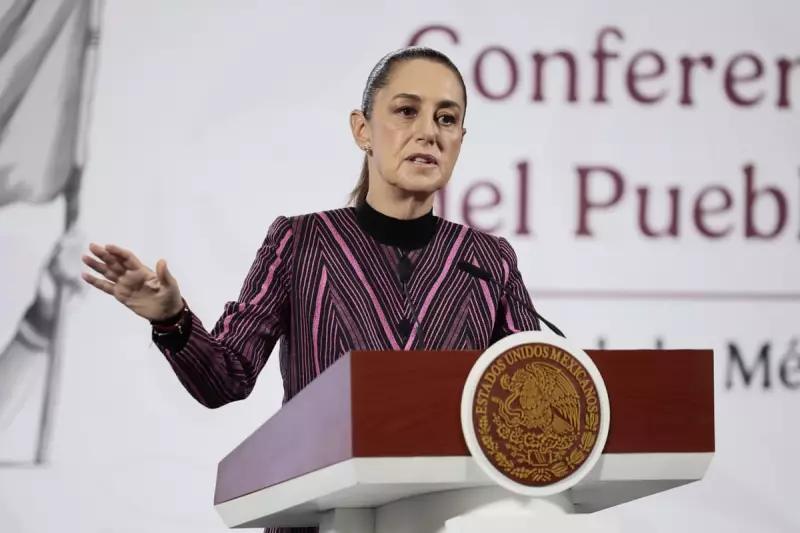
A shocking public assault on Mexico's President, Claudia Sheinbaum, has catalysed the government into announcing a comprehensive new plan to combat sexual abuse. The incident, which saw a seemingly intoxicated man grope the leader and attempt to kiss her while she walked down a street in Mexico City, was captured on video and sparked widespread national anger.
The fact that the country's most powerful woman could fall victim to such a common violation brought unprecedented visibility to an issue affecting millions. In response, the Secretary for Women, Citlalli Hernández, presented a presidential initiative designed to tackle the problem head-on.
Details of the New Government Plan
The multi-faceted strategy includes several key actions. A primary objective is to ensure prison sentences for sexual abuse are enforced consistently across all of Mexico's 32 states, aligning them with existing federal law that mandates six to ten years of imprisonment for violent sexual abuse against vulnerable individuals or minors.
Furthermore, the plan will encourage women to report incidents and will involve training for prosecutors and other public officials on how to handle these cases sensitively and effectively. A nationwide public awareness campaign is also slated for rollout in public spaces, workplaces, schools, and on public transport to prevent violence against women.
"We want to tell all Mexican women, girls, young women, and women in general that you are not alone," Hernández stated last week. "Know that today there is a president who protects you."
A Widespread National Crisis
The urgency of the government's response is underscored by alarming statistics. According to the country’s national statistics agency, seven out of 10 Mexican women and girls aged 15 and over have experienced at least one incident of violence in their lifetime, which includes psychological or sexual abuse. This year alone, a staggering 25,000 complaints of sexual harassment have been filed nationwide.
This abuse often escalates into fatal violence. In Mexico, an average of 10 women are murdered every day. In a particularly grim statistic, more than 500 women were killed in gender-based crimes known as femicides in just the first six months of this year.
Congresswoman Rocio Abreu from Sheinbaum's Morena party emphasised the universality of the experience, stating, "What happened to the president is what has happened to many of us... The president is just another one of us who have experienced harassment, political violence, physical violence, sexual violence, economic violence."
Mixed Reactions and Calls for Deeper Change
While the government's plan has been welcomed by many, some activists and citizens have expressed scepticism about its reliance on criminal punishment. Senator Martha Lucía Mícher, also from the governing party, acknowledged that legislation is only one component, highlighting the need for work with men, women's empowerment, and community training.
However, feminist legal expert Estefania Vela voiced concern, saying, "What worries me is that the president’s focus is exclusively on criminal law and she is neglecting other avenues that could be strengthened." She pointed out that changing penal codes is an easy response but often leads to little change in real life.
Feminist activist Oriana López echoed this sentiment, arguing that harsher prison sentences are not a proven deterrent. Instead, she and others advocate for a fundamental cultural shift. "There has to be cultural change in masculinity," López asserted. "What are we doing so that men have a masculinity that isn’t toxic, that isn’t violent, that isn’t invasive?"
This perspective suggests that alongside legal reforms, long-term educational campaigns are crucial to altering deep-seated societal attitudes and finally ending the normalisation of violence against women.




