
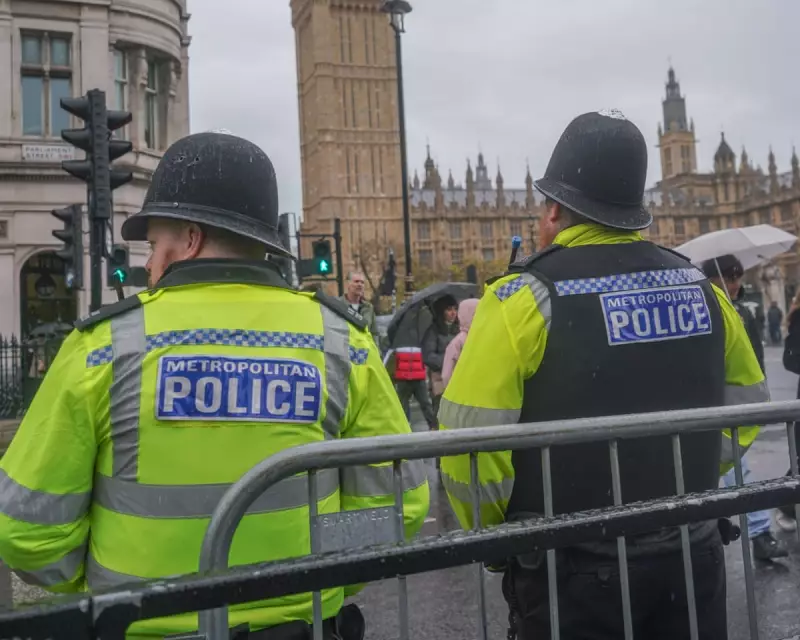
A powerful internal review has concluded that the culture within the Metropolitan Police makes the racial harm inflicted on Black people an inevitable outcome. The report, authored by Dr Shereen Daniels and published on Friday, represents the first examination to focus specifically on the force's 'anti-blackness' as an institution.
The findings reveal that the Met's leadership and organisational culture actively protect it from meaningful change, with racial discrimination being institutionally defended. The force has responded by accepting long-standing evidence of racism within its ranks, Britain's largest police service.
Patterns of Systemic Failure
Dr Daniels told The Guardian that her review, titled '30 Patterns Of Harm', is distinct because it diagnoses the institution itself rather than focusing on individual scandals. She concluded that the very design of the Metropolitan Police makes it inevitable that racial harm keeps reoccurring.
The report states unequivocally: "Anti-black outcomes in policing are not random. They have been built in. And they have been named, again and again, by families in grief, frontline officers, unions, activists, whistleblowers, campaigners, and formal investigations."
Stop and Search: A Key Flashpoint
On the critical issue of stop and search, the report delivers a stark assessment. It finds that the Met causes significant pain in Black communities, with suspicion being the default starting point. "The Met doesn't wait for wrongdoing. It waits for justification," the report says.
Alarmingly, the review found that force and coercive tactics are more likely to be used against black people than white people. It describes how "stop and search converts streets into checkpoints" and accuses the Met of treating "blackness itself as probable cause".
Leadership Resistance and Historical Context
Dr Daniels criticised Met Commissioner Sir Mark Rowley for his continued refusal to use the term institutional racism, which he has claimed is political and unclear. The report counters this, stating: "This is how clarity is framed as political, and the power to name harm is surrendered to institutional comfort."
This latest review comes just two years after the Met was savaged by Baroness Louise Casey's inquiry, which found it to be institutionally racist - a finding Commissioner Rowley refused to accept while acknowledging systemic failings. The pattern extends back to the landmark 1999 Macpherson report into the Stephen Lawrence case, which first identified institutional racism within the force.
The National Black Police Association has expressed deep concern, stating that the commissioner himself has become a block on change. They accused him of creating an "echo chamber" that reassures him of progress while maintaining the structures that enable discrimination to persist.
In his response, Sir Mark Rowley described Dr Daniels' report as "powerful" and acknowledged that further systemic and cultural change is needed. He pointed to initiatives like A New Met for London and the London Race Action Plan as evidence of progress, noting that trust among Black Londoners has improved by 10% over two years, though it still lags behind other groups.
A spokesperson for London Mayor Sadiq Khan emphasised that systematic and cultural issues remain untackled and called on the Met's leadership to accelerate the pace of reform.




