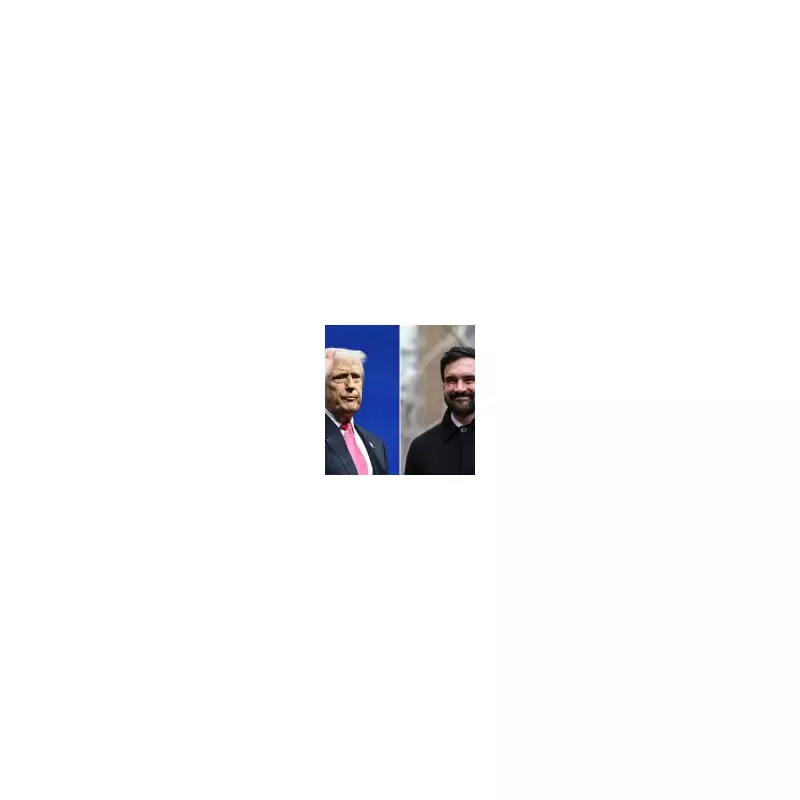
Political Showdown in the Oval Office
In a highly anticipated encounter that has captured national attention, New York City Mayor-elect Zohran Mamdani is scheduled to meet President Donald Trump today in the Oval Office. The meeting brings together two political figures who have publicly clashed from opposite ends of the spectrum, yet now face the practical necessity of collaboration.
The scheduled discussion represents a significant moment in American politics, pitting a Democratic rising star against a Republican president who has previously made controversial remarks about the incoming mayor. President Trump had previously threatened to deport Mamdani, despite the politician holding a green card, and even commented on their physical appearances during their war of words.
Common Ground Despite Differences
Despite their obvious political differences, both leaders share several concerns that might form the basis of their discussion. According to political analyst Jason Pack, host of the Disorder Podcast, both figures approach politics as populists who recognise the struggles facing working-class Americans.
"They both, in theory, care about low inflation and making life go back to the way that it once was for the working class," Jason explained. "They agree on many of the challenges, but not that they're going to agree on how to get there."
The issue of affordability, which formed the centrepiece of Mamdani's successful mayoral campaign, has apparently gained some traction with the President since the election results. This shift suggests that practical governance might override ideological differences, at least temporarily.
Practical Realities and Political Theatre
Beyond the symbolic significance of their meeting, practical considerations loom large. Jason Pack points out that much of Mamdani's proposed programmes require federal funding, making his relationship with the Trump administration crucial for implementing his agenda.
"Mamdani may be able to just do rent control freezes, that's within the power of the city, but much of the rest of his agenda requires a relationship with Washington," Jason noted, highlighting the interdependence between city and federal governance.
The White House perspective, articulated by Press Secretary Karoline Leavitt, framed the meeting as evidence of President Trump's willingness to engage with political opponents. "President Trump is willing to meet with anyone and talk to anyone and to try to do what's right on behalf of the American people," she stated, though she mistakenly labelled Mamdani as a communist rather than accurately identifying him as a democratic socialist.
Immigration policy represents another potential flashpoint in their discussions. Mamdani has vowed to "Trump-proof" New York City against certain federal immigration enforcement actions, setting the stage for potential conflicts over jurisdiction and policy implementation.
Beyond the Meeting: Long-term Implications
Political observers suggest that today's encounter could set the tone for the remainder of President Trump's term in relation to America's largest city. Jason Pack characterises the meeting as part of a broader "reality television show" of contemporary politics, where personality often overshadows policy substance.
"I've previously said that Mamdani is Trump, and Trump is Mamdani," Jason remarked. "Both of them realise that they're the same person on opposite sides of the spectrum. They will benefit from growing each other's personalities and engaging in the reality television show of the Oval Office drama."
Mamdani himself has been clear about his objectives for the meeting, emphasising his commitment to New Yorkers above partisan politics. "I intend to make it clear to President Trump that I will work with him on any agenda that benefits New Yorkers," he stated. "If an agenda hurts New Yorkers, I will also be the first to say so."
The mayor-elect referenced his campaign promise to meet with "anyone and everyone, so long as it was to the benefit of the 8.5 million people who call the city home" as the driving force behind seeking the Oval Office discussion.
As the political world watches this unprecedented meeting unfold, the outcomes could signal whether pragmatic cooperation can transcend ideological divisions in addressing the pressing issues facing New York City and the nation.