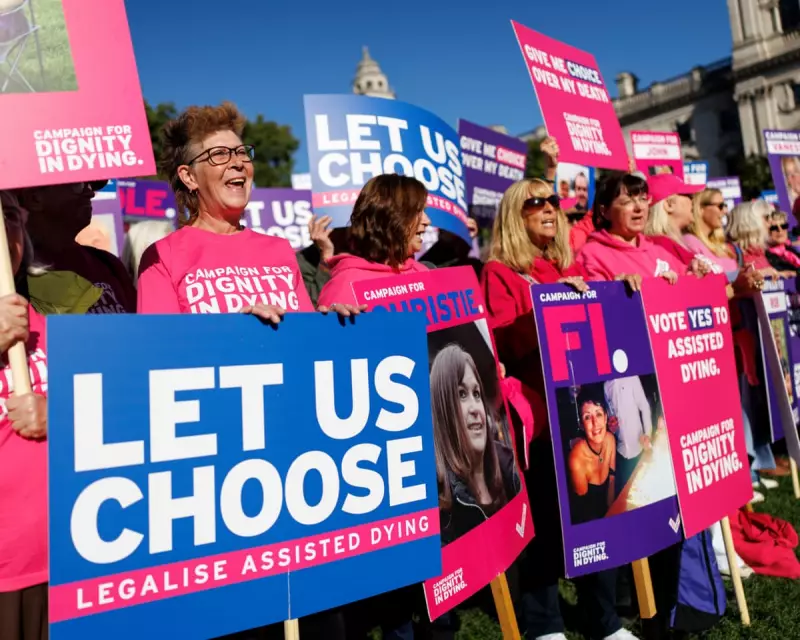
Democratic Crisis as Unelected Peers Block Assisted Dying
Britain's House of Lords has sparked a constitutional crisis by systematically blocking the assisted dying bill passed by the elected House of Commons. In what campaigners are calling a democratic outrage, unelected peers are using procedural tactics to prevent the legislation from progressing despite clear public support.
The situation reached boiling point last week when just seven peers were responsible for 630 of the 1,047 amendments now attached to the bill. These include absurd requirements such as prohibiting assistance if someone has travelled abroad in the past year, or demanding assessments from five different doctors.
The Filibuster Strategy Exposed
Many of these amendments directly contradict proposals already considered and rejected by the Commons during their thorough debate. The clear intention is not to improve the legislation but to kill it through exhaustion of the four days allocated for discussion.
This anti-democratic manoeuvre means that a bill supported by a majority of MPs and the British public is being held hostage by a small group imposing their personal moral views. The government has compounded the problem by declining to support the private member's bill, leaving it vulnerable to such tactics.
The human cost of this political gamesmanship is devastating. One woman faced ten months of police investigation simply for accompanying her terminally ill husband to Switzerland's Dignitas centre. The Crown Prosecution Service eventually dropped the case, but not before putting her through the trauma of being treated as a criminal for showing compassion.
A Chamber Stuck in the Past
The House of Lords represents an anachronism in modern British democracy. It remains the only governing assembly outside the Muslim world where clergy sit ex officio, and one of the few where membership can effectively be bought through political donations.
This isn't the first time the Lords has resisted social progress. The chamber previously attempted to block reforming governments in the 1830s and 1910s. More recently, in the 1960s, Harold Wilson's Labour government had to push through crucial reforms including decriminalising homosexuality and permitting abortion against conservative opposition.
Today's upper house has ballooned to more than 820 members, essentially functioning as a retirement home for senior politicians and party donors. Despite a 2016 promise from its own constitution unit to reduce its size, nothing has been achieved in the subsequent decade.
The International Perspective
Britain now stands increasingly isolated on this issue among western nations. Assisted dying is legally available in numerous European countries including Germany, Spain and the Netherlands, as well as Canada, most of Australia, New Zealand and several US states.
In none of these jurisdictions has assisted dying led to the abuses and concerns raised by opponents in the Lords. The safeguards proposed by peers often appear designed not to protect vulnerable people but to make the process practically impossible.
The decision to end one's life in the face of terminal illness represents the most personal and intimate of acts, properly shared with loved ones and medical professionals. For peers to transform this into a legislative bunfight is both obscene and fundamentally undemocratic.
This situation highlights broader concerns about Britain falling behind international norms on social reform. From justice and prisons to narcotics policy, the country increasingly trails the liberal consensus of other western nations.
The government must now take responsibility and adopt the assisted dying bill as government business to break the deadlock. Simultaneously, urgent reform of the House of Lords is needed through an independent commission that can recommend a modern, democratic second chamber fit for the 21st century.