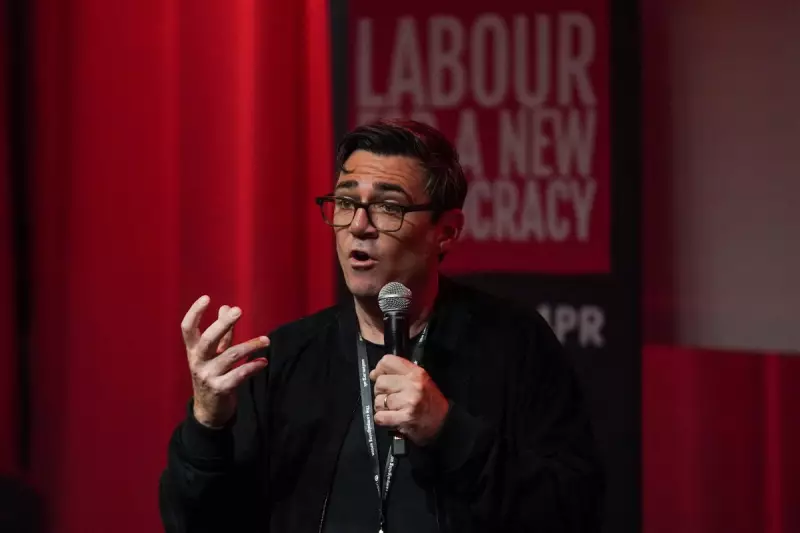
In a move that has sparked widespread debate, the Labour Party has barred Andy Burnham from standing in the forthcoming Gorton and Denton by-election, a decision that could prove catastrophic for the governing party. This action, taken by Labour's National Executive Committee (NEC), risks causing irreparable damage if Labour loses the seat, particularly as it grapples with unprecedented unpopularity.
Labour's Electoral Crisis Deepens
Under the leadership of Prime Minister Keir Starmer, Labour has reached its lowest ever levels of unpopularity in polling history. Recent surveys indicate that support for the party has plummeted to just 17 per cent, meaning it has shed half the support it garnered in its so-called "loveless landslide" during the general election. As Starmer's government enters its mid-term phase, this dramatic decline underscores the urgent need for all available electoral assistance.
The By-Election Challenge
By-elections are notoriously difficult for governing parties, offering voters a chance to send a clear message without the stakes of a general election. In this context, Andy Burnham's bid to stand was not merely a personal ambition but a strategic recognition of Labour's need to counter the rising threat of Nigel Farage and Reform UK. Burnham, along with Wes Streeting, is one of only two Labour politicians with the popularity to effectively challenge right-wing populism.

His appeal is evident not only in polls but also in his grassroots support, such as among football fans who frequently seek selfies with him. By blocking his candidacy, Labour has lost a candidate who could have served as Manchester's representative in Westminster, rather than merely Labour's face in the region.
Consequences of the Decision
The NEC's decision is widely viewed as not being in the party's best interests. It has opened the door for insurgent populist parties, such as the Greens and Reform UK, to capitalise on voter frustration in Greater Manchester. This scenario represents the worst possible outcome for Starmer's government, as it could lead to a by-election defeat that would only bolster Burnham's standing, allowing him to argue that blocking him was a clear error.
Threat of a Reform Surge
A surge by Reform UK would be damaging enough, but the situation could escalate if the Green Party successfully positions itself as the progressive alternative to defeat Reform. This would mirror the dynamics of the Caerphilly Senedd by-election in Wales, where Plaid Cymru assembled a "progressive majority" to overcome Reform. In Gorton and Denton, such a shift could be a game-changer for the centre-left, further destabilising Labour's already precarious position.
Ultimately, this misstep is self-inflicted, highlighting Labour's tendency to miss opportunities. As the by-election approaches, the absence of a beloved local candidate like Burnham may well pave the way for a political upset that could reshape the landscape of British politics.