
Labour's Leadership Turmoil: A Week of Political Drama
In a remarkable turn of events that proves the old adage 'a week is a long time in politics', the Labour Party finds itself engulfed in leadership speculation just months after their election victory. The political drama unfolded when Downing Street sources appeared to encourage a leadership challenge against Prime Minister Keir Starmer in what political observers describe as a provocative 'come and have a go' manoeuvre.
The Streeting Factor: Loyalty or Ambition?
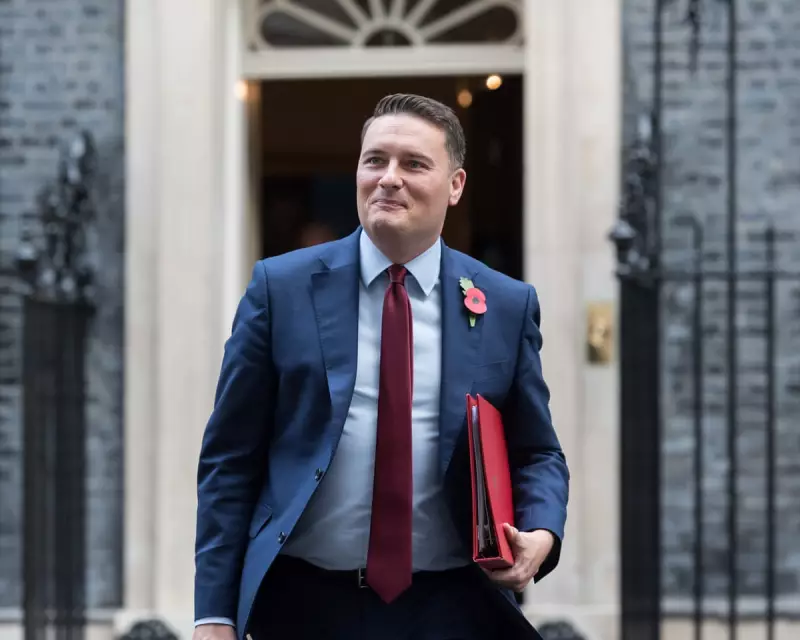
Health Secretary Wes Streeting found himself at the centre of the storm when he appeared on BBC's Today programme attempting to project an image of unflappable loyalty to the Prime Minister. However, his revelation that he hadn't spoken directly with Starmer about the briefing raised eyebrows among political analysts. This omission suggested that if the leadership challenge rumours were circulating without the Prime Minister's knowledge, one might expect urgent communication between the two senior figures.
The speculation raises crucial questions about Labour's internal rules, particularly the 2021 rule change that increased the nomination threshold for leadership candidates from 10% to 20% of the parliamentary party. Many believed this amendment was specifically designed to benefit figures like Streeting while preventing more left-wing candidates from reaching the ballot.
Same Problems, Different Face?
Despite the intense speculation, many commentators argue that replacing Starmer with Streeting would solve none of Labour's fundamental problems. Both politicians share what critics describe as a fixation with process over project and demonstrate what appears to be an absence of core values. This approach, critics warn, inevitably leads to broken promises and disillusioned supporters.
The situation echoes Starmer's own leadership campaign in 2020, when he presented himself as explicitly left-wing, emphasising his background as a human rights lawyer and positioning himself as 'Jeremy Corbyn in a suit'. Many members who supported him feel betrayed by subsequent policy shifts, including his stance on Israel and environmental issues.
Broken Promises and Political Strategy
Streeting himself has been remarkably candid about Labour's political strategy, telling The Guardian in an interview with Simon Hattenstone that parties must 'feint left to win the membership, then go full-steam ahead to the right' to capture the nation. This admission raises profound questions about political authenticity and the purpose behind such strategic manoeuvring.
The fundamental problem with politicians who readily abandon their principles, according to political analysts, is twofold: contradictions destroy public trust in politics generally, and more practically, it becomes impossible to predict their future positions. As Labour faces challenges from both Reform UK and the Greens, the party's identity crisis becomes increasingly dangerous to its long-term survival.
Ultimately, the solution to Labour's problems won't be found in a new leader who shares the same faults as the last, nor in a shopping list of policies. The party will only recover its purpose and popularity when it rediscovers genuine belief in something – though by that point, according to some observers, it may already be too late.




