The British press has delivered a stark verdict on the Labour Party's decision to block Greater Manchester Mayor Andy Burnham from standing in a parliamentary by-election, with front pages dominated by warnings of impending civil war and leadership crises.
Unified Front Pages Signal Deep Labour Rifts
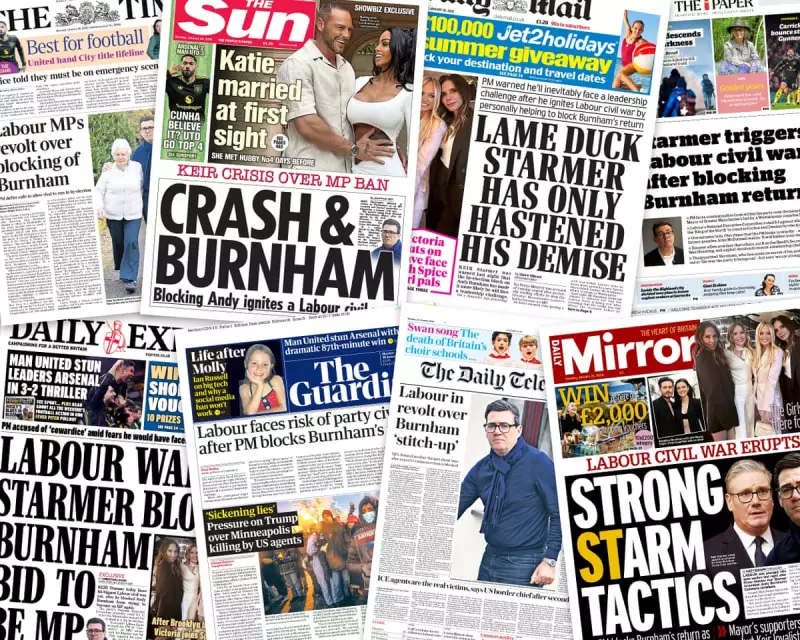
Monday's newspapers presented a remarkably consistent narrative across the political spectrum, with multiple publications using the term "civil war" to describe the fallout from Labour's National Executive Committee vote. The committee, which includes leader Keir Starmer, rejected Burnham's request to seek selection in the Gorton and Denton by-election, prompting what many papers describe as open rebellion within party ranks.
Burnham's Bitter Disappointment
The Greater Manchester mayor expressed profound disappointment with the decision, particularly criticising the manner in which it was communicated. Burnham revealed that journalists learned about the NEC's verdict before he received official notification, commenting bitterly that "you would think that over 30 years of service would count for something but sadly not." His criticism extended to broader concerns about "the way the Labour party is being run," suggesting deeper structural issues beyond this specific rejection.

Newspaper Headlines Capture Mounting Tension
The Guardian led with "Labour faces risk of party civil war after PM blocks Burnham's return," framing the decision as potentially explosive for party unity. The Mirror adopted a more tactical perspective with "Strong Starm tactics," suggesting Starmer had deliberately derailed a potential leadership challenge from the popular northern mayor.
The Times highlighted parliamentary discontent with "Labour MPs revolt over blocking of Burnham," accompanied by a poignant photograph of Burnham with his mother. Their reporting revealed that Starmer's allies feared allowing Burnham to stand down as mayor might hand Greater Manchester to Reform UK, while critics denounced the process as a "stitch-up."
Varied Editorial Interpretations
The Express presented the conflict in stark terms with "Labour war as Starmer blocks Burnham bid to be MP," while The Telegraph echoed the "stitch-up" language with "Labour in revolt over Burnham 'stitch-up'." The Sun employed characteristically dramatic phrasing with "Crash & Burnham," insisting Starmer had "lit the fuse on a bloody civil war" and now faced imminent internal crisis.
Perhaps the most devastating critique came from The Daily Mail, which declared "Lame duck Starmer has only hastened his demise" and predicted the leader would "inevitably face a leadership challenge" for his role in the decision. They reported the NEC took just 45 minutes to determine Burnham's political fate.
Broader Political Implications
The i Paper joined the consensus with "Starmer triggers Labour civil war after blocking Burnham return," but added an intriguing dimension by suggesting Health Secretary Wes Streeting might exploit the divisions to mount his own leadership challenge. This analysis points to potential ripple effects extending far beyond the immediate by-election controversy.
The collective newspaper response underscores several critical developments:
- Widespread perception that Starmer's leadership faces its most serious internal challenge
- Deepening north-south divides within Labour, with a popular northern figure being blocked
- Procedural concerns about how the decision was made and communicated
- Growing speculation about alternative leadership contenders waiting in the wings
As the political fallout continues, these front pages capture a pivotal moment for Labour, with unity appearing increasingly fragile and the party's direction under Starmer facing unprecedented scrutiny from both internal critics and the national media.