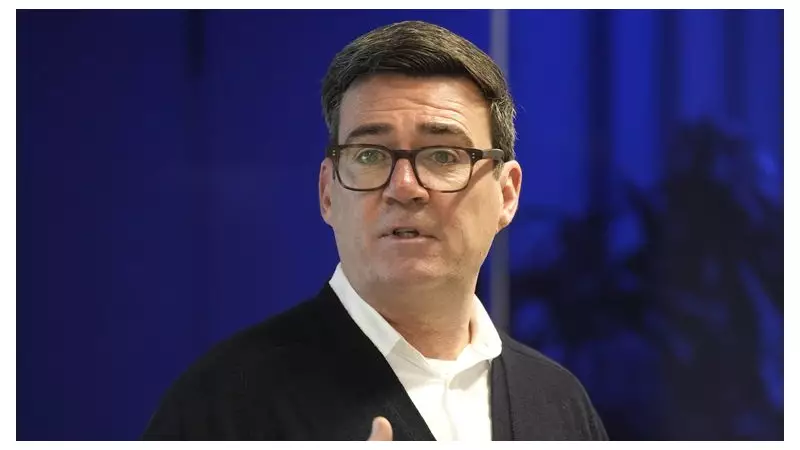
Andy Burnham, the Mayor of Greater Manchester, has publicly expressed his disappointment after Labour's governing body decisively blocked his attempt to return to Parliament as an MP. The Labour National Executive Committee (NEC) voted overwhelmingly on Sunday to prevent Burnham from standing in the upcoming Gorton and Denton by-election, a move that has sparked significant political debate within the party.
NEC Vote Details and Prime Minister's Involvement
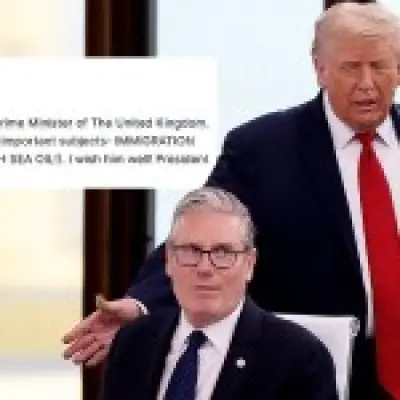
The 10-person NEC panel voted eight to one against granting Burnham permission to contest the parliamentary seat, with only Deputy Leader Lucy Powell supporting his bid. Home Secretary Shabana Mahmood, who chairs the NEC, abstained from the vote as is customary. Notably, Prime Minister Sir Keir Starmer personally voted against Burnham's return to Westminster, joining union representatives and other Labour Party figures in opposing the move.
Burnham had formally requested permission to stand for the by-election on Saturday, acknowledging that as an elected mayor he needed explicit approval from Labour's ruling body before seeking nomination for a Westminster seat. His potential return to Parliament had been widely interpreted as a possible challenge to Starmer's leadership, creating what some observers described as a "frenzied 48 hours of Labour leadership speculation."

Official Reasons for the Blockade
In an official statement, Labour cited multiple practical concerns behind their decision. The party emphasized that directly elected mayors must seek NEC permission before standing for parliamentary elections according to chapter 5, clause IV, 2 of the Labour Party rule book, a regulation specifically designed to avoid unnecessary campaign costs.
The NEC expressed particular concern about the "substantial and disproportionate impact" that running simultaneous campaigns would have on party resources. If Burnham had been permitted to stand and won the parliamentary seat, it would have triggered an immediate mayoral by-election in Greater Manchester during what promises to be a crucial election period.
- The local elections in May
- Elections to the Scottish Parliament
- Elections to the Welsh Senedd
Labour officials also raised concerns about Reform UK potentially mounting a divisive campaign in Manchester during a mayoral contest, with polling suggesting the party could have a realistic chance in the region. The statement acknowledged that while Labour would be confident of retaining the mayoralty, the NEC "could not put Labour's control of Greater Manchester at any risk."
Burnham's Reaction and Internal Party Criticism
Following the decision, Burnham stated he was "disappointed" and expressed concern about "its potential impact on the important elections ahead of us." However, he pledged his full support to whoever becomes Labour's candidate in Gorton and Denton, promising to be there "whenever you need me" for party members in Manchester and Tameside.
The decision has faced criticism from some quarters within Labour, particularly from figures on the left of the party. Former Transport Secretary Louise Haigh described it as "an incredibly disappointing decision" and argued that "the leadership should not feel threatened by having one of the most popular politicians in the country as part of the national team."
Haigh warned that without changing course, "we'll all come to regret this," highlighting broader concerns about the party's connection with the public. The internal debate reflects deeper tensions within Labour about strategy and leadership as the party prepares for multiple electoral challenges in the coming months.
Strategic Considerations and Political Implications
Political analysts suggest that by blocking Burnham, Starmer and his allies have chosen to accept short-term criticism rather than allow what could have become a prolonged leadership psychodrama to dominate the May elections. The move prevents what might have become a "hugely symbolic battle" similar to Labour's fight for the West Midlands mayor position ahead of the 2024 election.

The NEC statement emphasized practical considerations, noting that an unnecessary mayoral election would use "substantial amounts of taxpayers' money and resources that are better spent tackling the cost of living crisis." Labour officials stressed their commitment to "fighting and winning the upcoming by-election" with a campaign focused on "tackling the cost of living and bringing investment to the local area."
As the political fallout continues, Burnham will remain as Mayor of Greater Manchester, a position where Labour says he is "doing a great job." The decision represents a significant moment in Labour's internal dynamics and sets the stage for how the party approaches both the immediate by-election and broader electoral challenges in the months ahead.