
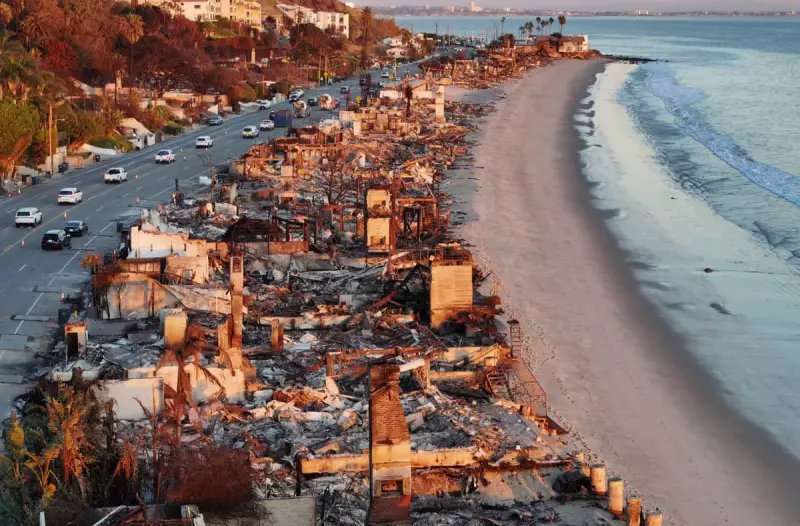
Growing scrutiny surrounds the origins of Los Angeles's most destructive wildfire in history as explosive new reports reveal firefighters were ordered to abandon the initial blaze site despite warnings about ongoing smouldering.
The Fateful Decision That Changed Everything
According to bombshell revelations from the LA Times, firefighters battling the small Lachman fire on New Year's Day reported visible smouldering and hot rocks to their battalion chief, warning that leaving the site was a "bad idea". Despite these concerns, crews were instructed to roll up their hoses and depart the following day.
The Los Angeles Fire Department had previously maintained the eight-acre Lachman fire was completely extinguished, with officials claiming they had conducted multiple "cold-trailing" procedures - manually checking for hotspots. An assistant fire chief remarked at the time that any new fire emerging from the ashes would "be a phenomenon".
Catastrophic Consequences Unfold
Five days after firefighters withdrew from the Lachman site, the Palisades fire erupted with devastating force. Whipped by 100mph winds equivalent to a Category 1 hurricane, the inferno ravaged communities across Pacific Palisades, Malibu and Topanga.
The catastrophic blaze claimed 12 lives and destroyed more than 6,800 structures, making it the most destructive wildfire in Los Angeles history. The fire remained uncontained until 31st January 2025, part of a series of eleven wind-driven fires that devastated southern California over three weeks.
A man has since been arrested and faces three federal arson charges for allegedly igniting the initial Lachman fire. He has pleaded not guilty.
Mayor Demands Answers as Cover-Up Allegations Surface
The growing controversy prompted Los Angeles Mayor Karen Bass to order an investigation into the Lachman fire response last month, describing the emerging accounts as "tremendously alarming".
In a 31st October letter, Mayor Bass wrote: "Make no mistake: our city's firefighters are heroes every day. We owe it to them and the people of Los Angeles to make sure that their fire department is led, organised and ready for whatever emergencies may arise."
Concerns about transparency intensified when it emerged that a 70-page after-action report on the Palisades fire released in early October made no mention of the battalion chief's controversial order to leave the Lachman site or firefighters' objections. The report simply noted the Palisades fire began below the Lachman burn scar.
New Fire Chief Backs Independent Probe
Mayor Bass, who faces reelection next year, recently appointed Jamie Moore as permanent chief of the fire department. Moore has committed to supporting a full independent investigation into the handling of the Lachman fire.
"Recent media attention surrounding the January wildfires has created understandable mistrust, and it must be addressed directly," Moore told the city council's public safety committee. "Our members were not listened to and were not heard. That is why I am supporting Mayor Bass's request for an independent investigation."
The new chief emphasised his commitment to a "fair and thorough process" that would help restore public confidence in the fire department.
Pearl Harbor Moment for Fire Services
Former LA city councilor Zev Yaroslavsky characterised the Palisades fire aftermath as a "Pearl Harbor moment" for the city's emergency services, demanding an independent analysis by experts with no connections to regional fire departments.
"You've got to get an independent panel of people who do not have any connection to the fire departments of this region," Yaroslavsky told the Guardian. "Something always goes wrong in a fire. Every incident has a post-incident analysis, and something on this scale has to be looked at in a very different way."
Yaroslavsky praised the heroic efforts of firefighters during the actual Palisades blaze but noted that many questions remain unanswered about the initial response and subsequent communications failures.
The city has implemented several reforms since the disaster, including leadership changes, improved training and enhanced pre-deployment protocols. However, as communities continue rebuilding, the demand for accountability and transparency grows stronger.




