
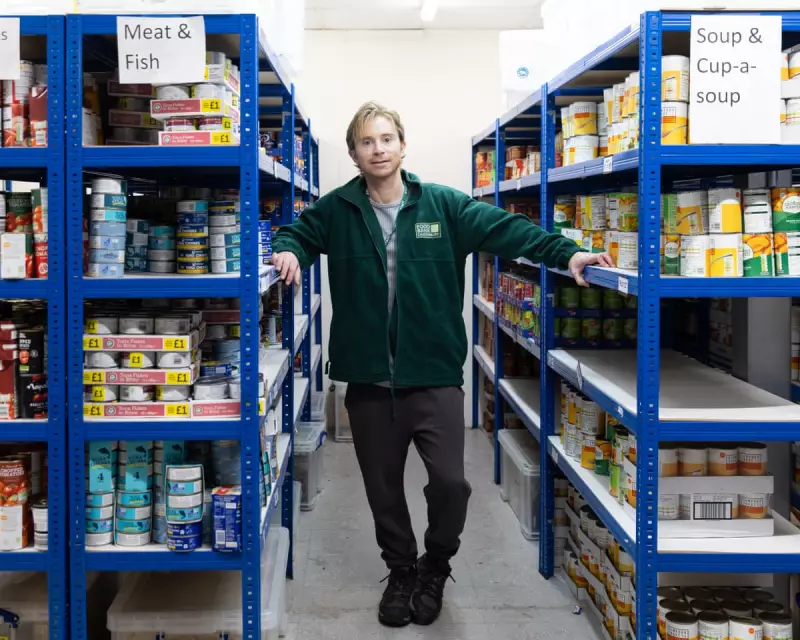
In a quiet corner of Kent, a silent crisis is unfolding. The Canterbury Food Bank, serving communities across Canterbury, Whitstable, and Herne Bay, is experiencing unprecedented demand while fighting a sharp decline in donations.
Operations manager Liam Waghorn reveals the stark reality: "We have to go and find donations rather than expect them." This fundamental shift highlights the growing pressure on frontline services as Britain's cost of living crisis deepens.
The human cost behind the statistics
Behind every statistic lies a heartbreaking human story. One Kent mother, who cannot be named, describes the emotional toll of poverty: "I've sat and cried many times, feeling like I've let my kids down."
Living in a rented flat in Herne Bay with four children under 13, her family survives on benefits with minimal comforts. "Food has to be £1 frozen food," she writes. "Snacks are a very rare treat. If it wasn't for the Canterbury food bank we would have nothing but pasta."
Her partner's mental illness prevents him from working, while she cannot work due to the special educational needs of two of their children, which require "constant calls to go to school."
Soaring demand meets financial pressure
The numbers tell a dramatic story of escalating need. In 2019, the food bank distributed approximately 450 parcels monthly. Today, that figure has skyrocketed to well over 1,100 parcels, sometimes exceeding 1,400. This volume places the charity in the top 5% of food banks nationwide.
Financial pressures have intensified dramatically. In February 2022, the organisation spent about £3,000 monthly on food. By the following year, this had surged to £7,000. Today, their monthly food bill stands at £10,000.
Stuart Jaenicke, the charity's head of finance, explains the double challenge: "Every pound we spend buys around 10% less food than it did a year and a half ago." Their shopping basket costs have risen by approximately 11%, with sharp increases on essentials like teabags, hot chocolate, and coffee.
A perfect storm of challenges
The food bank faces a perfect storm: demand has increased by 15% year-on-year, while monetary donations from the public have fallen sharply. Jaenicke notes they've seen a reduction of more than £80,000 over the past two years if current trends continue.
Meanwhile, grants have become "much more competitive and much less predictable." This year, the charity received only about 60% of its expected income.
Peter Taylor-Gooby, research professor of social policy at the University of Kent and one of the charity's trustees, contextualises the situation: "In the Canterbury area, poverty is becoming deeper and more concentrated, as it is in the country as a whole."
He attributes this to benefits and wages failing to keep pace with rising living costs, particularly problematic in seaside towns like those served by the food bank, where tourism creates "insecure and low-paid" employment.
Beyond emergency response to essential service
What began as temporary community projects after the 2008-09 financial crisis have transformed into permanent fixtures. Taylor-Gooby observes: "Once the goal of food banks was to work themselves out of a job. Now they have become a necessary part of the welfare state."
The Canterbury Food Bank has professionalised its operations to meet growing need. Screens have replaced pens and papers at picking stations, thanks to IT improvements by retired volunteers. They've added fresh food like bread and eggs to improve nutritional value and accelerated service to next-day delivery.
Technology also helps source donations through initiatives like the BanktheFood app, which alerts supporters about products in short supply.
For families relying on their services, policy changes could bring relief. The Herne Bay mother highlights how abolishing the two-child benefit cap would mean "my children would be able to have more of the things they need."
Alison Garnham, chief executive of Child Poverty Action Group, confirms that removing this "invidious policy" would instantly lift 350,000 children out of poverty and lessen hardship for another 700,000.
As Britain awaits potential government interventions, the Canterbury Food Bank continues its vital work, supporting not just traditional vulnerable groups but increasingly working families, single parents, older people, and even students who can no longer make ends meet.
Jaenicke summarises the new reality: "This isn't an emergency spike any more. It's become the new normal."




