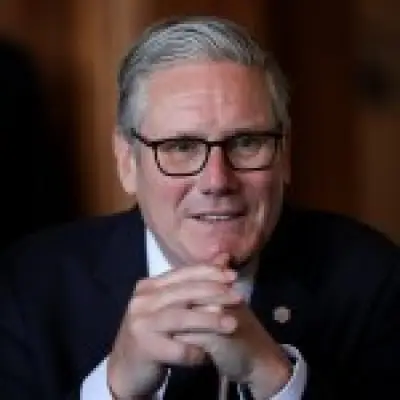
Prime Minister Keir Starmer has arrived in China for a significant two-day diplomatic mission, set to include high-level talks with Chinese leader Xi Jinping and extensive discussions on business and trade. However, the visit is unfolding against a backdrop of escalating tensions, with growing concerns in the UK about sophisticated Chinese espionage activities targeting British interests.
Security Concerns and Espionage Threats
Just two months prior to this trip, MI5 issued a stark warning to MPs and peers, alerting them that Chinese intelligence officers were actively attempting to recruit individuals within parliament who have access to sensitive and classified information. This revelation has heightened anxieties about security vulnerabilities during high-profile international engagements.
Adding to the controversy, Beijing's newly approved embassy in London has been mired in debate due to its strategic location near critical telecommunications infrastructure, raising further questions about potential surveillance risks. In this charged atmosphere, former security minister Tom Tugendhat made a striking claim regarding the government's transportation choices for Starmer's delegation.

The 'Burner Plane' Allegation
Tom Tugendhat, a Conservative MP, took to social media platform X to assert that security fears had directly influenced the logistics of the trip. He wrote in a post: 'Starmer's circus aren't just taking burner phones to China to beat spying, they're taking a burner plane! The government jet is staying home because it would need to be guarded round the clock to stop China putting bugs on it – so they've hired a plane!'
Tugendhat reiterated this allegation during an appearance on Sky News, amplifying speculation that the Prime Minister's team was taking extraordinary measures to prevent electronic eavesdropping. Reports from journalists accompanying the delegation indicate that Sir Keir himself is among officials using disposable burner phones while in China, with some resorting to analogue methods like notepads and pens to avoid digital surveillance.
Government Response and Logistical Realities
Despite these dramatic claims, a government source has provided a more pragmatic explanation to Metro. According to the source, the decision to utilise a British Airways jet instead of the official government plane was primarily driven by the sheer size of the delegation travelling to China.
Nearly 60 prominent business and cultural leaders are accompanying the Prime Minister, alongside dozens of journalists and support staff. This large contingent would have made it impractical to accommodate everyone on the standard government aircraft, which has limited seating capacity.
Precedent and Practical Arrangements
This logistical approach is not without precedent. A similar arrangement was made with British Airways during an official visit to India in October last year, when 125 business leaders joined the delegation. The inclusion of Colm Lacy, British Airways' Chief Commercial Officer, among the travelling party further underscores the commercial and practical nature of the transportation choice.
While security precautions are undoubtedly being implemented, including the use of burner phones, the government maintains that the aircraft selection was a matter of necessity rather than an explicit response to bugging fears. This highlights the complex balance between ensuring robust security protocols and managing the practical demands of large-scale diplomatic missions.
Starmer's Stance on UK-China Relations
Amid these discussions, Sir Keir Starmer has articulated a clear position on the UK's relationship with China. He advocates for a 'strategic and consistent relationship' with Beijing, arguing that such engagement is firmly in the national interest, despite acknowledged challenges and disagreements.
Starmer emphasised: 'That does not mean turning a blind eye to the challenges they pose – but engaging even where we disagree.' This statement reflects a diplomatic approach that seeks to navigate the delicate terrain of international relations, where security concerns must be weighed against economic and geopolitical considerations.

The Prime Minister's visit to China thus represents a critical juncture in UK foreign policy, testing the boundaries of engagement in an era of heightened global tensions and technological vulnerabilities.