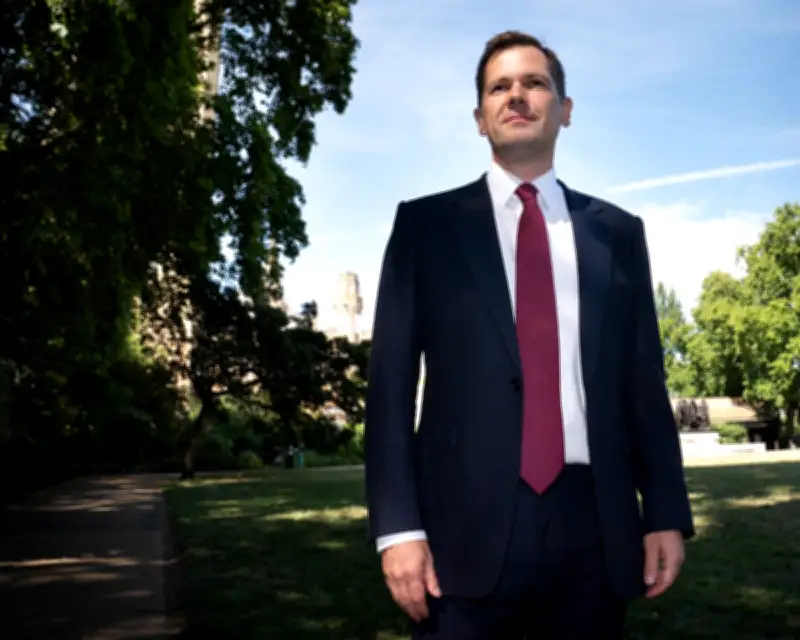
Robert Jenrick has criticised the government for not offering Nigel Farage a security meeting earlier, claiming it only happened as a result of the death of Ann Widdecombe. The Reform UK Treasury spokesperson accused ministers of choosing not to give Farage the security he needed, and only agreeing to arrange a meeting with the chair of the Royal and VIP Executive Committee (Ravec) after Widdecombe's murder.
Jenrick's accusations on BBC Radio 4
Speaking on BBC Radio 4's Today programme on Tuesday, Jenrick was challenged by Nick Robinson for attacking the media, the government, and House of Commons Speaker Lindsay Hoyle. Robinson questioned whether Jenrick and Farage were trying to change the subject from questions about Farage's £5m gift to his security arrangements. Jenrick responded: "The government chose not to give Nigel the security that he needed. They now have, as a result of Ann Widdecombe's appalling murder, offered him a meeting. The home secretary could have offered that meeting a year ago, two years ago. She chose not to. That, I'm afraid, is playing politics with the safety of politicians, and I suspect that's because they don't like the views the Reform politicians take forward. Because we are not mainstream politicians. We are politicians who are fighting the establishment every single day. We're not backing down."
Farage's rejected security package
Jenrick's comments follow reports that Farage had previously rejected a state-funded security package, which included a bodyguard, a secure car, and a trained driver, because he believed it represented a downgrade from the protection he had previously received. Jenrick confirmed the story, first reported by the i, telling the BBC that Farage turned down the package but argued it followed a broader reduction in his security arrangements. He said Farage had initially been given a "comprehensive plan" before his protection was downgraded, adding: "I don't know why. Maybe that will be explained to Nigel when he meets the committee."
Home secretary's response
On Monday, Home Secretary Shabana Mahmood offered Farage a personal meeting with Ravec, insisting all MPs were treated equally in how they were offered protection. Speaking in the Commons, Mahmood said Widdecombe's death raised questions about the security of former MPs and politicians from smaller parties, including those not in parliament. Farage replied on X by thanking the home secretary, adding: "I will meet with the chair of Ravec and discuss the security of all Reform politicians, including those who are not MPs."
Jenrick's astonishment
Jenrick told the BBC on Tuesday: "I find it astonishing that just a short period after [Farage] was elected to parliament, the authorities, the government, chose to massively downgrade his security. I can't see any good explanation for that, and the events of the last week have only shone a light on that. It shouldn't have taken the death of Ann Widdecombe for Nigel Farage to be given a meeting with the relevant Home Office committee."
Investigation into Widdecombe's death
The death of Widdecombe, a former Tory minister and Reform spokesperson, is being investigated by counter-terrorism police. On Saturday, a 28-year-old man from Rotherham, South Yorkshire, was arrested on suspicion of her murder. The suspect was rearrested on suspicion of the commission, preparation or instigation of acts of terrorism.
Government minister on threats
On Tuesday morning, Treasury Minister Lucy Rigby said the threats facing politicians reflected an increasingly "horrific" climate of abuse and intimidation. She told BBC Breakfast: "There is just this increasing climate of abuse and intimidation, including via social media, and in the very worst cases, extreme violence. I certainly wish that we didn't live in a country where this was a fact of life. We need members of parliament, but everyone involved in public life, to be able to go about their work freely. This is key to living in a democracy." Noting MPs had been offered increased security, Rigby added: "I think it's really troubling – more than troubling, it's pretty horrific, really – this increased culture of violence that affects those in public life."