
Japan's Historic Leadership Clashes with Ancient Sumo Tradition
All eyes are on Japan's newly appointed prime minister Sanae Takaichi as she faces a significant cultural dilemma that pits modern leadership against centuries-old tradition. The nation's first female leader must decide whether to step into the sacred sumo wrestling ring to present the Prime Minister's Trophy later this month, directly challenging the sport's longstanding prohibition against women.
The Sacred Ring Controversy
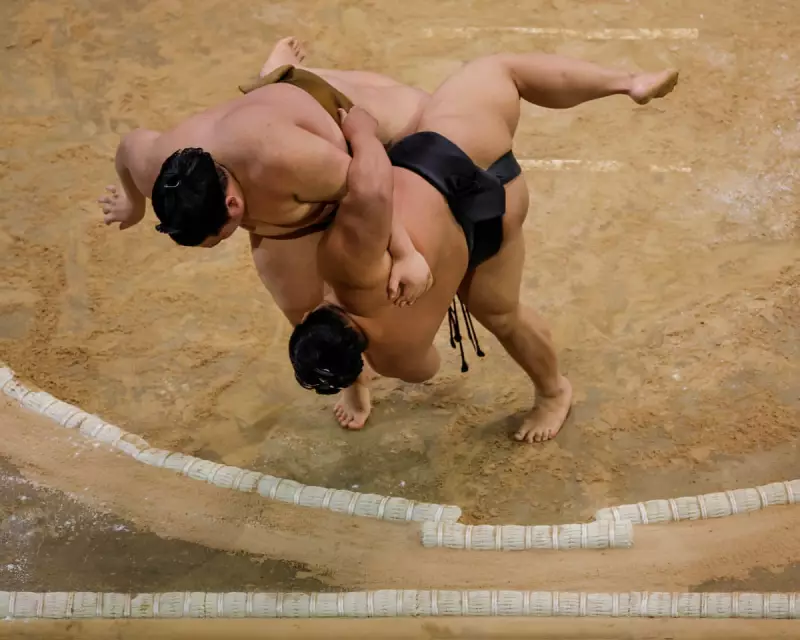
With eleven days remaining in the current fifteen-day tournament in Fukuoka, southwestern Japan, government officials have kept sumo enthusiasts guessing about whether Takaichi will make history by entering the dohyo - the sumo wrestling ring that women are traditionally forbidden from entering or even touching. This ban stems from Shinto beliefs that consider women "impure" due to menstrual blood, rendering them unsuitable for the sacred space.
When questioned about whether Takaichi would seek permission to present the trophy to the tournament winner, Chief Cabinet Secretary Minoru Kihara provided a carefully worded response that gave little away. "The prime minister wishes to respect sumo tradition and culture," he told reporters, according to Jiji Press. "The government has not yet made a decision on the matter. We will consider an appropriate response based on the prime minister's will."
A History of Controversy
This isn't the first time Japan's sumo tradition has clashed with modern gender equality. The controversy dates back to 1990 when Mayumi Moriyama, Japan's first female chief cabinet secretary, expressed interest in presenting the prime minister's trophy. The sumo association firmly rejected her request, with its chairman notably stating that "there should be at least one organisation like ours."
A decade later, Osaka's then-governor Fusae Ohta faced similar restrictions, forced to present a prize to the tournament champion from a walkway adjacent to the dohyo after her repeated requests to enter the ring were denied.
The issue gained renewed attention in 2018 during a dramatic incident at an exhibition tournament in Maizuru. When local mayor Ryozo Tatami collapsed from a stroke while speaking in the ring's centre, several female spectators, including a nurse, rushed to administer first aid. The referee repeatedly called over the PA system for them to leave the sacred space, but the women refused to abandon the stricken mayor.
Following the incident, officials scattered "purifying" salt on the wrestling surface, though sumo authorities denied this was specifically because women had entered the ring. The episode prompted an outcry that forced sumo association chairman Hakkaku to apologise for the referee's "inappropriate actions."
Days later, the sport faced further criticism when officials refused to allow Tomoko Nakagawa, then mayor of Takarazuka, to deliver a speech from the dohyo before an exhibition tournament. Forced to speak from the ring's side, Nakagawa received applause from spectators when she expressed feeling "mortified" by her treatment as a woman.
Political Implications and Sumo's Renaissance
The decision carries significant political weight for Takaichi, a known social conservative. Should she choose to enter the ring, it would represent a symbolic victory for women's rights campaigners and could potentially boost her party's political fortunes.
This controversy emerges during what many consider a golden age for sumo. The sport has recently recovered from various scandals, including allegations of bullying and violence within sumo stables where wrestlers live and train together. Tournament tickets now sell out rapidly, and Japanese fans celebrated earlier this year when Onosato became the first Japan-born yokozuna (grand champion) in eight years.
Adding to sumo's current popularity, the sport recently enjoyed a highly successful exhibition at London's Royal Albert Hall - its first appearance in the United Kingdom in thirty-four years.
Despite forming a panel of outside experts in 2019 to examine the ban on women, the sumo association has yet to reach a conclusion. As the tournament progresses, the world watches to see whether Japan's groundbreaking female leader will step into history or respect tradition.




