
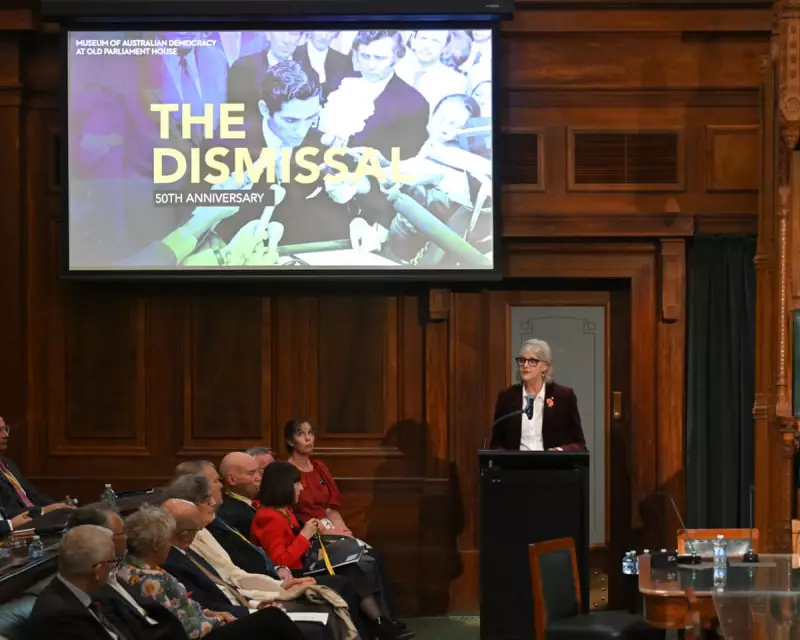
In a remarkable display of political unity, former Prime Minister John Howard has joined forces with the current Australian Prime Minister to advocate for extending parliamentary terms to four years. This rare bipartisan agreement emerged during commemorations marking the 50th anniversary of the controversial dismissal of Gough Whitlam's government.
A Historic Rivalry Heals on Constitutional Reform
The political landscape witnessed an unexpected alignment as John Howard, representing the conservative side of politics, stood alongside the current Labor Prime Minister in supporting this significant constitutional change. Both leaders argue that longer parliamentary terms would provide greater stability for governance and policy implementation.
This unusual political harmony unfolded against the backdrop of one of Australia's most divisive political anniversaries. November 11, 1975 remains etched in the nation's memory as the day Governor-General Sir John Kerr dismissed the Whitlam government, triggering a constitutional crisis that continues to polarise Australians five decades later.
Commemorating a Nation-Dividing Event
The anniversary events revealed how deeply the Whitlam dismissal still cuts across Australian society. Supporters of the dismissed government gathered to honour what they view as a democratic outrage, while others maintained that the Governor-General's intervention was necessary to resolve a political deadlock.
Current political figures navigated these sensitive commemorations with careful language. The Prime Minister acknowledged the profound impact the dismissal had on national trust in institutions, while emphasising the importance of learning from historical events to strengthen Australia's democratic foundations.
John Howard's participation in these events carried particular significance, given his long political career and historical perspective on the constitutional dimensions of the 1975 crisis.
The Case for Constitutional Change
The push for four-year terms represents one of the most substantial proposed changes to Australia's political system in recent years. Proponents argue that the current three-year cycle creates several challenges:
- Frequent election campaigns disrupt long-term policy planning
- Governments spend excessive time in perpetual campaign mode
- Important reforms often get sacrificed for short-term political gains
Both leaders emphasised that extending parliamentary terms would bring Australia in line with many other democratic nations, including the United Kingdom, where governments typically serve five-year terms between elections.
The constitutional reform would require a national referendum, presenting a significant hurdle given Australia's historical reluctance to approve changes to its founding document. Only 8 of 44 referendums have succeeded since Federation.
This bipartisan endorsement from figures representing both major political traditions could provide the momentum needed to overcome this historical resistance to constitutional change.
As Australia reflects on one of its most turbulent political chapters, this unexpected unity between former rivals offers a potential pathway toward strengthening the nation's democratic institutions for future generations.




