
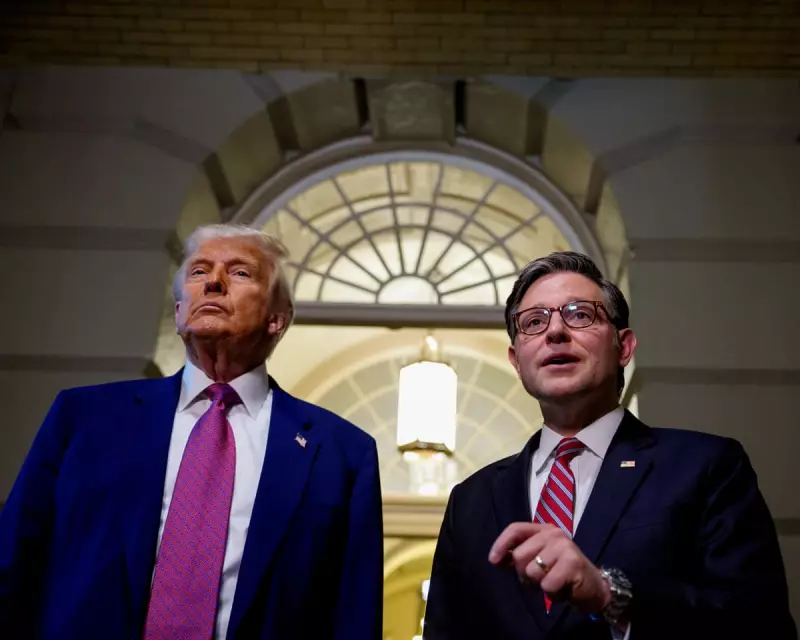
In a significant political reversal, the Republican-controlled US House of Representatives is poised to vote on compelling the release of investigative files related to convicted sex offender Jeffrey Epstein. The scheduled Tuesday vote follows President Donald Trump's unexpected decision to drop his opposition to the measure over the weekend.
Presidential Reversal Sparks Congressional Action
President Trump performed a dramatic U-turn on Sunday, abandoning his previous resistance to the vote that would force transparency around the Epstein investigation. By Monday, the president had confirmed he would sign the measure should it reach his desk, marking a substantial shift in the White House's position.
The president's change of heart emerged as it became increasingly evident that the bill would pass the House, likely with considerable Republican support. Both Trump and House Speaker Mike Johnson altered their approach from outright opposition to declarations of indifference regarding the document release.
"I DON'T CARE!" Trump declared in a social media post on Sunday, adding that his primary concern was ensuring Republicans "get BACK ON POINT." During an Oval Office appearance on Monday, the president characterised the Epstein scandal as a "hoax" and "a Democrat problem," while pledging full cooperation with the document release.
Procedural Battles and Political Manoeuvring
The path to Tuesday's vote involved considerable parliamentary manoeuvring. In July, Democratic Congressman Ro Khanna and Republican Thomas Massie employed an obscure procedural tactic known as a discharge petition to bypass House leadership and compel a vote on their Epstein Files Transparency Act.
Speaker Johnson reportedly went to extraordinary lengths to avoid a vote on the measure, which had created divisions within his conference. Democrats accused Johnson of delaying the swearing-in of Arizona Democrat Adelita Grijalva to prevent her from becoming the crucial 218th signatory on the petition. She signed moments after being sworn in last week.
Following Trump's reversal, several House Republicans, including close presidential allies, have publicly committed to voting for the file release, suggesting the measure could pass unanimously.
Broader Implications and Ongoing Investigations
The Epstein scandal continues to resonate through American politics, with the disgraced financier's connections to numerous powerful figures in the US and overseas remaining a subject of intense public interest. Investigators concluded that Epstein took his own life in a New York jail cell in 2019 while awaiting trial on sex trafficking charges.
Recently released emails by a House committee revealed that Epstein believed Trump "knew about the girls," though the precise meaning of this phrase remains unclear. The White House has maintained that the released emails contain no evidence of wrongdoing by the president.
In a related development last week, Trump instructed the Justice Department to investigate prominent Democrats' ties to Epstein. US Attorney General Pam Bondi, who earlier this year stated that a review of the files revealed no further investigative leads, has appointed a prosecutor to lead this effort.
The Epstein case represents a core concern for a significant portion of Trump's right-wing base, with some adherents embracing conspiracy theories surrounding Epstein and his network of influential associates. Unlike many other issues, the Epstein files have prompted rebellions from Trump's supporters in both political and media circles, demanding he fulfil his campaign promise to release the documents.
Meanwhile, survivors of Epstein's abuse have intensified pressure on Congress to approve the measure. "It's time to bring the secret's out of the shadows," one victim declared in a video released by the organisation World Without Exploitation, urging Americans to contact their representatives and demand they vote for record release.
Activists reinforced this message on Monday night by projecting an image of Trump and Epstein onto the Justice Department building, accompanied by the demand: "Release the files now."
Should the House pass the resolution, it would proceed to the Senate, which must also approve it before reaching the president's desk for signature. Republican Senate Majority Leader John Thune's office has declined to comment on his plans for the bill.




