
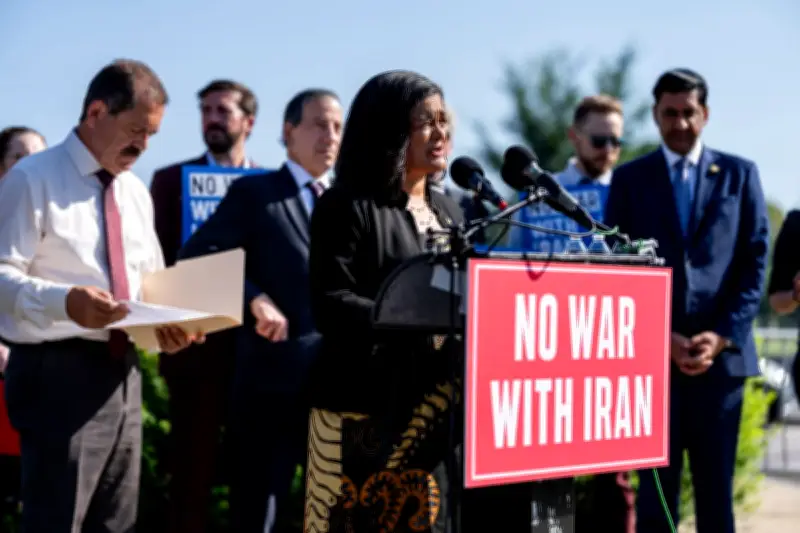
The US House of Representatives passed a war powers resolution for the second time, directing President Donald Trump to withdraw US military forces from the conflict with Iran. The vote, 214-208, largely followed party lines, with four Republicans joining all Democrats present. The resolution is largely symbolic, as Democrats have few options to force compliance.
Resolution details and bipartisan support
The resolution, proposed by Democrat Pramila Jayapal of Washington, mirrors one passed in June that was later approved by the Senate. The same four Republicans—Tom Barrett of Michigan, Warren Davidson of Ohio, Thomas Massie of Kentucky, and Brian Fitzpatrick of Pennsylvania—again crossed party lines to support the measure.
"This is not a partisan issue," Jayapal said. "Vast majorities of Americans, of all parties, believe that this is an unconstitutional, illegal war that needs to stop. It was not authorized by Congress, and it has cost us incredible tolls: [the] lives of 18 service members, millions who have been displaced and thousands who have been injured."
Senate rejects similar measure
Later on Thursday, the Senate rejected a similar resolution proposed by Democrat Chris Van Hollen in a 47-49 vote, largely along party lines. The Trump administration has argued that war powers resolutions are unconstitutional, and Democrats' minority status limits their ability to enforce compliance.
Renewed fighting and economic impact
The resolution's passage comes amid renewed fighting between US forces and Iran, which has driven oil prices to their highest levels in weeks and claimed four American lives. The conflict began in February when the US joined Israel in attacking Iran, sparking a regional war unpopular with the US public.
House foreign affairs committee ranking member Greg Meeks accused Trump of violating the law. "This body has already spoken. The war powers resolution passed with bipartisan support in the House and the Senate. The Trump administration was required to end its hostilities against Iran. It has not," Meeks said. He announced plans to introduce a resolution to compel Speaker Mike Johnson to bring a lawsuit against Trump, though such a move faces long odds.
Political implications
The resolution underscores Democrats' ability to exploit divisions among House Republicans. Massie lost his primary in May after Trump endorsed his opponent, while Barrett and Fitzpatrick represent swing districts targeted in November's midterms. Davidson, a libertarian, stated on social media: "If we want a war, or need one, we should apply the lessons from history and our Constitution," listing steps including defining the mission and authorizing war.
In contrast, House Republicans advanced a $95 billion budget blueprint for military needs related to the Iran war and a $1.15 trillion defense spending bill. The former faces Senate delays, while the latter requires Democratic votes and includes voter regulations Democrats oppose.




