
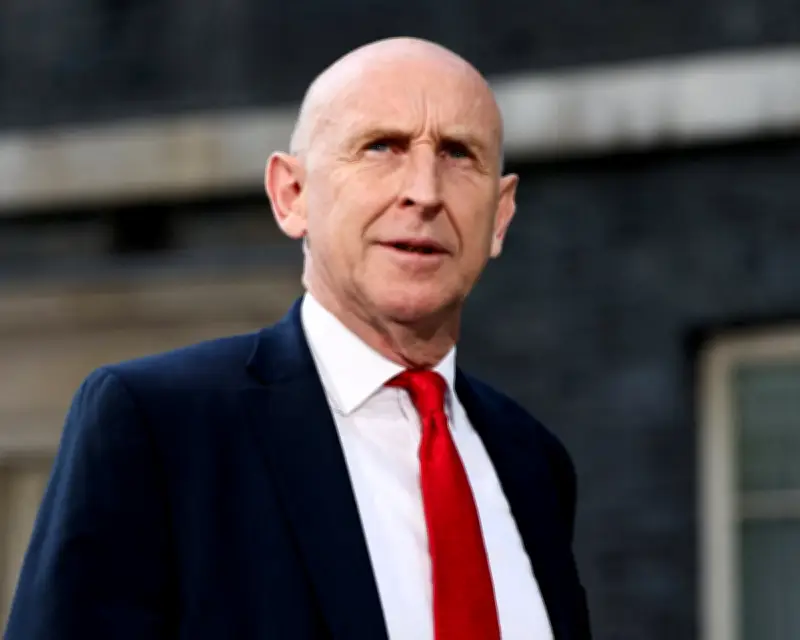
John Healey, the former defence secretary under Keir Starmer, has been appointed chancellor by new Prime Minister Andy Burnham, a decision that blindsided even senior Labour figures after weeks of intense lobbying by allies of Ed Miliband, Shabana Mahmood, and Rachel Reeves.
“We did not see this coming,” said one Labour MP. “But that is probably a sign that it is a good decision.”
Surprise Appointment Ends Fierce Lobbying
For weeks, as ministers jostled for top roles in Burnham’s government, the incoming prime minister remained tight-lipped. He told an interviewer on Monday that he had a “black box” containing his ministerial picks and major policy announcements, adding that even as he prepared to enter Downing Street: “The black box is still sealed.”
Officials said Burnham chose Healey because the two agreed on key policies, including sticking to borrowing rules, re-industrialisation, devolution, and intervention to help with the cost of living. Healey also has Treasury credentials, having served as a junior minister in the department for five years under Gordon Brown, earning a reputation as a stalwart Brownite.
Defence Spending Implications
Healey’s appointment signals Burnham’s thinking on defence spending. His resignation as defence secretary last month, in protest at the proposed defence investment plan, was a critical moment in Starmer’s downfall. Some Starmer allies believe that resignation sapped the former prime minister’s will to fight Burnham for the premiership. Some even think Healey did a deal to become Burnham’s chancellor before announcing his resignation.
Healey will almost certainly use his new position to increase defence spending, possibly by issuing “defence bonds” – new borrowing allocated only for the military – which he advocated in government and now has a chance to enact.
Other Contenders and Their Campaigns
While Healey’s allies pushed his case less vociferously than others, three other big hitters – Ed Miliband, Shabana Mahmood, and Rachel Reeves – were more active. Reeves, who had been positioning herself to stay as chancellor, proposed freezing private sector rents, a policy quickly slapped down by Starmer and seen as a signal to the more interventionist Burnham. Her senior adviser Katie Martin called business lobbyists and executives to press her case.
Supportive MPs rallied around Reeves. One told the Guardian: “I am concerned that we may lose everything if a new leader sacrifices the chancellor for promises and new alliances they are currently forging with MPs who fancy the job for themselves. The biggest fear for the bond markets and the unions is Ed Miliband.”
In the end, Reeves resigned from the government on Monday, having turned down the offer of another big appointment – reported to be defence secretary.
Miliband’s and Mahmood’s Prospects
Miliband’s allies spent time pressing his case, arguing his efforts to increase funding on green infrastructure were pro-growth. Several union leaders gave him public endorsement. Unison leader Andrea Egan said: “We need a chancellor who will rewire the economy and properly invest to improve the lives of the majority. Of those reported to be in the running, only Ed Miliband could enact the kinds of policies trade unions and our members urgently need.”
However, heavy lobbying from business and markets against Miliband counted against him. With the Iran war threatening inflation and borrowing costs rising, even his supporters expressed doubt. “It might just be time for a fiscal hawk,” said one MP who had previously advocated on his behalf.
Mahmood’s allies began mentioning her as a possible pick, despite her having said little about economic policy. Those who know her views say she would have been fiscally dry but committed to re-industrialisation. Burnham is known to admire her, but in the end, she will continue as home secretary.
Other Ministerial Changes
Steve Reed, the outgoing housing and communities secretary, stressed his commitment to devolution but was not enough to save his job. Several other ministers lobbied for roles, but Burnham’s aides say such campaigns may have backfired. “Andy hates people briefing themselves into jobs,” said one aide. “Anyone doing so is just as likely to find themselves out of government.”




