Guyanese Businessman Elected Opposition Leader While Facing US Extradition Proceedings
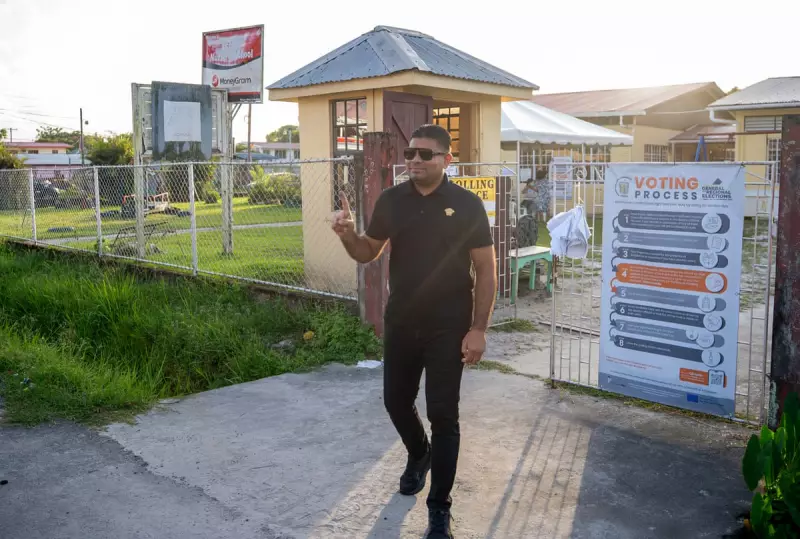
In a significant political development, a Guyanese businessman confronting serious legal challenges in the United States has been elected as the official opposition leader of Guyana. Azruddin Mohamed, aged 38, secured this pivotal parliamentary role just six months after establishing a political party that rapidly ascended to become the nation's second-largest political force.
Parliamentary Confirmation Amid Legal Scrutiny
Mohamed's election was confirmed during a brief parliamentary session attended exclusively by opposition lawmakers. A total of sixteen legislators from his We Invest in Nationhood party, commonly known as Win, alongside one representative from a single-seat political outfit, cast their votes in his favour. This decisive tally firmly established Win as the principal opposition party within Guyana's parliamentary structure.
This political milestone occurs concurrently with ongoing legal proceedings, as a magistrate's court continues to hear state arguments advocating for Mohamed's extradition to face charges in the United States. The session took place amidst mounting pressure from various western nations and civil society organisations, which had previously accused Guyanese authorities of deliberately delaying parliamentary gatherings to obstruct Mohamed's potential election.

Serious Allegations and International Sanctions
Both Azruddin Mohamed and his father, Nazar Mohamed, face federal indictments in Florida concerning allegations of gold smuggling and sophisticated money laundering operations. These legal actions follow earlier sanctions imposed by the United States Treasury Department, which accused the duo of smuggling an estimated ten thousand kilograms of gold from Guyana to the United States while allegedly evading over fifty million dollars in tax obligations.
The case has brought renewed attention to persistent governance and corruption challenges within the oil-rich South American nation. Prior to these legal complications, the Mohamed family operated as one of Guyana's most prominent gold purchasing and exporting enterprises. Their business portfolio additionally included one of the country's most successful foreign exchange outlets alongside extensive real estate investments. Following the announcement of international sanctions, Guyanese authorities have since closed all their commercial operations and frozen associated bank accounts.
Political Context and Parliamentary Dynamics
Monday's parliamentary gathering represented only the second meeting since the legislative body's dissolution in July, preceding the general elections held in September. This context highlights the unusual circumstances surrounding Mohamed's political ascent and the broader tensions within Guyana's political landscape.
Addressing journalists outside parliament, Mohamed robustly defended his position, emphasising the fundamental legal principle that "a person is innocent until proven guilty". He suggested that efforts to secure his extradition were politically motivated, directly linking them to his party's successful opposition against the ruling People's Progressive Party. "That is why they are fighting me down", he asserted, while maintaining that his political candidacy emerged from popular demand rather than personal ambition.
Institutional Discomfort and Formal Recognition
The election proceedings revealed notable institutional unease, with House Speaker Manzoor Nadir publicly describing himself as being in a "difficult position" for overseeing the appointment of an individual facing international extradition requests as the nation's official opposition leader. Despite these reservations, Nadir presided over the parliamentary session and formally congratulated Mohamed on his electoral victory, thereby acknowledging the constitutional legitimacy of the appointment.
This development marks a remarkable political transformation for Mohamed, whose rapid transition from business magnate to opposition leader underscores the volatile and complex nature of contemporary Guyanese politics, particularly against the backdrop of significant natural resource wealth and ongoing international legal scrutiny.