The Guardian's Frontline Reporting of the 2003 Iraq Invasion
In the spring of 2003, the initial jubilation over Saddam Hussein's downfall rapidly gave way to a harrowing descent into violent turmoil. Guardian correspondents, whether operating independently or embedded with military forces, provided unparalleled eyewitness accounts of the conflict's brutal reality on the ground. The allied offensive commenced on 20 March 2003, with the newspaper's early edition headlining a comprehensive "land, sea and air assault." Reports from Julian Borger and Rory McCarthy detailed British and American marines storming Basra's coast as cruise missiles illuminated Baghdad's skyline.
Shock and Awe: The Assault on Baghdad
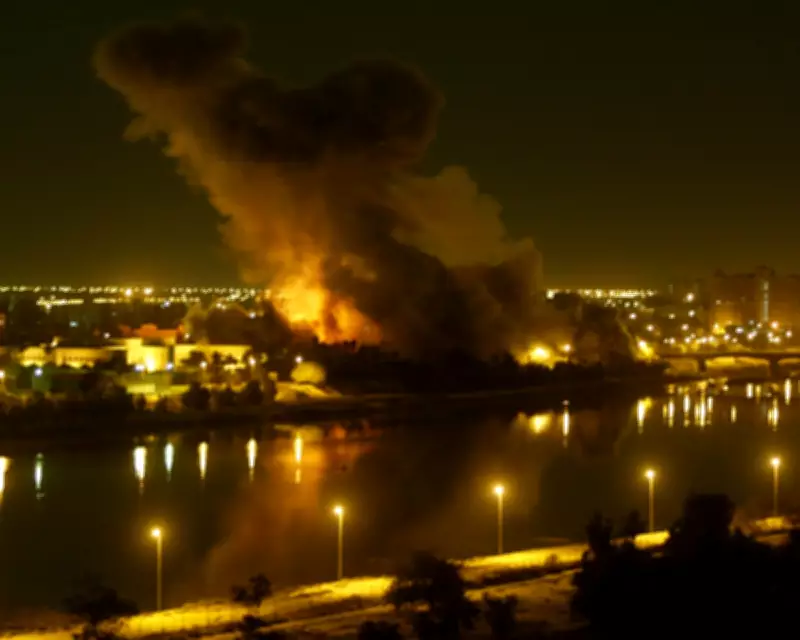
The campaign intensified with the "shock and awe" bombardment targeting regime infrastructure in the capital. Guardian coverage described successive aerial waves razing symbols of Saddam's power, such as the presidential complex along the Tigris River, within minutes. Suzanne Goldenberg, reporting from the Palestine Hotel, likened the spectacle to a "gigantic video game," capturing the surreal devastation as Iraqis watched their controlled lives unravel. Photographer Sean Smith, known for documenting war's casual brutalities, complemented these accounts with poignant images of Baghdad's final pre-invasion moments, from racetrack meetings to football matches.
Embedded and Unilateral Journalists: Divergent Perspectives
The war saw journalists adopting varied approaches. Embedded reporters like Jamie Wilson with the Royal Navy gained military access but faced restrictions, including monitored communications. In contrast, unilateral journalists such as James Meek operated freely, offering unfiltered insights into Iraqi civilian experiences. Meek's dispatch from Safwan highlighted the chaotic blend of looting and fear, with locals sending mixed messages of gratitude and terror. Audrey Gillan, embedded with the Household Cavalry, navigated the fine line between assimilation and objectivity, rarely using the contentious "we" pronoun except when expressing shared relief during respites from danger.

Civilian Casualties and Cultural Loss
Despite pledges to minimise harm, civilian tragedies mounted. A market bombing in Baghdad killed 14 people, with Goldenberg's report headlining "wayward bombs bring marketplace carnage." The Guardian faced both praise and criticism for publishing a graphic photograph of a victim. Additionally, the conflict threatened Iraq's cultural heritage, as looting ravaged museums in Mosul and Baghdad, despite Pentagon assurances of protection. Fiachra Gibbons' early warning in G2 foreshadowed this irreparable loss, emphasising the country's role as a treasury of ancient civilisations.
The Fall of Saddam and Its Aftermath
The regime's collapse was symbolised by the toppling of Saddam's statue in Firdos Square on 9 April 2003. Goldenberg's extensive account depicted the ensuing lawlessness in Saddam City, where looting erupted without police intervention. Meanwhile, Luke Harding recorded ecstatic celebrations in Kurdish Sulaymaniyah, with locals cheering "I love George Bush." Polls showed war support peaking at 54% in Britain, yet Guardian editorials cautioned that "Iraq is not yet as free as Bush claims," highlighting the elusive nature of Saddam and his weapons.
Voices from Iraq: Bloggers and Fixers
The Guardian amplified Iraqi perspectives through figures like Salam Pax, the "Baghdad Blogger," whose irreverent, English-language diary offered a relatable, humorous take on life under Saddam. Initially supportive of the intervention, he later questioned its planning. Similarly, Ghaith Abdul-Ahad, an architect turned fixer, began optimistic about building a new country from carnage but grew disillusioned after witnessing sectarian violence and civilian deaths. His award-winning journalism, marked by personal risks including hostage situations, evolved to critique foreign intervention, preferring a potential Iraqi-led collapse over war-induced chaos.

Legacy and Reflection
In the decade following the invasion, Guardian features editor Charlie English curated memorials honouring all war dead impartially, sparking debate among readers. The newspaper's commitment to documenting human costs, from Noor Sabah's tragic death in al-Kindi hospital to Abdul-Ahad's harrowing photographs, personalised the conflict's toll. As Ian Mayes notes in his extract, these accounts underscore the complexities of reporting in a time of trial, blending immediacy with enduring moral questions about war's justification and consequences.