Greenwich Council Faces Intense Criticism Over Proposed Questioning Restrictions
Greenwich Council has ignited a fierce political controversy with its plan to overhaul public questioning procedures at council meetings, drawing accusations of attempting to evade democratic scrutiny and accountability. The South London authority's proposals would impose strict limits on both residents and councillors, sparking united opposition from Conservative, Green, and Independent members who have issued an unprecedented joint statement condemning the measures.
Proposed Changes to Questioning Procedures
The council wants to implement several significant changes to how questions are handled during meetings. Most notably, all public questions would be limited to a maximum of 100 words, a restriction that critics argue would prevent detailed inquiries about complex council decisions. Additionally, the submission deadline for residents' questions would be extended from five days to seven days before meetings.
Since Greenwich Council typically releases meeting agendas just one week in advance, this change would effectively give residents only a single day to formulate and submit questions related to that meeting's business. The council has justified these measures by citing increased questioning volumes that have caused meetings to run late, with some sessions extending past 10:30 PM.

Councillor Questioning Also Under Restriction
The proposed changes would also significantly limit opposition councillors' ability to question the administration. Currently, councillors can submit unlimited questions, but under the new rules, they would be restricted to just two questions per meeting. Furthermore, the time allocated for councillor questioning would be capped at just thirty minutes during each session.
Currently, councillors have three days to submit questions related to agenda items and five days for non-agenda questions. The new proposals would require all questions to be submitted seven days in advance, regardless of their nature, while maintaining the 100-word limit that would apply to both councillors and the public.
Additional Scrutiny Mechanisms Targeted
Beyond questioning restrictions, the council also wants to modify the 'call-in' process that allows decisions to undergo additional scrutiny. Under the proposed changes, councillors would need to provide supporting documents and information when requesting a call-in, and the council's monitoring officer would gain authority to reject requests deemed inadequately supported.
Opposition councillors argue these additional requirements would raise the threshold for using this vital accountability mechanism, particularly following recent controversial decisions that have been called in for review, including cuts to Adventure Play Centres.
Council Leadership Defends Proposals
Council Leader Anthony Okereke has defended the proposed changes, stating that increased public questioning has made it "incredibly hard" for council meetings to "function properly." He noted that at January's meeting, there were 98 questions submitted—more than triple the number from July 2024.
"The council is facing the challenge of achieving the right balance between ensuring robust participation by both councillors and the public with the need to conduct essential business during its full council meetings," Okereke explained. He emphasized that the proposals follow a review benchmarked against other London authorities and would bring Greenwich in line with neighboring boroughs.
Unprecedented Opposition Unity
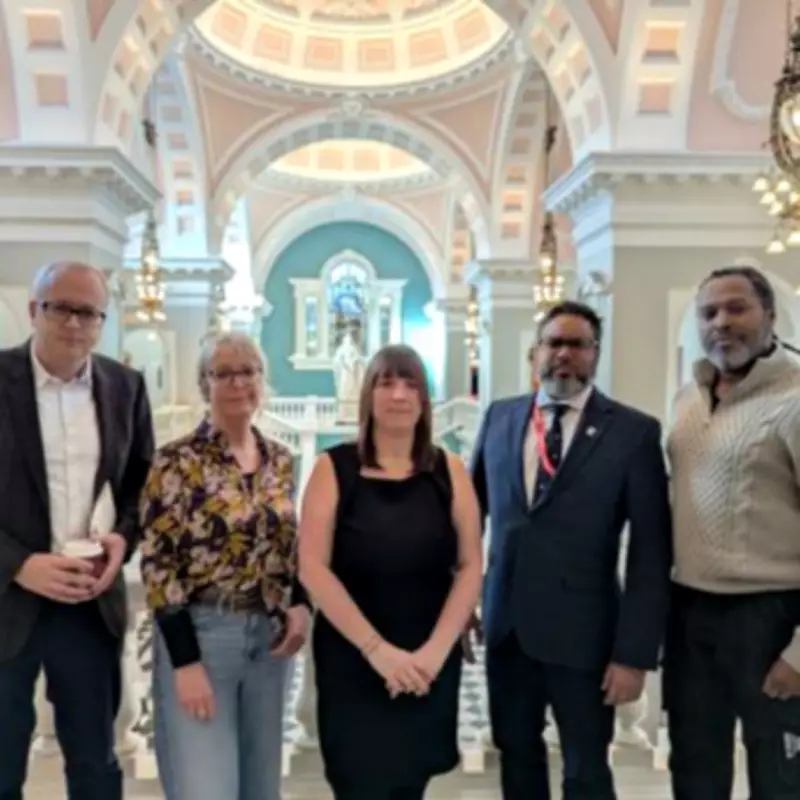
The eight Conservative, Green, and Independent councillors—representing all non-Labour members on Greenwich Council—have taken the extraordinary step of issuing a joint statement condemning the proposals. This marks the first time these political groups have united in such a manner, highlighting the severity of their concerns about democratic accountability.
Their statement accuses the Labour administration of using its majority to "force through constitutional changes designed to limit scrutiny from opposition councillors and members of the public" just before May's local elections. They describe the measures as "a shameless attempt to evade scrutiny and accountability" and have called on Okereke to withdraw the proposals entirely.

Context of Controversial Council Decisions
The proposed changes come amid increasing public engagement with council decisions that have proven unpopular with many Greenwich residents. Recent contentious issues that have prompted significant questioning include:
- A controversial Low Traffic Neighborhood (LTN) scheme
- The mostly scrapped Sustainable Streets Controlled Parking Zone (CPZ) project
- Staffing cuts at three Adventure Play Centres
- Public pension investments in companies linked to Israel
- Potential sale of Greenwich Equestrian Centre to developers
- Sale of three council-owned car parks
Opposition councillors argue that rather than restricting questioning, the administration should examine why their decisions have generated such significant public concern and opposition.
Broader Implications for Local Democracy
The controversy raises fundamental questions about transparency and accountability in local government. Critics argue that the proposed changes would damage residents' ability to hold future administrations accountable, regardless of which party holds power. They emphasize that democratic processes should facilitate, not restrict, public engagement with elected officials.
The council's report on the proposed changes will be debated at the full council meeting on March 18, 2026, where the Labour majority is expected to approve the measures despite opposition objections. The outcome could set important precedents for how local authorities balance administrative efficiency with democratic accountability across London and beyond.