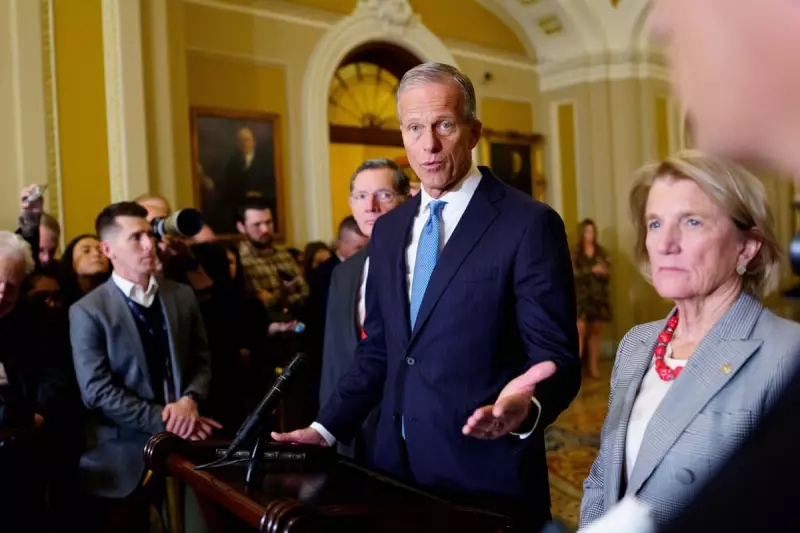
In a dramatic political showdown, Republican leaders are demanding immediate transparency from the US Justice Department regarding the long-awaited Jeffrey Epstein files. The pressure intensifies just hours after former President Donald Trump signed the Epstein Files Transparency Act into law.
Bipartisan Bill Forces Deadline
The legislation, which achieved remarkable bipartisan support in an otherwise divided Congress, mandates the release of Department of Justice documents concerning convicted sex offender Jeffrey Epstein within 30 days. The bill passed the House of Representatives with 427 votes and cleared the Senate by unanimous consent, demonstrating rare cross-party agreement.
Senate Majority Leader John Thune emphasised congressional intent, stating they trust the Justice Department to "protect the victims while getting the information out there." However, Republican senators immediately expressed concerns about potential delays or excessive redactions.
Republican Skepticism Grows
Several prominent Republican voices have voiced apprehension about how Attorney General Pam Bondi's department might implement the new law. Senator Lisa Murkowski of Alaska warned that "people who feel very strongly about this will feel like they've been duped" if the Justice Department claims ongoing investigations prevent disclosure.
Senator Thom Tillis of North Carolina, a judiciary committee member, added that "it would just add fuel to the fire if they don't produce something meaningful." The concerns stem from the Trump administration's initial resistance to the bill's passage before reversing course when it became inevitable.
Legal Loopholes and Historical Context
The legislation contains potential escape clauses that worry transparency advocates. Exemptions exist for information that could jeopardise active investigations and for material depicting minors. Given that Bondi has opened investigations into Democrats mentioned in Epstein's correspondence, Republicans fear these probes could be used to justify withholding documents.
The urgency reflects deep historical skepticism about how justice authorities have handled the Epstein case. In 2008, then-US attorney Alexander Acosta approved a controversial non-prosecution agreement that allowed Epstein to plead guilty to state prostitution charges instead of facing federal sex-trafficking charges.
Key aspects of the case include:
- Epstein's death in federal custody in August 2019, officially ruled suicide
- Ghislaine Maxwell's 2021 conviction and 20-year sentence for recruiting victims
- Approximately 300 gigabytes of FBI evidence awaiting potential release
Republican senator Eric Schmitt of Missouri summarised the prevailing sentiment: "All the credible information that can be released should be released." As the 30-day deadline approaches, all eyes remain on how Bondi's Justice Department will balance transparency with legal obligations.